Peru's Ministry of Culture reports 38 individuals on intact Chimú funerary platform at Chan Chan
Peru's Ministry of Culture said on 8 September 2026 that archaeologists found an intact funerary platform holding the remains of 38 individuals at Chan Chan's Utzh An complex, with high-status grave goods largely undisturbed for more than six centuries.
 Sofia MarchettiScience and health
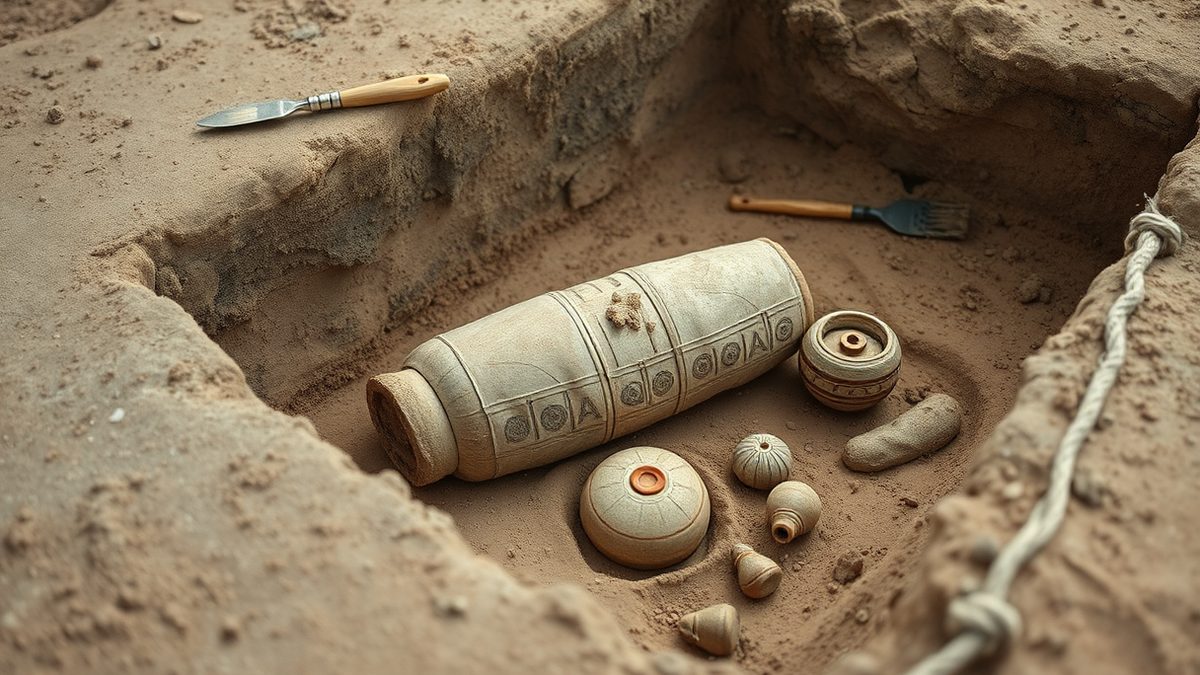
The platform at Utzh An
The platform sits inside Utzh An, the walled compound formerly known as the Gran Chimú Palace. It consists of a central chamber flanked by two larger side chambers.
The central chamber measures about 1.2 metres wide and five metres deep. A staircase descends roughly 2.5 metres into it, and the chamber contains a niche. It held one person and objects made of shell and metal, Jorge Meneses, the archaeologist overseeing the project, said according to Archaeology.
Each side chamber measures about 1.5 metres wide and eight metres long and extends 3.5 metres below the working surface. One held weapons and metal emblems but no human remains. The other has so far produced 20 individuals. Another 18 people were found elsewhere on the platform, bringing the total to 38.
Why the platform matters
The Ministry of Culture led the work, and the Chan Chan Archaeological Complex Special Project carried it out. The ministry called the discovery exceptional because the tombs and their contents survived largely undisturbed for more than six centuries. AOL reported that the ministry said the site escaped historical looting.
Meneses said much of what researchers knew about elite Chimú tombs came from platforms looted and damaged since colonial times. Objects removed from those sites entered museum and private collections, leaving incomplete information about their original contexts.
HeritageDaily said the new platform offers a rare chance to study the remains and artefacts in the positions in which they were deposited about 600 years ago.
HeritageDaily described the objects as strong evidence that the complex was associated with high-ranking members of Chimú society. They include fine metal ear ornaments, necklaces and headdresses, carved wooden boxes decorated with metal appliqués, necklaces made from seashells and quartz, weapons and ceremonial objects. Several individuals had traces of red pigment on their heads.
The ministry said sacred red pigment was reserved for high-ranking burials in Andean societies. The same colour was identified on a number of ceramic objects. The ministry said that supported the interpretation that those interred belonged to the Chimú elite.
AOL reported that the ministry described the artifacts as showing high-status wealth and "clear Inca stylistic influence."
Chan Chan and the Chimú
Chan Chan was the capital of the Chimú civilization and one of the largest pre-Columbian cities in South America, AOL reported. UNESCO lists it as a World Heritage site. The site covers about 13 square kilometres, according to UNESCO and National Geographic figures, and its peak population reached up to 40,000. The Chimú held the city until the Inca conquest in 1470.
The extended burial
One skeleton towards the rear of a chamber was laid fully extended rather than flexed or seated-flexed. That difference is the part archaeologists cannot yet explain. One possibility is that the individual was the victim of a sacrificial ritual. Another is that the position reflected a substantial difference in social rank from the others interred on the platform. Meneses said the individual was found at the bottom of one of the chambers.
Further examination of the remains will be required before researchers can determine whether the evidence supports either interpretation. Researchers have not established the person's identity, status or circumstances of death.
What happens next
Centuries of exposure to coastal humidity have left the bones and organic materials extremely fragile. Specialists are documenting each burial using high-precision photogrammetry before removal, HeritageDaily reported. The ministry dates the platform to more than 600 years ago.
The platform provides strong evidence of how the Chimú buried high-status dead. It does not yet explain why one person was laid out straight.
Sources
34- 01Excavations reveal elite Chan Chan funerary platform - HeritageDailyEN
- 02Archaeologists uncover 600-year-old Chan Chan burial complex in Peru, along with 38 high-status individualsEN
- 03Burial Platform Excavated at Peru's Chan ChanEN
- 04600-Year-Old Burial Complex Revealed in PeruEN
- 05Chan Chan: Peru's Vast Adobe Empire Near TrujilloEN
- 06Chan Chan’s Desert Walls Still Hold Peru’s Oldest StoryEN
- 07Tokyo tests solar-powered hydrogen production at high-rise office complexEN
- 08How Outlook Search is changing: ranking, resilience, and the feedback loopEN
- 09Teens arent getting enough exercise and the problem has barely changed in 15 yrsEN
- 10Canva is announcing changes and layoffs affecting 22 percent of its staffEN
- 11How software engineering is changing: a tale of two erasEN
- 12Revolut confirms $115BN valuation, after completing secondary saleEN
- 13From Type to Token: Petri Nets, Individual Token Philosophy, and Individualized Causal EffectsEN
- 14FedSharp: Byzantine Robust Decentralized Federated Learning Under Noisy ChannelEN
- 15Kellogg's Rice Krispies changed U.K. recipe, muffling its snap, crackle and popEN
- 16From wild to mild: Friendly foxes show changes in brain regionEN
- 17Password manager mSecure tells users to change passwords, won't say whyEN
- 18Have the experts who believed in a single autism spectrum changed their minds?EN
- 19Nyquist Limit:The frequency of changes in tech is invalidating our understandingEN
- 20Project Cyan: A Complete Indigo R4K Workstation as an FPGA SoC in RTL VerilogEN
- 21Plugins with no writes to the live site.WASM sandboxes and reviewable changesetsEN
- 22A bigger paycheck tends to come with personality changesEN
- 23Maximo milestone: friendly robot has completed 300,000 tasksEN
- 24‘The ticket is the gateway’: How destination events, sprint races and greater accessibility are changing the modern F1 fanEN
- 25 Creality K3 Review: It’s a Tool Changer, not a game changer EN
- 26'It's just vape, nail, charity shops': Can anything save UK high street?EN
- 27Liquid Cooling Is Changing What Data Centers Need to MeasureEN
- 28AI Is Changing How Semiconductor Fabs Work — and Engineers Are Moving Faster Because of ItEN
- 29Researchers face record-low chances of getting a grant partly due to rise of AIEN
- 30Politeness Has Changed. Our Language Shows HowEN
- 31Mathematics has changed. Let's act like itEN
- 32NASA discovers Jupiter’s invisible shield is more complex than Earth’sEN
- 33China's first AI-generated film is a flop. Some still see it as the futureEN
- 34Canva Lays Off over 1,200 People Amid Slowing GrowthEN
All figures and quotations in this text come from the sources listed below.
Content prepared by the editorial team with AI assistance.
Sofia Marchetti
Comments
0- No comments yet — be the first.