Polcom to build a 40 MW data center in Skawina. 150 million zloty for sovereign AI
Polcom is expanding its Polcom AI Cloud platform and has announced Data Center 3 in Skawina, a facility of up to 40 MW with a budget of about 150 million zloty, due to launch in 2030. The company has already spent 42 million zloty modernizing its existing infrastructure.
 Dr. Amara PatelEconomy, business and world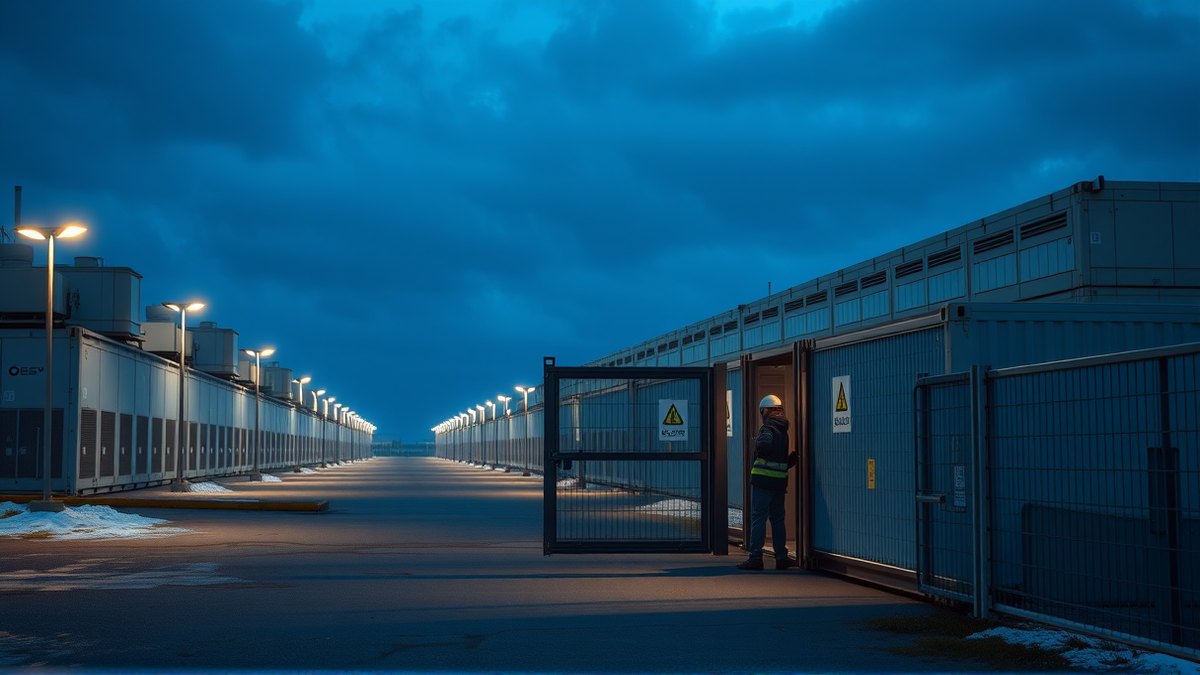
Polcom is expanding its Polcom AI Cloud platform, where the infrastructure, models and training data are to fall under Polish jurisdiction, Computerworld reports. The company has invested 42 million zloty in modernizing its existing IT and power infrastructure. The next stage is Data Center 3 in Skawina: a facility of up to 40 MW with a budget of about 150 million zloty, scheduled to start operating in 2030.
Computing power is not the only motivation. For European companies, the location of data, the jurisdiction of the provider and control over how that data is processed all matter more and more. Investment decisions are also shaped by regulation, including the EU artificial intelligence act, and by compliance requirements in the financial, industrial and public sectors. That leaves room for European suppliers that combine local infrastructure with support for workloads of high power density.
Poland holds another card in this chain: semiconductors. According to a Bank Gospodarstwa Krajowego report discussed by Rzeczpospolita, the value of the Polish semiconductor market is to rise from 5.1 billion dollars to 23.7 billion dollars by 2035. The authors advise against focusing on the costly production of the most advanced chips.
The recommended specializations are integrated circuit design, photonics, and assembly, testing and packaging, the backend segment. Poland's potential advantage also lies in gallium nitride, a material gaining uses where classic silicon runs into limits.
The European context does not make the task easier. As Rzeczpospolita reports, France and Germany cannot agree on the EU Industrial Accelerator bill tied to the "Made in EU" initiative. The dispute concerns the criteria by which products gain access to European subsidies and public procurement. Berlin considers the proposals of the EU industry commissioner too strict and fears harm to free trade. Spain wants to mediate.
For investment in AI infrastructure, this means that three things now set its pace at the same time: access to energy, access to components, and the shape of European industrial rules.
The regulatory context reinforces this direction. The Polish company is building its position as a cloud supplier operating under Polish jurisdiction. In the financial, industrial and public sectors, that translates directly into compliance requirements, from data protection to the provisions of the EU artificial intelligence regulation.
The scale of market demand is large. According to the Bank Gospodarstwa Krajowego report discussed by Rzeczpospolita, the value of the Polish semiconductor market will rise from 5.1 billion dollars to 23.7 billion dollars in 2035. Poland's specializations are chip design, photonics, assembly and testing, and gallium nitride devices.
This is not only a Polish story, however. The EU is arguing over the criteria of the "Made in EU" program, that is, over which products will gain access to European subsidies and public procurement. France and Germany take different positions on the matter, and Spain is trying to mediate. For investments such as Skawina, the rules of EU support will matter as much as the availability of energy and grid connection capacity.
Sources
2- 01Polcom rozwija suwerenną chmurę AI. Na nowe centrum danych przeznaczy 150 mln złPL
- 02Trump i Xi o AI. Polska szansą dla półprzewodników, spór Francji i NiemiecPL
All figures and quotations in this text come from the sources listed below.
Content prepared by the editorial team with AI assistance.
Dr. Amara Patel
Comments
0- No comments yet — be the first.