Pompeii archaeologists reconstruct cupboard sealed since AD 79
Pompeii archaeologists have reconstructed a wooden cupboard sealed since Mount Vesuvius erupted in AD 79, finding 38 bronze coins and a necklace of at least 24 charms, the park said in late October.
 Sofia MarchettiScience and health
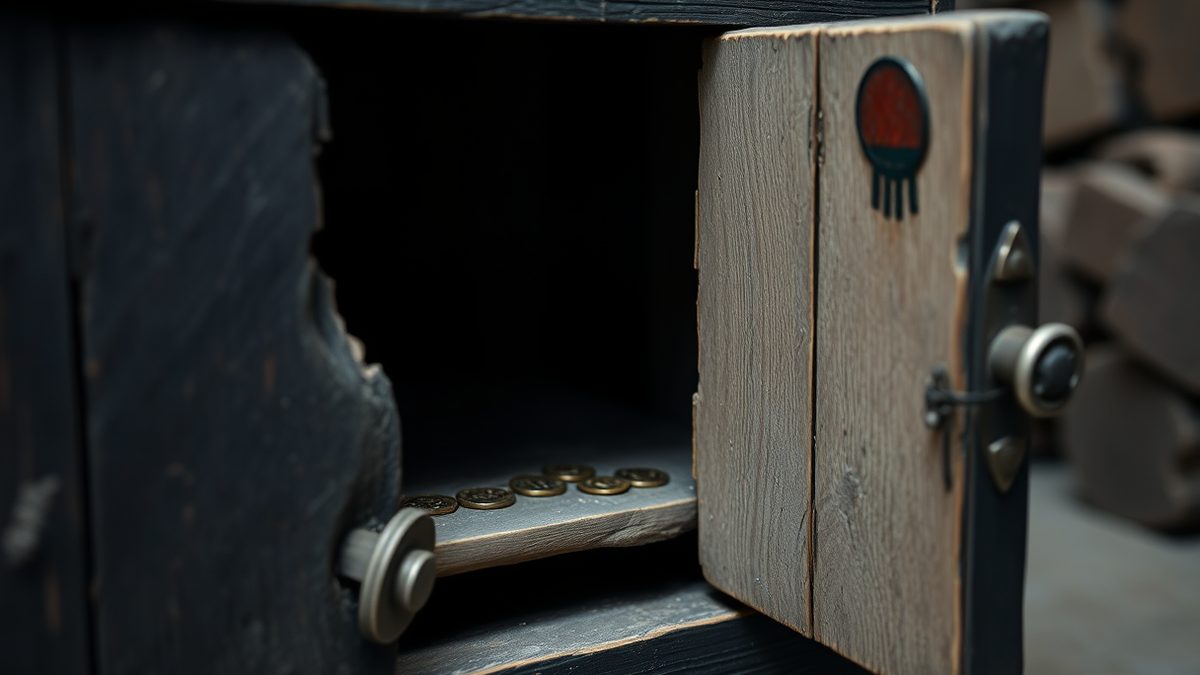
The Archaeological Park of Pompeii said the cupboard stood in a room of House IX 11, 7, on Via dell'Abbondanza, one of the busiest streets of the ancient city, and that researchers reconstructed the cabinet using evidence collected during excavation. The cupboard had stayed shut since Vesuvius buried Pompeii in AD 79, close to 2,000 years ago.
Inside, the team recorded 38 bronze coins in a small woven container made from plant fibers. Vessels and cooking pots in bronze, glass and ceramic stood around them. A decorated jug was among the vessels. Lead weights in a wooden box suggested that someone in the house was involved in trade.
A child's necklace and grooming tools
Among the objects was a necklace of at least 24 miniature charms made from bone, glass paste, earthenware and rock crystal. The charms depict the gods Bes and Mercury, as well as hands, feet, pine cones and bunches of grapes. The type of necklace, known as a crepundia, was traditionally given to Roman children as protective amulets and as rattles whose sounds helped adults keep track of them. Some Romans kept the necklaces into adulthood as mementos of childhood.
Gabriel Zuchtriegel, director of the park, said a crepundia was a reminder of parents who perhaps lived far away. He said many people moved around the Mediterranean area and tended to carry personal objects with them.
The cupboard also held tweezers, a tool for preparing cosmetic pigments, a small glass perfume or ointment bottle, an incense burner and a bronze lamp. The excavation found the remains of at least two young mice inside an amphora on a raised storage area. Laboratory examinations identified 117 bone fragments, probably belonging to the wood mouse species Apodemus sylvaticus, Greek Reporter reported.
The house and what remains unknown
The house is in a central area of Pompeii and is tentatively associated with a man named Cornelius Maximus because of inscriptions discovered there. The inscriptions are no longer visible. Its facade was first excavated in 1912, but archaeologists have only now investigated some of the rooms behind it as part of a wider restoration project near the House of the Chaste Lovers.
Elaborate Fourth Style wall paintings suggest that the residents enjoyed a relatively comfortable standard of living. Evidence shows that construction work was underway when Vesuvius erupted. Researchers cannot determine whether the owners escaped or died.
Zuchtriegel said the identity of the household cannot be reconstructed with certainty and that the fragments bring researchers closer to the residents' daily life. He said the value of the discovery lies in reading together the different traces of a life: personal habits, work and memories. The park said the fact that money and objects with apparent sentimental value remained behind suggests the owners had no time to retrieve them after Vesuvius erupted.
Sources
26- 01Time capsule of Pompeii: Ancient cupboard provides glimpse into life before Vesuvius eruptedEN
- 02Ancient Cabinet Found in Pompeii Reveals Personal Treasures Left Behind 2,000 Years AgoEN
- 03Perfume bottle and child's necklace among treasures found in Pompeii wardrobeEN
- 042,000-Year-Old Pompeii Wardrobe Preserves Personal Items and a Child's Protective CharmsEN
- 05A Sealed Cupboard in Pompeii Held Childhood Amulets and 38 Coins That Were Never CollectedEN
- 062,000-Year-Old Cupboard in Pompeii Reveals 24 Protective Amulets and 38 CoinsEN
- 07Pompeii: A Woman's Wardrobe, Lost in the Eruption of 79 A.D., ResurfacesEN
- 08Pompeii, life went on after Vesuvius: new discovery points to the RenaissanceEN
- 09Scientists solve 30-year-old mystery and discover a hidden defense against inflammationEN
- 10AI helps Stanford scientists discover a “natural Ozempic” with a surprising advantageEN
- 11All 5 genetic “letters” of DNA and RNA discovered in a 4.5-billion-year-old asteroidEN
- 12Scientists discover new Alzheimer’s drug that repairs DNA damage and reduces brain inflammationEN
- 13From Waste to Discovery: Recycling High-Scored Unexposed Candidates in Taobao Feed RecommendationEN
- 14Data-Efficient Scaling-Law Discovery for Recommendation Systems via Coupled Hyperparameter ScalingEN
- 15Trace Gas Orbiter discovers potential evidence of volcanic activity on Mars via atmospheric observationsEN
- 16Scientists discover that some “unhealthy” diets can boost cancer immunotherapy in miceEN
- 17NASA's Hubble and Webb discover ancient worlds that remember their pastEN
- 1828 Zero-Day Findings in Less Than Two Days: What AI-Speed Discovery Means for RoboticsEN
- 19Scientists discover the hidden “muscles” trees use to straighten themselvesEN
- 20Scientists discover metals that defy the deep freeze at -424°FEN
- 21Scientists discover a bacterial defense so strange they thought it was brokenEN
- 22A surprising vitamin A discovery is changing what scientists know about visionEN
- 23Scientists discover mysterious seahorse lookalikes that no one has ever seen aliveEN
- 24Scientists discover why chronic back pain feels so personalEN
- 25NASA discovers Jupiter’s invisible shield is more complex than Earth’sEN
- 26How AI Is Changing the Pace of Discovery for Millions Living With DementiaEN
All figures and quotations in this text come from the sources listed below.
Content prepared by the editorial team with AI assistance.
Sofia Marchetti
Comments
0- No comments yet — be the first.