Qualcomm forecasts $15 billion in data center revenue by 2029
Qualcomm said on its Q4 2026 earnings call that it expects about $650 million in data center revenue in the first quarter of 2027, rising to $15 billion by 2029.
 Grace OkonkwoAI, models and technology
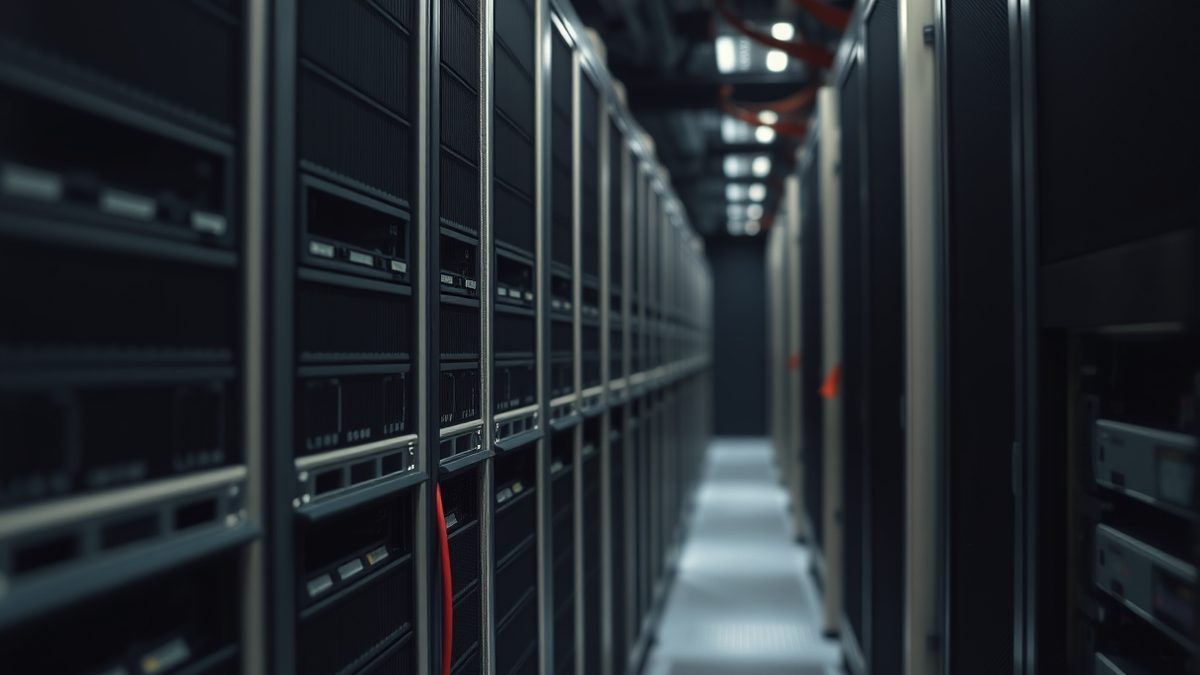
The forecast came on the Q4 2026 earnings call. The shape of the ramp matters more than the endpoint. Qualcomm expects roughly $650 million in the first quarter of 2027, $5 billion by the end of 2027, and $15 billion by 2029. For scale, The Verge put total revenue for 2026 at $10.4 billion, so the 2029 data center target exceeds its entire 2026 revenue.
The phone business is shrinking. Smartphone sales fell around 20 percent compared with 2025.
Qualcomm's data center push runs through partnerships with Amazon and Meta announced earlier this year. The company says data centers will eventually account for around 30 percent of its business. That makes the forecast a target rather than booked business, and buyers of AI compute should read it that way.
The benchmark AMD has set
AMD has set a far higher bar. It says it expects more than 80 percent of its revenue eventually to come from data centers, against Qualcomm's roughly 30 percent. The gap is partly ambition and partly arithmetic. Qualcomm still has a shrinking handset business to defend, and data centers are only forecast to reach around 30 percent of its business.
Memory stacked on the compute die
The silicon is still in validation. Qualcomm said it had completed initial validation of its High Bandwidth Compute memory architecture, which stacks layers of DRAM on top of a small compute die. Putting memory there cuts the energy spent moving data, according to ServeTheHome.
The Dragonfly AI250 accelerator is scheduled to start sampling in 2027.
Cheaper packaging is part of the pitch. Because less bandwidth is needed between the stacked die and the main processor, Qualcomm can use traditional 2D organic substrates instead of CoWoS or EMIB. The stacking still requires through-silicon vias, so manufacturing does not get simple.
Inference is where the capacity goes
Others are already selling inference capacity on hardware that exists. SambaNova and Supermicro said on 4 November they will build systems pairing Nvidia GPUs for prefill with SN50 RDUs for decode, starting with 10,000 chips. They argue operators can add inference capacity without waiting for buildouts constrained by power and cooling, and extend the life of GPUs they already own.
Argonne bought the same argument. Argonne National Laboratory said the same day that it added the Tara system to its inference service. Tara carries 2,688 Nvidia GH200 superchips, roughly 100 times the GPU memory previously available to the service. The lab also expanded Metis from two to six SambaRacks, for 96 SambaNova SN40L processors. For buyers, the question is less which vendor wins than whether inference capacity arrives before new power-constrained buildouts do.
What happens next
Two dates frame the next year. Dragonfly AI250 sampling is due in 2027. Qualcomm's forecast sets the end of 2027 as the deadline for $5 billion in data center revenue.
Sources
28- 01Qualcomm is betting big on data centers as smartphone sales sinkEN
- 02Qualcomm Validates HBC Stacked Memory Ahead of 2027 Dragonfly AI250 SamplingEN
- 03SambaNova and Supermicro to Build AI Inference Systems Combining RDUs and GPUsEN
- 04Argonne Adds AI Inference Capacity for Genesis Mission and Scientific ResearchEN
- 05 Nvidia can only fulfill 1% of China’s massive $70 billion GPU order for AI chips, report claims — supply constraints choke export-friendly RTX Pro 5500 deliverEN
- 06 Nintendo ROM chip supplier Macronix quits to focus on chips for AI data centers, reports indicate EN
- 07Nvidia is happy to take your money whether you're using open or closed modelsEN
- 08SpaceX signs deal with Qualcomm to provide network technology for U.S. mobile serviceEN
- 09NVIDIA's controversial DLSS 5 is coming to RTX Remix to 'enhance' older gamesEN
- 10Qualcomm Dragonwing Nabs a Big SpaceX Starlink Mobile Nationwide US 5G Network WinEN
- 11Synopsys to Offer EDA Software Through European Chips Design PlatformEN
- 12 Nvidia tells data center operators to limit business from Chinese customers with new global restrictions, report claims EN
- 13 Creator says Amazon closed his account after he tried to buy seven Nvidia DGX Sparks EN
- 14 Nvidia Brev security breach may have exposed SSH keys used to access customer VMs EN
- 15SpaceX boldly goes into 'huge' 5G network rollout with QualcommEN
- 16Nvidia CEO reportedly targeted by Chinese spyEN
- 17Solving the Interconnect Challenge in Modern Robotics: How 3M Is Engineering for Motion, Density, and UptimeEN
- 18Alleged Chinese spy had 'close relationship' with Nvidia boss Jensen HuangEN
- 19Cities Worldwide Build and Scale AI Services With NVIDIA Physical and Agentic AIEN
- 20Nokia quickie with Marvell at VMO2 shows AI-RAN needs no NvidiaEN
- 21Liquid-Cooled NVIDIA Servers at the ASRock Rack OCP 2026 BoothEN
- 22A History of Nvidia Stream Multiprocessor (2020)EN
- 23NVIDIA Updates Rubin GPU Specs as First Production Hardware ArrivesEN
- 24A New Map of ‘Empty’ Space Challenges a Tranquil Picture of the GalaxyEN
- 25AI, fuelled by advanced chips, set to power semiconductor manufacturing: industry veteranEN
- 26China dismisses US report of suspected spy targeting Nvidia CEO Jensen Huang as ‘groundless’EN
- 27Chinese AI chipmaker Iluvatar CoreX says new GPU matches Nvidia’s H200 as chip gap closesEN
- 28Nvidia, AMD Commit $4B to Meta AI BuildoutEN
All figures and quotations in this text come from the sources listed below.
Content prepared by the editorial team with AI assistance.
Grace Okonkwo
Comments
0- No comments yet — be the first.