Quantum computing's universality claim lands on the same weekend as a national roadmap
On 27 September, ScienceDaily reported that a team using 54 qubits on Quantinuum's H2 processor built a universal gate set from non-Abelian anyons, the first experimental demonstration of its kind, according to the University of Chicago. Hours earlier, Fermilab published the US Department of Energy's quantum computing roadmap.
 Grace OkonkwoAI, models and technology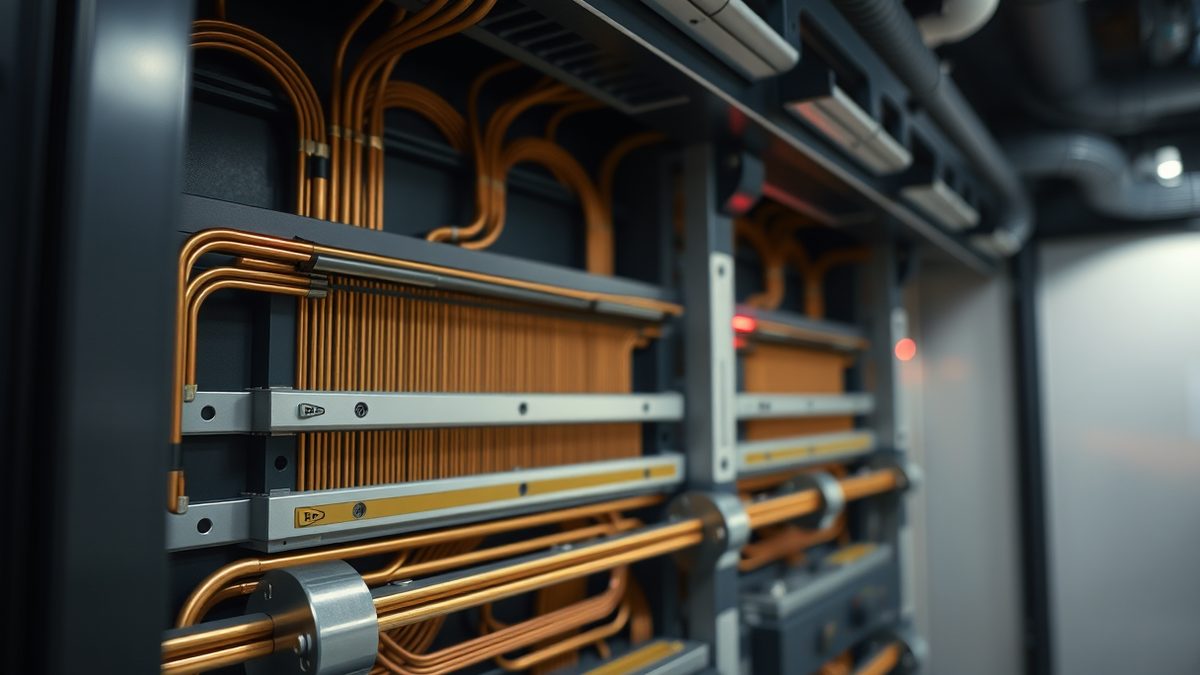
The result appeared in Nature, according to the ScienceDaily write-up dated 27 September. The team combined two operations, braiding and fusion, on 54 entangled qubits of Quantinuum's H2 trapped-ion processor. Both operations rely on a symmetry group called S3: the rotations and reflections that leave an equilateral triangle unchanged.
Ruben Verresen is an assistant professor at the University of Chicago Pritzker School of Molecular Engineering and a co-author of the paper. In the release, he describes the outcome in plain terms. "We demonstrated a so-called universal gate set, meaning that if you store information in these emergent versions of quarks, and you move them around, you can do any quantum computation you might want to do," he said.
The work involved UChicago PME, Harvard, Stony Brook University and Quantinuum. It builds on a 2024 experiment by some of the same researchers, which created anyons tied to a different symmetry group, D4, on Quantinuum hardware. That earlier run proved the particles could be made and manipulated. It did not prove they were enough to compute.
Why a gate set matters more than a qubit count
The gap between protecting quantum information and computing on it is the central engineering problem in the field. Error correction spreads one logical qubit across many physical ones, which keeps data alive but typically does not grant every operation a universal machine needs. Engineers plug the hole with magic states, produced through a purification process called distillation.
Distillation is expensive. It eats a large share of a machine's available qubits, which is exactly the resource everyone is short of. The new paper argues that non-Abelian anyons may sidestep that step. Henrik Dreyer is managing director and scientific lead at Quantinuum's Munich office and a co-author of the paper. In the release, he calls non-Abelian codes "a dark horse in the race to quantum error correction" and says the work shows fault-tolerant computation can in principle proceed without magic state distillation or cultivation.
That is a claim about a route, not a delivered machine. The experiment ran on 54 qubits and demonstrated a gate set. It did not demonstrate a useful algorithm at scale, and the release gave no error-corrected logical qubit count.
Verresen's own framing is instructive. "In that work, we didn't demonstrate that those emergent forces were enough to do quantum computation," he said of the 2024 experiment. "That particular universe we created was not powerful enough."
Washington publishes its own timeline, with 2028 on it
On the same day, Fermilab republished a Department of Energy Office of Science article announcing the release of the "SCAC Quantum Committee Report: Path to an Integrated Quantum Future." A subcommittee chaired by Anna Grassellino, Fermilab chief technology officer, led the roadmap, with Supratik Guha of the University of Chicago's Pritzker School of Molecular Engineering as vice chair.
The report sets a milestone-driven path toward demonstrating scientific utility from quantum computing, with a stated target of a scientifically relevant, error-corrected quantum computer by 2028. It proposes three phases: competitive Quantum Grand Challenges from 2026 to 2028 pairing national labs, universities and industry; a DOE Quantum Computing User Facility built from those lessons; and, from 2030, integration of quantum co-processors into the department's high-performance computing and AI infrastructure.
The DOE text is explicit that the facility is not intended as a commercial cloud service. It describes an open scientific instrument where researchers co-develop hardware, control systems and software alongside vendors, and it commits to a technology-neutral stance. The stated applications are chemistry and materials problems: molecular properties for drug discovery, catalysts for manufacturing, fusion-relevant materials, and early-universe physics.
One sentence in the Fermilab piece is worth separating from the rest. The DOE says success must be measured by scientific utility rather than by the largest quantum computer. That is a policy argument as much as a technical one.
Three hardware routes, three different bets
The weekend also produced a second research result. ScienceDaily reported on 26 September that researchers led by the Duke Quantum Center used a 13-ion trapped-ion quantum simulator to reproduce string breaking, a process connected to particle-antiparticle formation after the Big Bang. The paper was published 23 September in Nature Physics, with collaborators from the University of Maryland, Oxford, Caltech, Cornell and KU Leuven.
Christopher Monroe of Duke, who led the research, is quoted saying that quantum computer simulations are the best available platform for questions like matter formation "short of having witnessed the Big Bang itself." The team cross-checked the quantum results against a classical calculation, and the two agreed. The release notes that agreement is expected at this small scale.
Then there is the industrial timeline. IBM announced on 19 August, in a release dated 19 August and surfacing in this dossier on 21 September, that it had joined and cooled two cryogenic modules into a single environment, reaching below 15 millikelvin. Each module offers up to 12 times more wiring space than the most widely used IBM quantum systems, and IBM plans to install Quantum Nighthawk processors into the modules later this year, on a roadmap toward a 1,000-programmable-qubit system in 2027 and the fault-tolerant IBM Quantum Starling in 2029.
Jay Gambetta, director of IBM Research, is quoted calling the module connection "a leap forward" toward fault tolerance. Note the dates: IBM's target sits a year after the DOE's stated 2028 milestone for a scientifically relevant, error-corrected machine. The two documents do not contradict each other, because they define the finish line differently. The DOE wants demonstrated scientific utility. IBM wants a fault-tolerant system. Those are not the same claim, and readers should not average them.
Away from the headlines, the supporting stack is moving too. A sponsored post on Semiengineering dated 24 September describes a workflow from Keysight that fits a BSIM-BULK compact model to room-temperature data and then uses hybrid neural networks to learn the cryogenic behaviour the model cannot capture at 4 kelvin. It cites a 41.8 percent compound annual growth rate for the quantum market from 2025 to 2030, sourced to MarketsandMarkets. This is vendor material, and it argues for a product, but it points at a real bottleneck: the control and readout electronics sitting next to the qubits need models that do not exist yet in standard form.
What the weekend actually established
Strip the framing and the last 72 hours delivered three things. A universality claim on 54 trapped-ion qubits, published in Nature and reported on 27 September. A national roadmap from the DOE with a 2028 milestone and a stated preference for scientific utility over qubit counts. And a small-scale physics simulation on 13 ions that matched classical calculation, reported on 26 September.
None of these is a working general-purpose quantum computer. The anyon result is a gate set demonstration on hardware that exists today, and its practical value depends on whether non-Abelian codes scale better than the magic-state machinery they would replace, which the paper does not settle. The DOE roadmap is a plan, not a result. IBM's cryogenic modules are an engineering milestone on a 2029 target.
The honest read is that the field has stopped arguing only about qubit counts and started arguing about routes. Non-Abelian anyons, magic states, modular cryogenics, cryo-electronics modelling: these are competing bets on how a machine gets built, and the weekend put several of them in public view at once. Which one wins is not something a single Nature paper decides.
Sources
5- 01Quantum computing's "dark horse" just proved it can go universalEN
- 02DOE releases national quantum computing roadmap following field-wide effort led by SCAC subcommitteeEN
- 03Quantum computer simulates matter "popping into existence"EN
- 04AI-Driven Device Modeling For Next Generation Quantum ApplicationsEN
- 05IBM Connects Its First Modular Cryogenic Systems in Milestone Toward Fault-Tolerant Quantum ComputingEN
All figures and quotations in this text come from the sources listed below.
Content prepared by the editorial team with AI assistance.
Grace Okonkwo
Comments
0- No comments yet — be the first.