Quantum supremacy explained: how Google and IBM raced to a contested milestone
Google's Sycamore processor sampled a quantum circuit in about 200 seconds, a task the company says would take a state-of-the-art supercomputer roughly 10,000 years. The claim, published after a premature leak, turned "quantum supremacy" into the most argued-about phrase in computing.
 Rachel NwosuAI, models and technology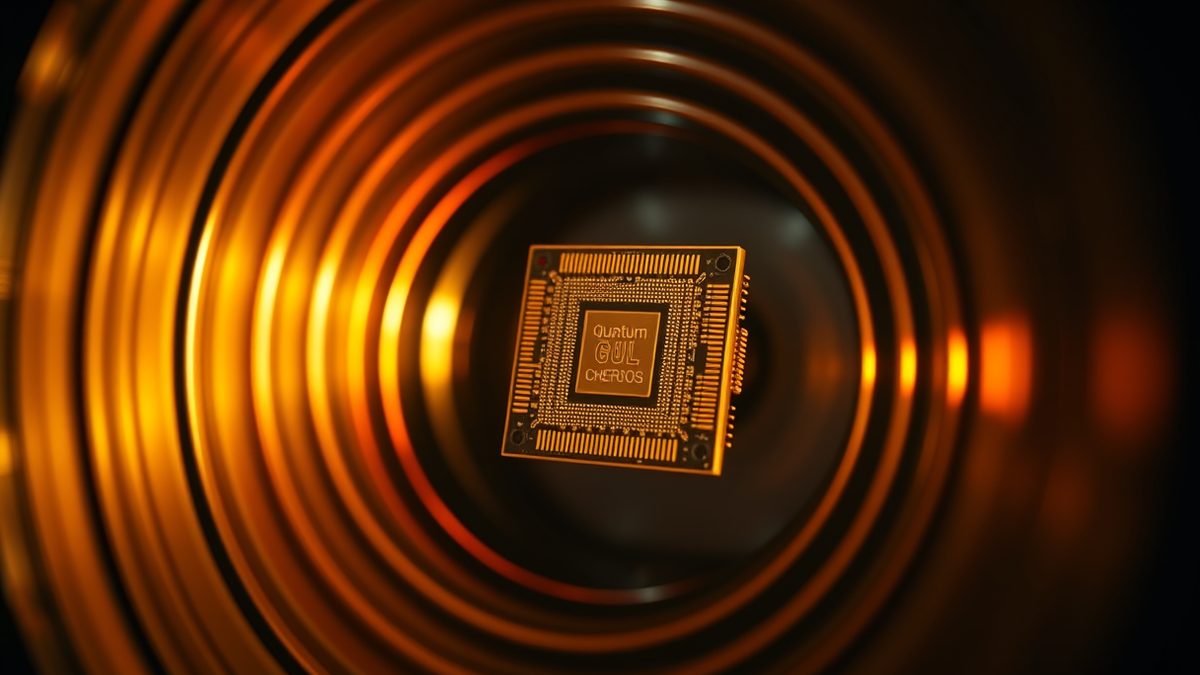
Google says it has achieved "quantum supremacy." The claim, made in a scientific paper, is the most serious indication yet that quantum computers can beat classical machines at a specific task, Fortune reported on 20 September 2019. The experiment was not a general-purpose breakthrough. It was a stunt, and a narrow one, but a stunt that had been promised for years.
The numbers are the story. Google's processor, called Sycamore, contained 53 qubits. The team scaled back from a 72-qubit device, Bristlecone, that it had previously designed. In the experiment, the quantum machine sampled randomly generated numbers produced through a specialized scenario involving quantum phenomena. The researchers said their processor took about 200 seconds to sample one instance of the quantum circuit 1 million times. A state-of-the-art supercomputer, they estimated, would need approximately 10,000 years to perform the equivalent task. Running the same experiment on a Google Cloud server, the researchers estimated, would take 50 trillion hours.
A paper that leaked before peer review
Fortune obtained a copy of the paper, which had been posted to NASA.gov earlier that week before being taken down. The Financial Times first reported the news. A Google spokesperson declined to confirm the authenticity of the paper and its results. NASA did not respond immediately to a request for comment.
A source at Google familiar with the situation suggested that NASA accidentally published the paper early, before the team's claims could be thoroughly vetted through scientific peer review, a process that could take anywhere from weeks to months. That detail matters. When the story broke, the public saw a milestone before scientists had finished checking it.
"Quantum speedup is achievable in a real-world system and is not precluded by any hidden physical laws," the Google researchers wrote.
The paper also predicted that quantum computing power would "grow at a double exponential rate," beating even the exponential rate that defined Moore's Law, the trend that observed traditional computing power doubling roughly every two years. The researchers wrote that quantum processors based on superconducting qubits can now perform computations beyond the reach of the fastest classical supercomputers available today. "To our knowledge, this experiment marks the first computation that can only be performed on a quantum processor," they wrote.
The road to 53 qubits
The milestone did not appear from nowhere. In April 2017, MIT Technology Review reported that John Martinis, who led Google's quantum research group, had given himself just a few months to reach a milestone in the history of computing. By the end of that year, Martinis said, his team would build a device that achieved quantum supremacy. One reason for his confidence was a new chip with six qubits arranged in a two-by-three configuration, which Martinis said showed the technology still worked when qubits sat side by side. The six-qubit chip also tested a manufacturing method in which qubits and the conventional wiring that controls them are made on separate chips and later bump bonded together.
At the time, Google had released results from a chip with nine qubits arranged in a line. Martinis said he would need a grid of 49 qubits for the supremacy experiment, and that designs for devices with 30 to 50 qubits were already in progress. He spoke about the work at the IEEE TechIgnite conference in Burlingame, California, but the group had yet to formally disclose technical details.
Google was not alone. The race to develop quantum processors included Intel, Microsoft and IBM, plus startups. Simon Gustavsson, a principal investigator in a quantum computing research group at MIT, told MIT Technology Review that Google was one of the leaders. "It's pretty comparable between Google and IBM," he said. Chris Monroe, a professor at the University of Maryland and cofounder of the quantum computing startup IonQ, called the supremacy experiment "an academic milestone." "Afterward you still have to figure out how to make it more scalable and programmable," he said.
IBM's counterpunch
IBM had its own announcement. On 10 November 2017, the Associated Press reported that IBM scientists had successfully built and measured a processor prototype with 50 qubits. Dario Gil, who led IBM's quantum computing and artificial intelligence research division, said it was the first time any company had built a quantum computer at this scale. Seth Lloyd, an MIT mechanical engineering professor not involved in IBM's research, said IBM likely still had glitches to work out, but the 50-qubit announcement was a sign of significant progress.
By March 2019, IBM was talking about a different metric. ZDNET reported that IBM would outline its highest Quantum Volume to date at the American Physical Society March Meeting. Quantum Volume is a performance metric that accounts for the number of qubits, connectivity and coherence time, plus gate and measurement errors, device cross talk, and circuit software compiler efficiency. IBM said its Q System One, which has a 20-qubit processor, produced a Quantum Volume of 16, double the current IBM Q, which had a Quantum Volume of 8. IBM also said the Q System One had some of the lowest error rates it had measured.
IBM said Quantum Volume would need to double every year to reach Quantum Advantage, the point where quantum applications deliver significant advantages over classical computers, within the next decade. IBM has doubled the power of its quantum computers annually since 2017. It made its quantum computing technology available via a cloud service in 2016.
What the milestone does not mean
The sceptics were ready. Dario Gil, head of IBM Research, advised against using quantum supremacy as a metric with which to measure progress in the field. "The experiment and the 'supremacy' term will be misunderstood by nearly all," he told Fortune. Gil described the experiment as a highly special case "laboratory experiment" that has "no practical applications." He added: "Quantum computers will never reign 'supreme' over classical computers, but will rather work in concert with them, since each have their unique strengths."
Jim Clarke, Intel Labs' director of quantum hardware, called Google's update "a notable mile marker." He said a commercially viable quantum computer would require many research and development advancements before becoming a reality. "While development is still at mile one of this marathon, we strongly believe in the potential of this technology," Clarke added.
Google itself framed the result carefully. In a blog post published on 23 October 2019, after Nature ran the paper in its 150th anniversary issue, the company said the milestone was the "hello world" moment it had been waiting for, but that many years would pass before a broader set of real-world applications could be implemented. The blog post described a 13-year effort, starting in 2006 when Google scientist Hartmut Neven began exploring how quantum computing might accelerate machine learning. John Martinis and his team at the University of California at Santa Barbara joined in 2014. Two years later, Sergio Boixo published a paper that focused the effort around the well-defined computational task of quantum supremacy.
Google also acknowledged the limits. Quantum computers are prone to errors, yet the experiment showed the ability to perform a computation with few enough errors at a large enough scale to outperform a classical computer. The blog post compared the moment to building the first rocket that left Earth's gravity to touch the edge of space. At the time, some asked why go into space without getting anywhere useful.
That comparison is the honest one. Quantum supremacy was a benchmark, not a product. It showed that a quantum processor could do something a classical machine could not, for one carefully chosen problem. Useful work, the kind that might design better batteries or cheaper fertilizer, remains years away, according to both Google and its critics. The argument that followed was less about whether the experiment worked and more about what the word "supremacy" was doing in the headline.
Sources
5- 01Google's New Chip Is a Stepping Stone to Quantum Computing SupremacyEN
- 02IBM says it's reached milestone in quantum computingEN
- 03IBM hits quantum computing milestone, may see 'Quantum Advantage' in 2020sEN
- 04Google Claims 'Quantum Supremacy,' Marking a Major Milestone in ComputingEN
- 05What our quantum computing milestone meansEN
All figures and quotations in this text come from the sources listed below.
Content prepared by the editorial team with AI assistance.
Rachel Nwosu
Comments
0- No comments yet — be the first.