Photon state teleported between separate quantum dots over 270 meters
An international team including Paderborn University researchers teleported a photon's polarization state between two separate quantum dots over a 270-meter free-space link, a step toward quantum relays, the university said on April 30, 2026.
 Sofia MarchettiScience and health
The 270-meter link
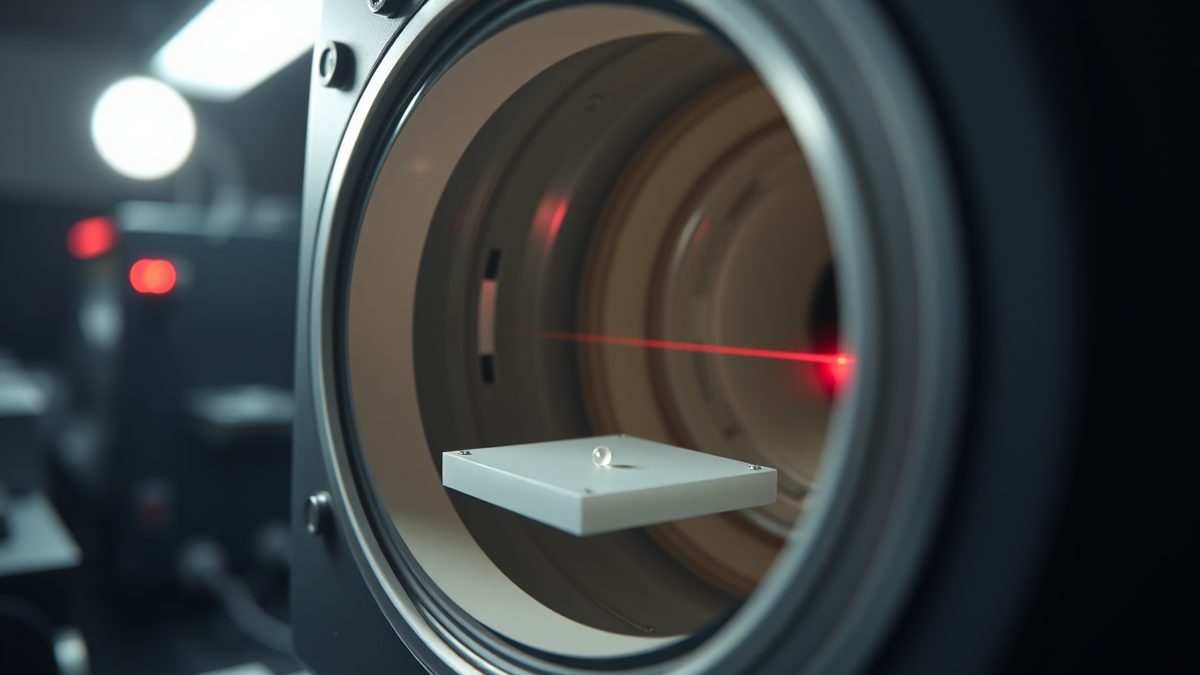
The link connected two buildings at Sapienza University of Rome, where the teleportation experiments took place. Paderborn University said its doctoral and postdoctoral researchers spent about ten years on optical measurements, data analysis and evaluation. Professor Klaus Jöns's group collaborated closely with a team led by Professor Rinaldo Trotta at Sapienza. The university described the result as an important milestone on the path toward a quantum internet.
The team teleported the polarization state of a single photon from one quantum dot to another that was physically separated. The receiving dot reproduced the polarization of the first photon. The two dots were separate emitters, not one source split in two. The findings were published in Nature Communications.
Why separate emitters matter
Entangled systems made up of multiple quantum particles create interconnected states across multiple particles. Paderborn University said this approach is essential for applications in secure communication, data processing and quantum computing.
Jöns said earlier experiments used photons from one and the same source. Using distinct quantum emitters to implement a quantum relay between independent parties had remained out of reach, he said. He called successful teleportation between two independent quantum emitters a step towards scalable quantum relays and the practical implementation of a quantum internet.
Jöns said the experiment shows that quantum light sources based on semiconductor quantum dots could serve as a technology for future quantum communication networks.
How the experiment worked
Quantum dots were precisely engineered at Johannes Kepler University Linz. Resonator nanofabrication was carried out by partners at the University of Würzburg. The Rome experiments used GPS-assisted synchronization, ultra-fast single photon detectors and stabilization methods to counter atmospheric turbulence.
The teleportation state fidelity, a measure of how well quantum states are preserved, reached up to 82 ± 1%. That exceeded the classical limit by more than 10 standard deviations.
What comes next
The next goal is demonstrating entanglement swapping between two quantum dots. The team says that would create the first quantum relay using two deterministic sources of entangled photon pairs. Deterministic sources can reliably produce single photons almost on demand, although developing them has been a major challenge.
About ten years ago, Jöns and Trotta outlined a plan for using quantum dots as sources of entangled photon pairs in communication and teleportation systems. Jöns said the result shows the long-term planning paid off. He credited a combination of materials science, nanofabrication and optical quantum technology.
Sources
8- 01A photon was teleported across 270 meters in stunning quantum breakthroughEN
- 02Scientists just teleported information using lightEN
- 03World First: Quantum Teleportation Achieved Between Photons, Scientists ConfirmEN
- 04In a laboratory, they manage to teleport quantum information between photons born in different crystalsEN
- 05NQCC and STFC Select 13 Projects for UK Quantum Computing GrantsEN
- 06A Strange Quantum Theorem Has Killed Einstein’s RealityEN
- 07IBM, AMD Mix Quantum and AI at U.S. National LabEN
- 08Chinese chipmaker Hua Hong bets big on silicon photonics amid AI boomEN
All figures and quotations in this text come from the sources listed below.
Content prepared by the editorial team with AI assistance.
Sofia Marchetti
Comments
0- No comments yet — be the first.