Rubin Observatory's first science image contains more than 500,000 galaxies
Rubin Observatory has released its first science image, a COSMOS field composite with more than 500,000 galaxies and over 50,000 foreground stars, the first science data from its ten-year LSST survey.
 Sofia MarchettiScience and health
The composite stacks hundreds of individual observations of the COSMOS field, a region in the constellation Sextans that astronomers have studied since 2003 with Hubble, the James Webb Space Telescope, Chandra and Spitzer, The Debrief reported. The image contains more than 500,000 galaxies and over 50,000 foreground stars. The field lies away from the crowded plane of the Milky Way, giving an unusually clear view of distant galaxies and light that has traveled billions of years.
“The COSMOS deep image is just the beginning for Rubin in this region,” said Bob Blum, director of Rubin Observatory at NSF NOIRLab, in a statement. Rubin will repeatedly capture the same region over the decade-long Legacy Survey of Space and Time, allowing astronomers to track supernovae, variable stars and other transient phenomena over time.
Camera and survey
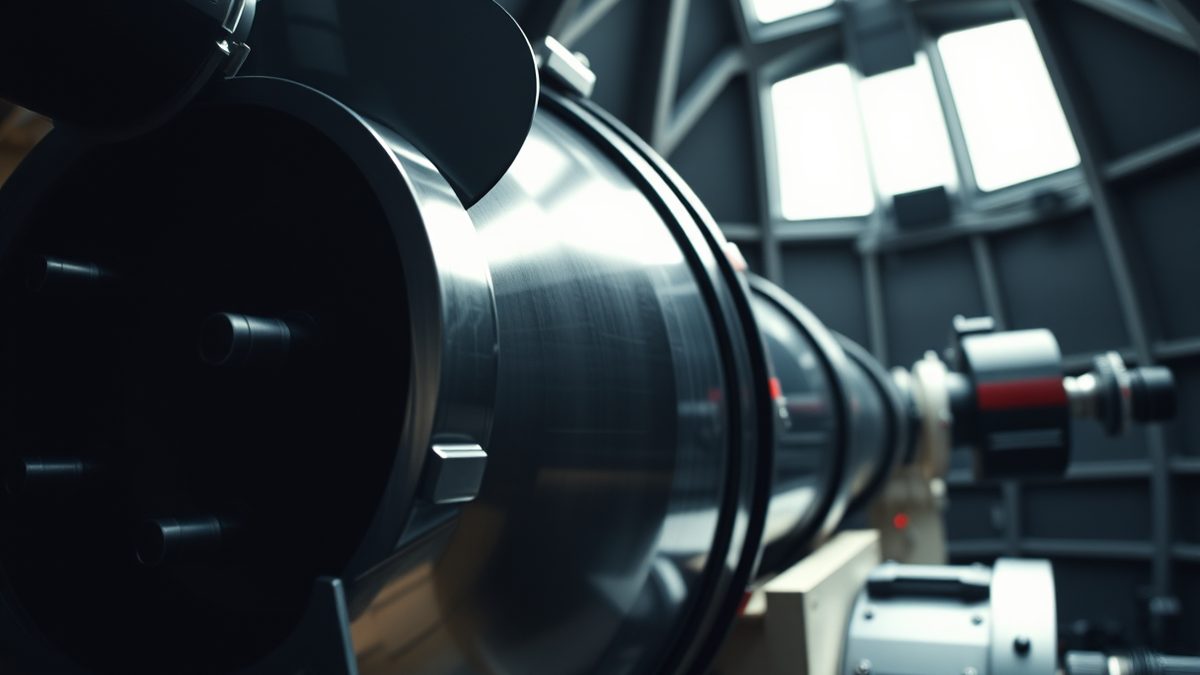
The image was taken with Rubin's 3.2-gigapixel LSST Camera, which The Debrief described as the largest digital camera in existence, mounted on the observatory's 8.4-meter Simonyi Survey Telescope. The camera has 3,200 megapixels, 67 times more than an iPhone 16 Pro camera, and a single image would need 400 Ultra HD screens to display, the BBC reported. Unibo Magazine said the telescope has the widest field of view ever achieved by an 8-meter-class ground-based instrument.
Light enters the telescope, hits the 8.4-meter primary mirror, reflects to a 3.4-meter secondary, then onto a 4.8-meter third mirror before reaching the camera, the BBC reported. The camera measures 1.65 by 3 meters and weighs 2,800 kilograms. It can capture an image roughly every 40 seconds for about 8 to 12 hours a night.
Rubin Observatory is a U.S. government facility jointly operated by NSF NOIRLab and DOE's SLAC National Accelerator Laboratory. Its LSST is a ten-year campaign to observe the entire southern sky every few nights and build an ultra-wide time-lapse record of the universe. The survey formally began on 30 June 2026, after the June 2025 First Look event, final commissioning work, an operational readiness review and the start of the alert stream, Fermilab reported.
“Today, we begin filming the greatest cosmic movie ever made,” said Brian Stone, who is performing the duties of the NSF Director.
The alert stream flags changes in the sky for scientists. Alerts are expected to peak at around 10 million a night, and hundreds of scientists around the world will analyze the data, the BBC reported.
What comes next
A second phase of the COSMOS work is expected later this year, producing individual observations and difference images that highlight objects changing between observations, The Debrief reported. The first image is part of Early Data Preview 2, which it described as Rubin's first science data release.
The LSST runs for a decade, so the record will keep growing into the 2030s. The UK is a partner in the survey and will host data centers to process the detailed snapshots, the BBC reported.
Sources
25- 01Action! NSF–DOE Vera C. Rubin Observatory begins capturing the greatest cosmic movie ever made - FermilabEN
- 02Rubin Observatory Reveals More Than Half a Million Galaxies in Landmark First Science Image - The DebriefEN
- 03NSF–DOE Vera C. Rubin Observatory Spots Record-Breaking Asteroid in Pre-Survey Observations - Rubin ObservatoryEN
- 04The Keen-Eyed Vera Rubin Observatory Has Discovered A Massive Stellar Stream - Universe TodayEN
- 05First celestial image unveiled from revolutionary telescope - BBCEN
- 06Vera Rubin Observatory: A New Era for Astronomy - Unibo MagazineEN
- 07The new Vera Rubin Telescope takes on the giant Seagull NebulaEN
- 08MTG-I2 First ImagesEN
- 09MTG-I2 weather satellite delivers first imagesEN
- 10A First-Look Image of M87* from the 2026 EHT Monitoring CampaignEN
- 11EVgo opens its first Tesla Superchargers, with hundreds more plannedEN
- 12 Giant exoplanet emerges from the dark when the James Webb Space Telescope turns out the starlight EN
- 13 Elegoo M1 Ultra review: A good first entry into the scanner market EN
- 14BYD’s electric hypercar hits 312 mph, first production car over 500 km/hEN
- 15NASA’s Swift telescope falls to Earth after nearly 22 years in spaceEN
- 16Child dies of measles in Wisconsin’s first such death since 1990EN
- 17 Early Black Friday beginner telescope deal — this portable Celestron is now 25% off at Amazon EN
- 18First: Volvo CE Electric equipment does the work, without disturbing the wildlifeEN
- 19 NASA's Swift space telescope crashes back to Earth after failed rescue attempt EN
- 20NASA is racing against time to save the Hubble Space TelescopeEN
- 21New Vera C. Rubin telescope spots possible new dwarf planet beyond PlutoEN
- 22NIST Tests AI Tool to Map Building Interiors for First RespondersEN
- 23 NASA asks industry for ideas about saving Hubble Space Telescope EN
- 24 Hubble Telescope sees cosmic 'cat's tail' that could wrap around Earth and the sun 500 times EN
- 25Price hikes aren’t all that’s at stake in FirstEnergy Ohio’s rate caseEN
All figures and quotations in this text come from the sources listed below.
Content prepared by the editorial team with AI assistance.
Sofia Marchetti
Comments
0- No comments yet — be the first.