DataMintelligence projects wearable health market at $112 billion by 2035
DataMintelligence said on 3 November that the wearable health devices market will reach $112.00 billion by 2035, citing preventive care and remote monitoring. A separate study found wrist-worn tracker data can classify the same person in different activity groups.
 Sofia MarchettiScience and health
Forecast puts market at $112 billion by 2035
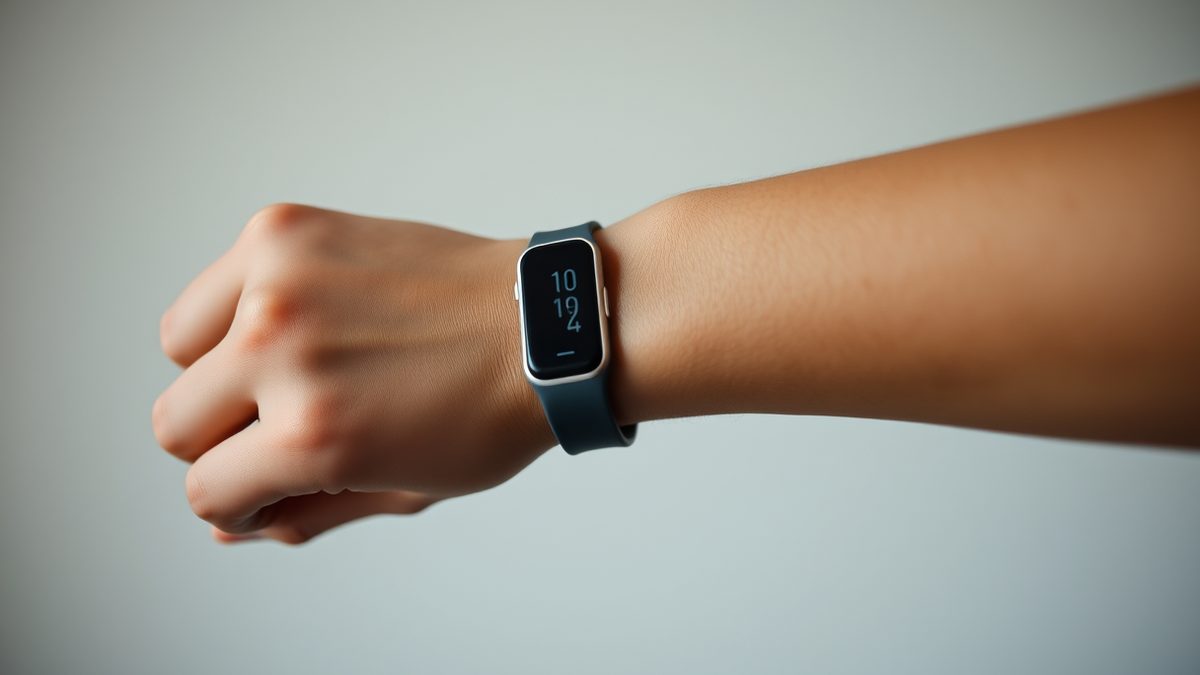
DataMintelligence said on 3 November that the global wearable health devices market will reach $112.00 billion by 2035, according to a report on openPR. The forecast covers smartwatches, fitness trackers, biosensors and medical monitoring devices. The target is nine years from the report date.
The report cites preventive healthcare, continuous health monitoring and connected medical technology as growth drivers. It also points to rising chronic disease, aging populations and demand for remote patient monitoring. The devices it covers track heart rate, blood oxygen, sleep, blood pressure and physical activity, the report said.
The report names Medtronic, Withings, Garmin, Apple, Samsung and Fitbit as major players. It says competition depends on sensor accuracy, battery performance, real-time data analytics, connectivity and integration with healthcare platforms. It also lists clinical validation and the ability to convert wearable data into actionable healthcare information as competitive factors.
Wrist data can split the same person into different groups
A study in Frontiers in Digital Health compared two ways of turning Fitbit data into activity profiles. Researchers from the National Heart Centre Singapore and other Singapore institutions used the SingHEART cohort. The analysis included 984 adults with a mean age of 45.6 years. Participants wore a Fitbit Charge HR for up to eight consecutive days, and the analysis required at least three valid wear days, with a mean of 7.1.
The team built one profile from raw accelerometry outputs such as steps, distance and floors climbed. It built another from the manufacturer's derived metrics, including active minutes and calorie estimates. The two approaches agreed on 46.2 percent of participants, or 454 of 983, the study found. The volume-based profile matched blood tests, body composition scans and cardiac magnetic resonance imaging more closely.
After merging two high-variability clusters, both metric sets produced four phenotypes: Sedentary, Average Movers, Regular Exercisers and High-Variability Movers. Sedentary participants averaged 7,183 steps a day. Average Movers averaged 8,635 steps and 6.0 kilometers. Regular Exercisers averaged 12,089 steps and 8.6 kilometers. A wearer near a boundary could fall into either group depending on the metric set the analyst chose.
Reviews find activity gains, not consistent health gains
A 2026 review in Physiological Reviews covered 39 systematic reviews and 98 original studies. It found that interventions using wearable activity trackers generally increased physical activity, according to the Daily Tribune. Evidence of improvement in cardiovascular risk markers, quality of life and mental health remained inconsistent.
A second 2026 review in The Lancet Digital Health found that health apps could improve physical activity, blood pressure, weight management and mental well-being. The researchers identified tracking, education and interaction with healthcare professionals or communities as features behind that effectiveness. They listed tracking alongside education and interaction, not as a standalone factor, the Daily Tribune reported.
Wellness survey shows activity, not wearable adoption
The Herbalife Asia Pacific Wellness Culture Survey 2026 found that 76 percent of Filipino respondents take part in a wider variety of wellness activities. Seventy-four percent said they do so more often than three years ago. Only 58 percent reported improvements in physical health, 61 percent in mental health and 59 percent in emotional well-being. The survey's findings concern wellness activities, not wearable adoption.
Herbalife Philippines general manager Kinki Lau said growing wellness awareness must be matched by accessible guidance and motivation. 'Intention alone is not enough to sustain this momentum,' Lau said, according to the Daily Tribune. The survey also found that 73 percent wanted more support for physical health, 55 percent sought additional mental health support and 50 percent wanted help with emotional well-being.
What the forecast does and does not show
The forecast is a market-size estimate. It does not report clinical outcomes or a standard for turning a wrist reading into a medical decision. The SingHEART analysis excluded people with known cardiovascular disease, previous stroke or diabetes, so its activity profiles may not transfer to those patients. The National Heart Centre Singapore recruited the cohort through print advertising, which narrows who it represents.
The Herbalife survey is self-reported. It measures what respondents say about their health, not clinical outcomes. The reviews cover activity trackers and health apps, not every wearable health device. Those limits do not make the $112.00 billion forecast wrong. They show that the market estimate and the evidence on health benefit are separate questions.
Sources
16- 01Wearable Health Devices Market Projected to Reach US$112.00 Billion by 2035EN
- 02Smartwatches, fitness apps fuel wellness boom, but are Filipinos getting healthier?EN
- 03Step Counts Outperform Smartwatch Intensity Algorithms in Health Phenotyping StudyEN
- 04Alethios expands decentralized research tools for human health studiesEN
- 05New study will map how the aging body changes hour by hourEN
- 06STAT+: Democrats win power to push back on Trump’s health care movesEN
- 07Rapid LLM development is outrunning the research meant to explain it, study findsEN
- 08STAT+: FDA, CMS look to collaborate with states on health AIEN
- 09Digitalgipfel 2026: Was lange währt, wird nicht KI-NationEN
- 10The biggest conversations in health techEN
- 11How digital membership platforms help sports NGBs leave the spreadsheets behindEN
- 12Wearable With AI Could Predict Blood Pressure Crisis 3 Days Early - Tomorrow's World TodayEN
- 13Wrist-based health signals used in cancer treatment and women's health; Garmin announces awardsEN
- 14IEEE Xplore Digital Library Adds AI AssistantEN
- 15Studying Fraudulent North Korean IT WorkersEN
- 16NVIDIA Transforms European Retail, From Digital Discovery to Physical OperationsEN
All figures and quotations in this text come from the sources listed below.
Content prepared by the editorial team with AI assistance.
Sofia Marchetti
Comments
0- No comments yet — be the first.