ASAP Act clears House Ways and Means Committee unanimously
The Alzheimer's Screening and Prevention Act cleared the House Ways and Means Committee with unanimous bipartisan support, BlackDoctor reported, advancing a bill that would create a Medicare coverage pathway for FDA-cleared Alzheimer's blood tests.
 Sofia MarchettiScience and health
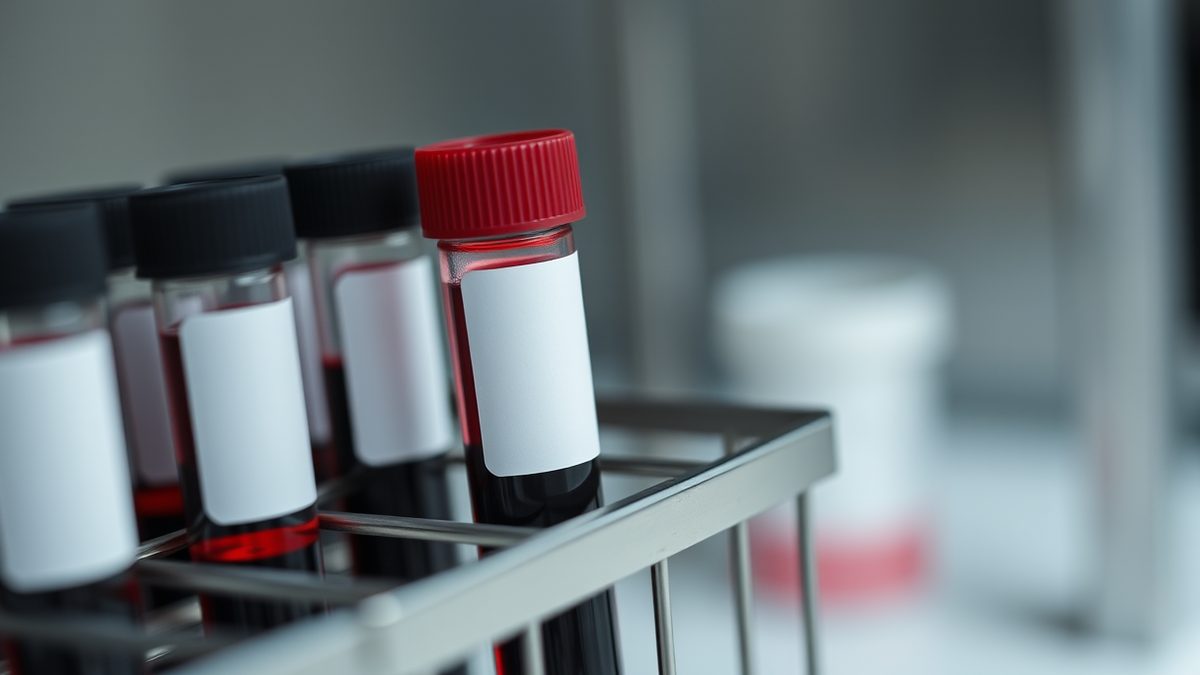
The legislation would authorize the Secretary of Health and Human Services to provide Medicare coverage of FDA-approved or cleared blood tests for detection of Alzheimer's. It now needs passage by the full Congress.
Why the vote matters
Medicare does not cover Alzheimer's blood tests for pre-symptom screening. Federal law allows Medicare to cover preventive services only when Congress specifically authorizes them or the US Preventive Services Task Force recommends them, Medical Daily reported. The blood test does not yet meet that threshold. Joe Grogan, former director of the Domestic Policy Council and a researcher at the USC Schaefer Institute, said at a June 2026 policy event that coverage "is going to take an act of Congress," according to Medical Daily. Coverage for symptomatic patients is incomplete or variable, Being Patient reported. The anticipated out-of-pocket cost is $500 to $1,000, according to ALZRA, less than a PET scan that can cost several thousand dollars but still a barrier for Medicare enrollees on fixed incomes, Medical Daily reported.
Four cleared tests, narrower labels
Between May 2025 and August 2026, the FDA cleared four blood tests to help doctors evaluate Alzheimer's in people with cognitive symptoms, Being Patient reported. Medical Daily reported in June 2026 that both tests approved by then were authorized for patients 55 and older who already had memory problems or other signs of cognitive decline. Neither was approved for screening asymptomatic adults. The tests are sold as an alternative to a spinal tap or a PET scan, both invasive and expensive and often unavailable outside major medical centers, Medical Daily reported.
The first clearance went to the Lumipulse G pTau217/beta-amyloid 1-42 plasma ratio test, made by Fujirebio Diagnostics, in May 2025. Patients who score above the high-end cutoff have more than a 90 percent probability of amyloid plaque in the brain, according to Johns Hopkins Medicine. In the clinical validation study, 91.7 percent of positive results were confirmed by a follow-up PET scan or spinal fluid test, and 97.3 percent of negative results were cleared through further investigation, Medical Daily reported.
The tests look for fragments of two proteins, beta-amyloid and tau, that reach the bloodstream, Being Patient reported. A low ratio of amyloid-beta 42 to amyloid-beta 40 suggests plaques may be building in the brain. Elevated pTau-217 tracks closely with amyloid plaques and tau tangles.
Not every marker is read the same way. Dr. Howard Fillit, chief science officer at the Alzheimer's Drug Discovery Foundation, told Being Patient that "pTau-217 seems to be emerging as the best blood test." Dr. Marwan Sabbagh, a behavioral neurologist at Barrow Neurological Institute, says a pTau result is mainly a signal of amyloid rather than tau tangles and that the mix-up is a common source of confusion.
Maria C. Carrillo, chief science officer at the Alzheimer's Association, said in an August 2026 statement that "each FDA clearance gives clinicians another validated option to work with."
A result is not a diagnosis
A blood test is not a diagnosis on its own, and it is not meant for everyone, Being Patient reported. A positive amyloid result is not a dementia diagnosis on its own, and labeling positions the tests as one input alongside clinical history, cognitive testing and, when needed, imaging or spinal fluid analysis, Medical Daily reported.
Who the gap hits hardest
Nearly 7 million Americans are living with Alzheimer's, a figure the Alzheimer's Association projects will reach 13.8 million by 2060, BlackDoctor reported. Older Black Americans are about twice as likely as older white Americans to have Alzheimer's or another dementia and are more likely to have warning signs missed or a diagnosis delayed. A University of Southern California cost analysis estimates the US spent $781 billion on dementia in 2025. Researchers behind that analysis say equitable early detection will require Medicare coverage, physician education and rural access infrastructure that does not yet exist, Medical Daily reported.
What happens next
The bill still must pass the full Congress before it can become law. BlackDoctor describes it as having strong bipartisan support after the committee vote.
Sources
31- 01The ASAP Act: BlackDoctor Film Festival Screening Sparks 'Unforgettable' Conversation on Alzheimer's Medicare Pending PolicyEN
- 02New FDA-Approved Blood Tests Can Detect Alzheimer's Before Symptoms Worsen, but Access Remains LimitedEN
- 03Alzheimer's Blood Tests: How Blood-Based Biomarkers WorkEN
- 04Alzheimer's Blood Test Recall Stays Open Across 13 States Even as Newer Amyloid Tests Reach the MarketEN
- 05A simple blood test could reveal Alzheimer’s risk 10 years before symptomsEN
- 06Top 10: Der beste E-Scooter im Test – Testsieger mit 2400 W, Pendler-Tipp 439 €EN
- 07Heizkörperthermostat Eve Thermo 5. Gen im Test: mit Matter-Binding, ohne CloudEN
- 08heise+ | MacBook Pro mit PROLED-XDR-Display im Test: Das kann der Touch-MacEN
- 09STAT+: Medicare delays controversial remote patient monitoring rule to 2029EN
- 10 Hackers target French blood service fridges following supermarket attacks EN
- 11STAT+: A closer look at ProMis Neurosciences and its Alzheimer’s drugEN
- 12Why Testing Automated Driving Is Harder Than It LooksEN
- 13French blood banks hacked in latest cyber-attack on EuropeEN
- 14Experts Demonstrate Barracuda Email Security Gateway Chain Enabling Root Access Without LoginEN
- 15Data-Driven Modeling of Molten Chloride Corrosion Using Static Test DataEN
- 16Structural Conditional Independence Test via Neural Quantile ResolutionEN
- 17Test-Time Self-Play: Scaling without a VerifierEN
- 18French blood storage impacted by freezer hacks as theories swirl about culpritsEN
- 19Blood banks targeted in latest European fridge cyberattacksEN
- 20Gene editing could replace a lifetime of medication, but there's a catchEN
- 21‘The ticket is the gateway’: How destination events, sprint races and greater accessibility are changing the modern F1 fanEN
- 22Scientists discover new Alzheimer’s drug that repairs DNA damage and reduces brain inflammationEN
- 23Leapwork Play Reaches GA with Governance for Playwright TestsEN
- 24Scientists reverse liver cell aging and cut Alzheimer’s-linked protein in halfEN
- 25Cyberattack disrupts blood storage refrigeration systems in FranceEN
- 26New Research Tests Whether AI Models Know Their Own ThoughtsEN
- 27Barracuda Flaws Could Be Chained to Bypass Authorization and Gain Root AccessEN
- 28Red Hat Patches 9.8-Rated Linux TCP RCE Flaw While Ubuntu Releases Fixes for TestingEN
- 29Athenahealth patients can ask Claude about their medical records nowEN
- 30Google Disrupts 1.3 Million-Device Android Botnet, Says TV Box Maker Sold Criminal AccessEN
- 31How to Expand Reliable, Flexible Access to SpaceEN
All figures and quotations in this text come from the sources listed below.
Content prepared by the editorial team with AI assistance.
Sofia Marchetti
Comments
0- No comments yet — be the first.