Samsung's second Texas plant reportedly pre-sold to AMD and Nvidia for 2030 output
Samsung Electronics will make high-bandwidth memory base dies for AMD and Nvidia at its second Taylor, Texas plant, with orders already covering the site's entire planned output, according to a Maeil Business Newspaper report published on 3 November 2026. Most of the committed volume is for AMD, and mass production is not expected until 2030.
 Grace OkonkwoAI, models and technology
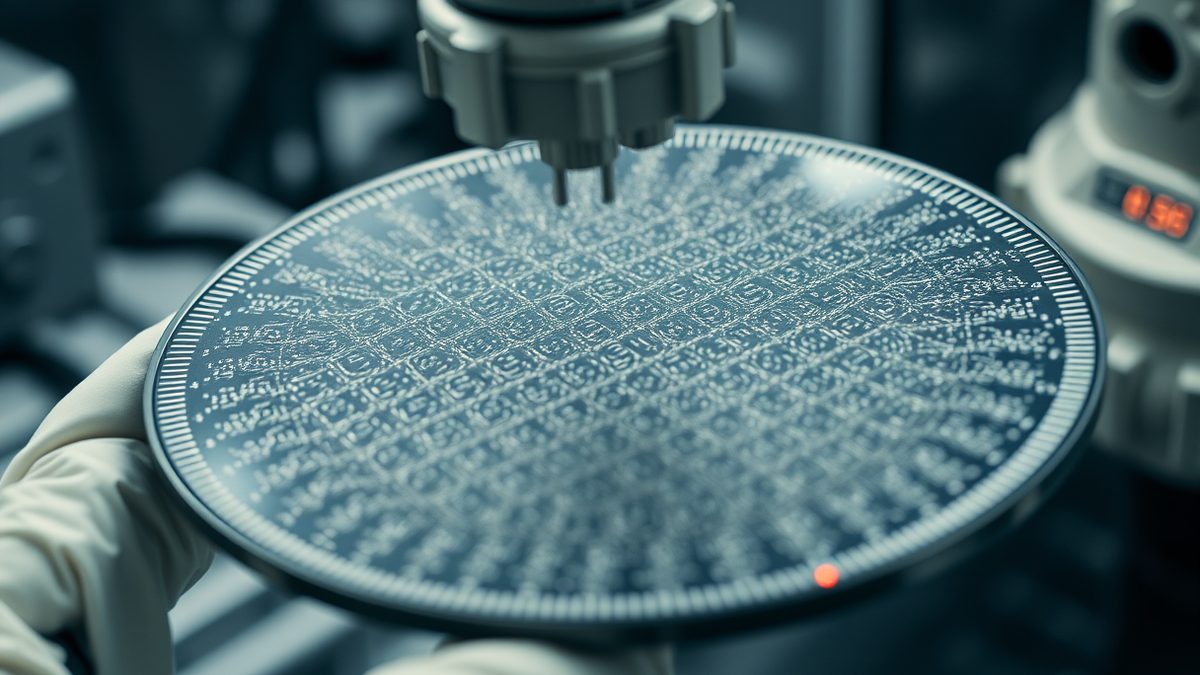
A Texas fab pre-sold to AMD and Nvidia
The report landed on 3 November. Maeil Business Newspaper, citing industry sources, said the second Taylor plant will build HBM base dies for both companies.
According to the newspaper, Samsung has secured orders for the plant's entire planned output, and most of that volume is for AMD. Samsung declined to comment, so none of the reported customer commitments are officially confirmed. The site will use 2-nanometer technology and cover about 2.7 million square feet, roughly 1.5 times the size of the first Taylor plant. That first plant is anchored by a Tesla supply agreement valued at approximately $16.5 billion. Crypto Briefing described the new facility as Taylor Fab 2, a sibling to the Tesla-linked plant.
Why the deal matters beyond Samsung
If the report holds, AMD becomes the main customer of a plant that has not yet started construction. For AMD and Nvidia, the commitments lock in specialized base die capacity years before it runs. They add no chips before 2030.
The commitments do not immediately boost Samsung's foundry or HBM market share, GuruFocus noted. TSMC currently dominates the foundry market, and landing orders from AMD and Nvidia would position Samsung as a more credible alternative. Samsung's foundry business has struggled to attract major customers away from TSMC, and a large AMD order could give its 2-nanometer process a needed boost. The arrangements also suggest that leading AI chipmakers are locking up long-term access to specialized manufacturing capacity. Samsung has not said what the contracts are worth, and the reported volumes have not been disclosed.
Buyers of AI accelerators get a second source of base dies in the long run. They get nothing extra in the near term.
What the plant will actually make
The base die is the logic layer at the bottom of an HBM stack, and it manages how the memory above it talks to the AI processor. HBM stacks combine multiple DRAM dies to deliver the bandwidth AI accelerators need. Samsung intends to make base dies in Texas and pair them with DRAM core dies produced in South Korea, so the finished stacks are a transpacific product. Current HBM4 technology uses base dies built on a 4nm process, while the Taylor plant aims for 2-nanometer or more advanced nodes.
The split matters for how American the final stack really is.
Building base dies in Texas adds domestic US capacity for a critical AI component, though the DRAM core dies still come from South Korea, which limits how much of the stack is made in America.
The timeline and the spending
Construction is due to start formally this month, with equipment installation expected from February 2029 and mass production in 2030. That leaves roughly four years between groundbreaking and the first revenue from the site, a gap investors will have to carry.
Samsung has increased capital spending by over 60% to boost semiconductor competitiveness, and the company is betting that AI memory demand holds through the gap. The heavy spending, combined with the wait, means profit margins and cash flow could face pressure if AI chip demand disappoints before the plant runs. The industry is cyclical, so the long lead time amounts to a bet on sustained demand.
What happens next
The next catalyst will be confirmation of the customer agreements and construction progress at the Texas facility. The nearer test is the first Taylor plant, expected to reach full operational capacity by the end of 2026 and then ramp toward production in 2027.
Equipment installation at the second plant is scheduled from February 2029, ahead of mass production in 2030. Until then, the reported bookings are a public signal of demand for the site.
Sources
28- 01Samsung to make AMD, Nvidia chip parts at second Texas plant, Maeil Business reportsEN
- 02Samsung to make AMD, Nvidia chip parts at second Texas plant: ReportEN
- 03Samsung Secures AMD, Nvidia Orders for New Texas Chip PlantEN
- 04Samsung Secures AMD, Nvidia Orders for New Texas Chip PlantEN
- 05Samsung to produce AMD and Nvidia chip parts at second Texas plantEN
- 06AMD Could Become Samsung's Biggest Customer at New Texas Chip PlantEN
- 07Samsung Targets Texas Plant for AMD and Nvidia Chip OrdersEN
- 08Samsung ka bada daanv! Texas plant mein banenge AMD aur Nvidia ke AI chipsHI
- 09The new factory in Texas by Samsung produces chips for AMD and NVIDIAEN
- 10Samsung targets second Texas plant to produce HBM base dies for AMD and Nvidia: reportEN
- 11 Nvidia can only fulfill 1% of China’s massive $70 billion GPU order for AI chips, report claims — supply constraints choke export-friendly RTX Pro 5500 deliverEN
- 12Nvidia tells data center partners to cut China exposure, limits RTX chip sales to mainlandEN
- 13Chipfertigung: EU investiert Hunderte Millionen in Chipdesign-PlattformEN
- 14Texas was the new epicenter of the AI data center buildout. That might be kaput.EN
- 15 Nintendo ROM chip supplier Macronix quits to focus on chips for AI data centers, reports indicate EN
- 16‘Every solar plant can be a data center’EN
- 17What does a blue Texas sweep mean for Elon Musk, Tesla & SpaceX?EN
- 18Chinese AI chipmaker Iluvatar CoreX says new GPU matches Nvidia’s H200 as chip gap closesEN
- 19A Michigan utility’s iffy plan to trap CO2 from its new gas plantsEN
- 20Accelerating Plug-And-Play Prototyping In Chiplet-Based DesignsEN
- 21Beyond The Chip: How AI Is Reshaping Semiconductor Design And ManufacturingEN
- 22NVIDIA's controversial DLSS 5 is coming to RTX Remix to 'enhance' older gamesEN
- 23Tesla wins trade zone status for Texas Megapacks, but China tariffs stayEN
- 24 Nvidia tells data center operators to limit business from Chinese customers with new global restrictions, report claims EN
- 25Chiplets: Meta-Scale Chiplet Velocity Accelerating AI SoC Development to Match the Rapid Evolution of AI ModelEN
- 26Kazakhstan Eyes Ambitious 2035 Goal for 2 Nuclear Power PlantsEN
- 27Synopsys to Offer EDA Software Through European Chips Design PlatformEN
- 28 AI chip smugglers exploit trade control loophole to bring banned HBM from South Korea into China EN
All figures and quotations in this text come from the sources listed below.
Content prepared by the editorial team with AI assistance.
Grace Okonkwo
Comments
0- No comments yet — be the first.