SpaceNews: Quantum Space Signs Launch Processing Deal for Prime Mission
Quantum Space said on 30 September it has executed a spacecraft processing work order with All Points Logistics for its Prime pathfinder mission, which is targeting the second half of 2027 for launch from Vandenberg Space Force Base.
 Sofia MarchettiScience and health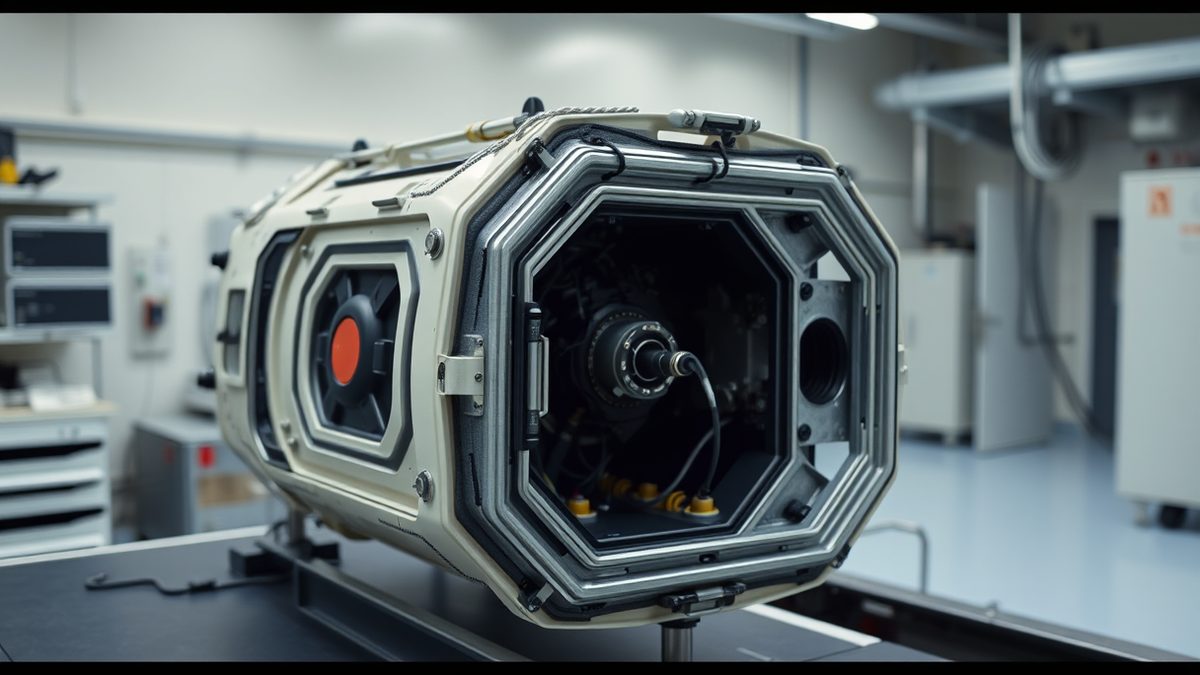
SpaceNews published the announcement on 30 September. Quantum Space is based in Rockville, Maryland. The company has completed a Systems Integration Review for Prime. It is now moving into what its president, Kerry Wisnosky, described as the detailed planning and execution stage required for a launch campaign.
Prime is the first of Quantum Space's high-performance class spacecraft. According to the company, the vehicle is designed for significant maneuverability, long-duration operations and payload hosting for national security and commercial customers. The mission will evaluate spacecraft performance, payload hosting and data collection. It serves as a pathfinder for the company's Ranger and Scout platform. The work order builds on an existing Master Services Agreement between Quantum Space and All Points Logistics, based in Merritt Island, Florida. Under the new scope, All Points will provide clean-room facilities, propellant servicing support, launch-site safety and operational reviews, ground support activities and transportation to the launch vehicle integration facility. The work is scheduled to support Prime launch preparations in 2027 at Vandenberg Space Force Base in California.
"This agreement comes as Prime moves into the detailed planning and execution stage required to successfully conduct a launch campaign," Wisnosky said in a statement carried by SpaceNews. "Many activities must come together between completing a spacecraft and getting it safely integrated onto a launch vehicle, and All Points brings the specialized infrastructure, people and launch-site experience required to help us execute that process."
Phil Monkress, president and CEO of All Points Logistics, said his company's launch infrastructure and spacecraft processing capabilities can make a difference on the Prime mission. "We are pleased to expand our relationship with Quantum Space and support their team as Ranger Prime advances toward launch," he said.
Wisnosky added that securing launch-site processing capability is another element of mitigating execution risk as Prime moves toward flight. He said the company's focus is now on completing the spacecraft, executing the environmental test campaign and moving through launch integration and ultimately to on-orbit operations.
Other space mission science results this week
SpaceNews also reported on 30 September that AstroForge plans to fly a spacecraft next year that will test its ability to operate fully autonomously using artificial intelligence. The space mining company's demonstration will examine whether an AI system can handle navigation and decision-making without ground intervention, according to the report by Jeff Foust. The story was published at 03:03 UTC on 30 September.
On the same day, Tech.eu reported that Lithuania's Blackswan Space closed a 2.5 million euro second investment round led by Iron Wolf Capital, bringing total funding to 3.2 million euro. The company is taking its autonomous navigation payload into orbit in 2027 before supporting Europe's first in-space refuelling mission a year later, according to the report. Blackswan's RPO Kit is a plug-and-play spacecraft payload designed to autonomously perform complex navigation manoeuvres using vision-based target detection, identification and tracking. The company has grown from two technical experts to a team of 25 people across Vilnius, London and Denver.
Endpoints News reported on 30 September that Varda raised a 251 million dollar Series D to advance pharmaceutical manufacturing in space. The California startup is pursuing a long-sought area for drug production, according to the report, which was updated at 12:52 PM EDT on the same day.
Microsoft Research published a blog post on 30 September describing an end-to-end machine learning pipeline that forecasts space weather risk across 66,935 substations in the continental United States. The system combines solar-wind observations, forecasts of the Auroral Electrojet and Disturbance Storm Time indices, physics-informed constraints, local geological conductivity and grid infrastructure data. According to the research blog, the pipeline detected nearly 80% of major space-weather events during the evaluation period and can warn grid operators 30 to 60 minutes before a specific risk appears.
Ars Technica reported on 30 September that Russia's long-delayed crewed spacecraft is undergoing renewed testing. Dmitry Bakanov, the chief executive of Roscosmos, told Interfax that tests of the spacecraft's parachute system will begin this fall. According to the publication, the spacecraft will also undergo tests in emergency rescue modes during an emergency at the launch pad later this year, and in 2027 tests will occur in the zone of maximum dynamic pressures. The article says Russian space officials are holding to a debut crewed launch in 2028 or 2029, likely on the Angara A5M rocket. Ars Technica notes it is not clear from the report whether these tests will involve real flight hardware, boilerplate vehicles or mockups.
Carnegie Mellon University announced on 30 September that a 500 million dollar gift from Ken Griffin will rename its School of Computer Science the Kenneth C. Griffin School of Computer Science. The gift is part of a 1 billion dollar philanthropic investment in Carnegie Mellon's Pittsburgh mission and a broader 3 billion dollar commitment that includes building a new campus in Miami, according to the university. The remaining 500 million dollars of the Pittsburgh investment will provide flexible support for the university's highest priorities.
Also on 30 September, Quote Investigator published a trace of the saying that computer science is not about computers, any more than astronomy is about telescopes. The earliest close match located by QI appeared in the 1986 book "Machinery of the Mind: Inside the New Science of Artificial Intelligence" by science journalist George Johnson, with the attribution anonymous.
Two developer-focused posts rounded out the day's output. A blog at Deferworks published the first part of a series on join ordering in query optimization, covering dynamic programming approaches from the Munich school of query optimization. And a GitHub project called Helheim released an Emacs configuration framework built around Hel, a Helix emulation layer for Emacs.
Sources
10- 01Quantum Space Executes Launch Processing Agreement with All Points Logistics for Prime MissionEN
- 02AstroForge to test full spacecraft autonomy using AIEN
- 03Blackswan Space raises €2.5M to take autonomous spacecraft navigation into orbitEN
- 04Varda gets $251M to make medicines in space, a long-sought area for drugsEN
- 05Forecasting space weather risks on power gridsEN
- 06So what's happening with Russia's new, long-delayed crewed spacecraft?EN
- 07$500M Gift Will Fuel Next Era of Computer Science at Carnegie MellonEN
- 08Quote Origin: Computer Science Is Not About Computers, Any More Than Astronomy Is About TelescopesEN
- 09Join Ordering, Part 1: The Shape of the Search SpaceEN
- 10Helheim-Emacs: Helheim to Helix is what Spacemacs and Doom are to VimEN
All figures and quotations in this text come from the sources listed below.
Content prepared by the editorial team with AI assistance.
Sofia Marchetti
Comments
0- No comments yet — be the first.