Spain extends Almaraz nuclear plant licence to June 2030
Spain's Ministry for Ecological Transition renewed the operating licence for both Almaraz reactors until 8 June 2030 in an order published on 14 August 2026, postponing shutdowns due in 2027 and 2028 to shield consumers from energy market volatility.
 Sofia MarchettiScience and health
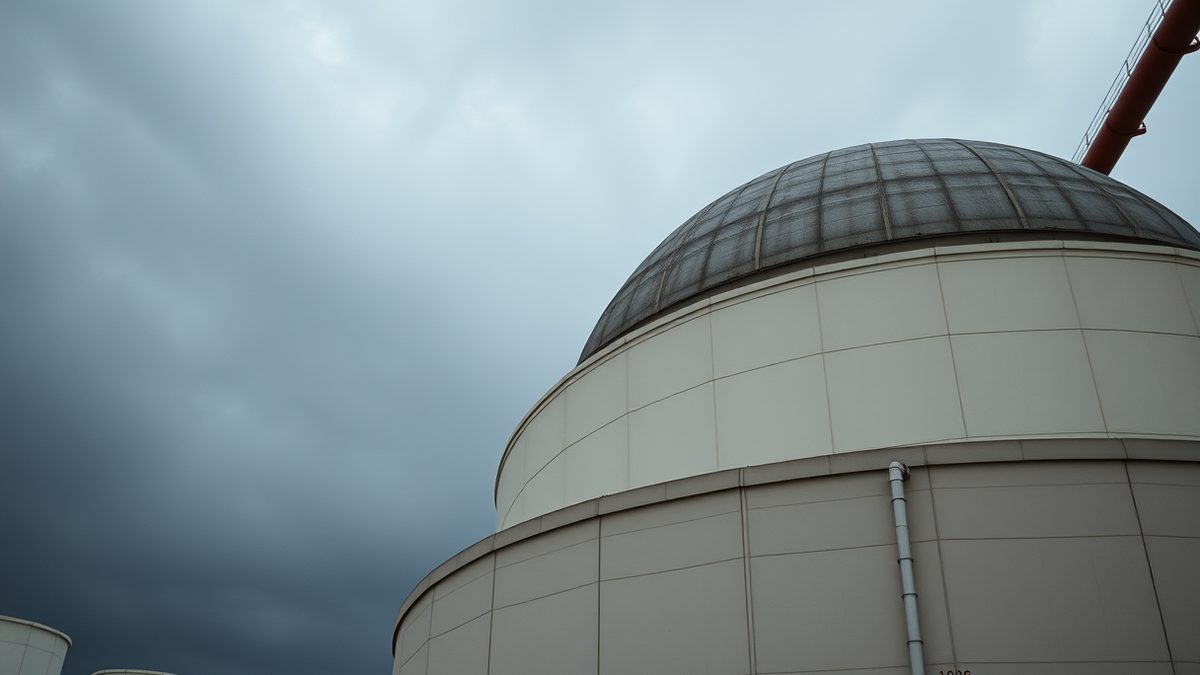
The order, published in the Official State Gazette, renews the operating authorisation for units I and II of the plant in Extremadura, Diari Ara reported. Under the 2019 timetable agreed between the government and energy companies, unit 1 was due to close in November 2027 and unit 2 in October 2028, according to Yahoo. Eurasia Review gives October 2027 for unit 1.
Why Madrid acted
The ministry tied the decision to uncertainty in international energy markets caused by the conflict in the Middle East and the war in Ukraine, NucNet reported. In a statement, it said the limited and temporary extension "may help to moderate the exposure of Spanish consumers to previously unforeseen price spikes" while measures to promote renewables and storage are deployed. The plant meets the ministry's requirements on security of supply and zero cost for consumers, Yahoo reported. The April 2025 blackout on the Iberian Peninsula had put nuclear's role back at the heart of the debate.
Pressure from Brussels built before the decision. In February 2026 a delegation of ten MEPs led by Bogdan Rzońca, chair of the European Parliament's petitions committee, visited Almaraz after a petition from workers, local governments and residents. Rzońca called the closure "an ideological issue" and said more than 10,000 local residents opposed it. In May 2026 the committee approved a report urging Madrid to reconsider the timetable, saying the shutdown rested on "purely political and ideological reasons, without sufficient technical basis". MEP Elena Nevado, of the European People's Party, said there was "no comprehensive impact assessment" and noted the plant sustains around 4,000 direct and indirect jobs.
The regulatory path
The Nuclear Safety Council issued a favourable report on 16 July 2026, saying the plant met the conditions to operate safely until 2030, Yahoo reported. The regulator found it met standards on operation, maintenance and waste management, according to NucNet. Operator Centrales Nucleares Almaraz-Trillo requested the extension at an extraordinary board meeting on 30 October 2025, and the ministry asked the council for a mandatory report on 17 November, Eurasia Review reported. Sur in English reported on 16 July that the government then had to decide before the end of October.
Reaction
Foro Nuclear president Marta Ugalde called the extension "great news" and said nuclear provides "firm, synchronous, and inertial power" that strengthens independence from fossil fuels, Eurasia Review reported. World Nuclear Association director general Sama Bilbao y León said she was "very encouraged". Employers' associations and the Partido Popular applauded the move, while Sumar, a partner in the governing coalition, distanced itself, Diari Ara reported. The citizens' platform Yes to Almaraz, Yes to the Future, which groups more than a hundred municipalities and business groups in the Cáceres area, welcomed it; its president, Fernando Sánchez, said the decision "restores confidence to thousands of families". Defenders of renewables criticised the extension, Renewables Now reported.
What happens next
Almaraz, which has generated more electricity than any other Spanish plant, supplies around 7% of national electricity production, Yahoo reported. Nuclear accounts for around 20% of Spain's electricity production, while renewables supply more than half of the country's energy mix, according to Red Eléctrica data cited by Mezha.net. The ministry said the extension does not alter the closure of the entire nuclear park in 2035, Eurasia Review reported. Spain's phase-out covers seven reactors at five plants, none due to run past 2035. Under the 2019 timetable, Ascó I and Cofrentes are due to close in 2030, Ascó II in 2032, and Vandellós II and Trillo in 2035.
Sources
19- 01Spain Approves Almaraz Nuclear Station Lifetime Extension In Light Of Energy CrisisEN
- 02Spain Extends Almaraz Nuclear Plant Operations Through 2030EN
- 03The nuclear safety council gives the go-ahead for the Almaraz power station to remain in operation until 2030EN
- 04The State extends the life of the Almaraz nuclear power plant until 2030EN
- 05Spain Approves Extended Operation Of Almaraz Nuclear Power PlantEN
- 06Spain extends Almaraz nuclear plant operations to 2030, delaying closure by three yearsEN
- 07Spain's Almaraz nuclear power plant now to work until 2030EN
- 08Spain extends Almaraz nuclear plant permit angering defenders of renewables - Renewables NowEN
- 09Spain extends Almaraz nuclear plant operations to 2030, delaying closure by three yearsEN
- 10Kazakhstan Eyes Ambitious 2035 Goal for 2 Nuclear Power PlantsEN
- 11Electric Buses Need a Plan for the Next Operating ContractEN
- 12Virtual power plants can help avoid overbuilt grid if AI boom goes bustEN
- 13A Michigan utility’s iffy plan to trap CO2 from its new gas plantsEN
- 14Regulating Autonomous Mobility-on-Demand Operators with Fixed and Adaptive Penalties: A Multi-Agent Reinforcement Learning ApproachEN
- 15AI Data Centers Are Fueling a Nuclear ComebackEN
- 16Capacity market, electricity costs and nuclear power: three decisions that will shape the energy agenda after the Spanish elections - Energía EstratégicaEN
- 17The DOE announces $5B loan to Constellation for nuclear upratesEN
- 18China’s optical suppliers extend sell-off as fears of slower AI growth trump upbeat earningsEN
- 19FCC clears drone operations in 800MHz bandEN
All figures and quotations in this text come from the sources listed below.
Content prepared by the editorial team with AI assistance.
Sofia Marchetti
Comments
0- No comments yet — be the first.