Star Catcher to test space-to-space laser power beaming on SpaceX launch
Star Catcher is preparing to launch its Protostar prototype aboard a SpaceX rocket this week and beam energy by laser to a free-flying cubesat, which the company says would be the first time lasers have transferred power between two untethered objects in orbit.
 Sofia MarchettiScience and health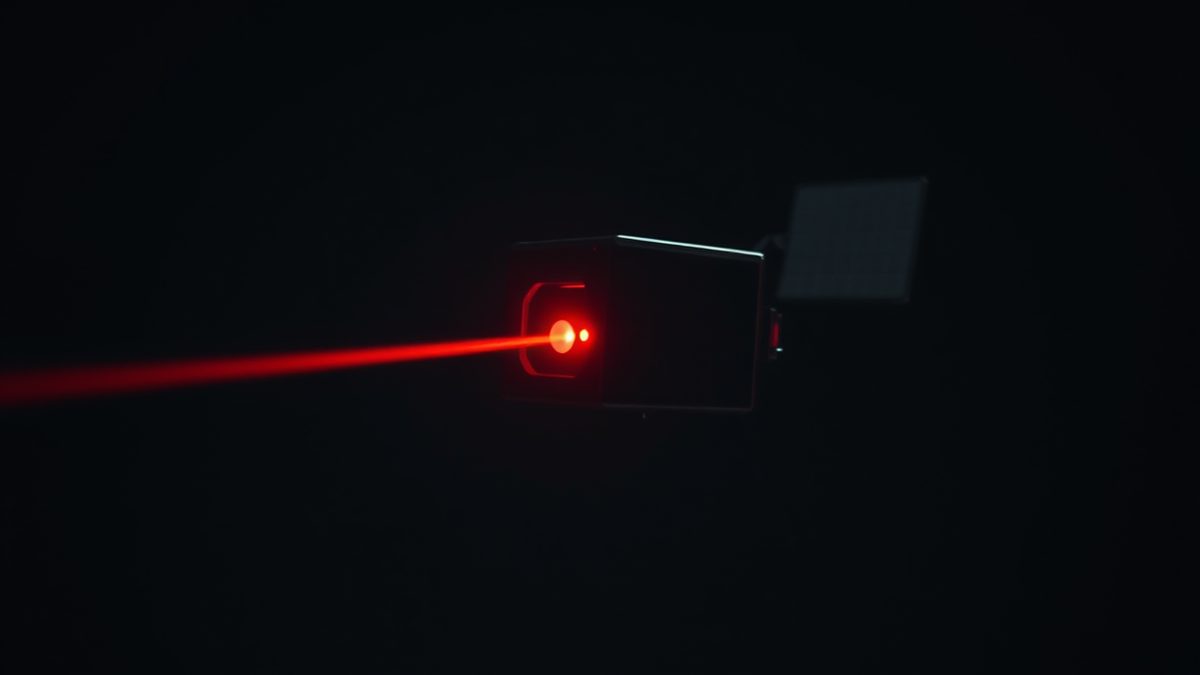
Star Catcher, a startup based in Jacksonville, Florida, is preparing to launch its Protostar prototype aboard a SpaceX rocket this week, according to WIRED, which reported the plan on 28 September. The satellite will fire a laser at a cubesat launched at the same time. The company says this would be the first transfer of energy by laser between two untethered objects in space. The cubesat will move away from Protostar during the test, and Star Catcher plans to compare the power it receives against its own models.
The idea is older than most of the hardware involved. WIRED traces it to a 1941 science fiction piece by Isaac Asimov and notes that NASA studied the concept in the 1970s. It stayed on the shelf because launch was too expensive. "Launching large amounts of hardware into orbit was extremely expensive, so generating power in space and transmitting it elsewhere rarely made practical sense," Hanieh Fattahi, a researcher at the Max Planck Institute for the Science of Light, told WIRED. Falling launch costs changed the arithmetic.
Star Catcher's pitch is that satellites, and the data centers that Google, SpaceX and a string of startups want to put in orbit, need power that no grid can supply. "There isn't a power grid in space," chief executive and cofounder Andrew Rush told WIRED. "Everybody just goes on these little camping trips."
The company's satellites, called power nodes, collect sunlight through lenses and concentrate it into wavelengths it says can deliver up to 10 times more power than diffuse sunlight. The beam then goes out as a laser pointed at a customer's solar panels. Rush argues the payoff for operators is more uptime and more profit, because smaller batteries leave room for more instruments or, in the case of orbital data centers, more GPUs.
There is commercial interest on paper. Star Catcher raised $65 million earlier this year, won a $30 million award from the US Space Force, and has signed 40 letters of intent plus 10 power purchase agreements, WIRED reported. The same SpaceX mission carries Google's first attempt at a space-based data center.
The ground record is modest next to the ambition. Star Catcher bested a DARPA mark last year by delivering more than 1 kilowatt to off-the-shelf solar panels, enough to run a microwave. The Naval Research Laboratory ran a space laser experiment in 2023 for 100 days, but the beam travelled less than 5 feet and operated at 11 percent efficiency. Fattahi told WIRED that efficiency, tracking, heat management and surviving years of cold vacuum all still need work. Rush describes his company as being in the "crawl" phase.
The launch itself is the other half of the story. CNBC reported on 28 September that the Federal Aviation Administration issued a licence authorization for the SpaceX Starship Super Heavy Flight 14 launch and reentry operations on 26 September. The 75-minute window opens at 8:15 a.m. ET from Starbase, Texas, according to SpaceX's website. The flight is meant to put Starship into orbit for the first time and deploy 26 Starlink V3 satellites. None of the 13 earlier flights were intended to reach orbit.
SpaceX is counting on Starship to scale Starlink, its largest and only profitable segment as of the second quarter, CNBC reported. The company operates around 11,000 active satellites, against roughly 650 for Eutelsat OneWeb. Its new V3 satellites, built in Redmond, Washington, carry solar arrays that generate twice as much power as earlier generations and are designed to transmit data faster.
Amazon's rival constellation is the contrast. The Verge reported on 28 September that twelve weeks have passed since Amazon's last successful Leo deployment, 29 satellites on a United Launch Alliance Atlas V on 2 July, taking Leo's launched total to 396. Vulcan has been grounded by the US Space Force since February 2026 after a booster anomaly. Blue Origin's New Glenn has been grounded since its only launchpad was destroyed in May. An unspecified Ariane 6 component issue is expected to disrupt launches for the remainder of 2026. Amazon has ordered six more Arianespace A64 launches, bringing its contracted total to 24, but 36 Leo satellites previously expected to fly in October have been scrubbed from the European spaceport website. The mid-2026 deadline Amazon set for commercial availability has passed without an update.
Not every space power idea needs orbit. CleanTechnica reported on 27 September that Cultivate Power's 11-megawatt Bowes Solar array in Elgin, Illinois, fits 22 acres hemmed in by subdivisions, high-voltage lines, train tracks and a wetland. It uses a high-density racking system from Planted Solar that needs about 2 acres per MWp instead of the usual 5 to 7. Chronicle Media, cited by CleanTechnica, said subscribers will save $13.9 million on ComEd bills over 40 years and the site will generate $2.1 million in property tax revenue over the same period.
Sources
4- 01Space Lasers Are About to Get Their First Real Test Generating EnergyEN
- 02SpaceX prepares to send Starship rocket to orbit for first timeEN
- 03SpaceX preps next-gen Starlink as Amazon's competitor stallsEN
- 04Space Squeeze Forces Solar Developers To Get CreativeEN
All figures and quotations in this text come from the sources listed below.
Content prepared by the editorial team with AI assistance.
Sofia Marchetti
Comments
0- No comments yet — be the first.