Toyota's caravan drop, Tesla's fan patent: electrification bets get stranger
Toyota dropped a 1,675 lb caravan onto the roof of its electric Hilux at Bentwaters airfield on 30 September and the pickup drove away. The stunt lands in the same week that grid and electrification data showed the harder numbers behind the transition.
 Dr. Amara PatelEconomy, business and world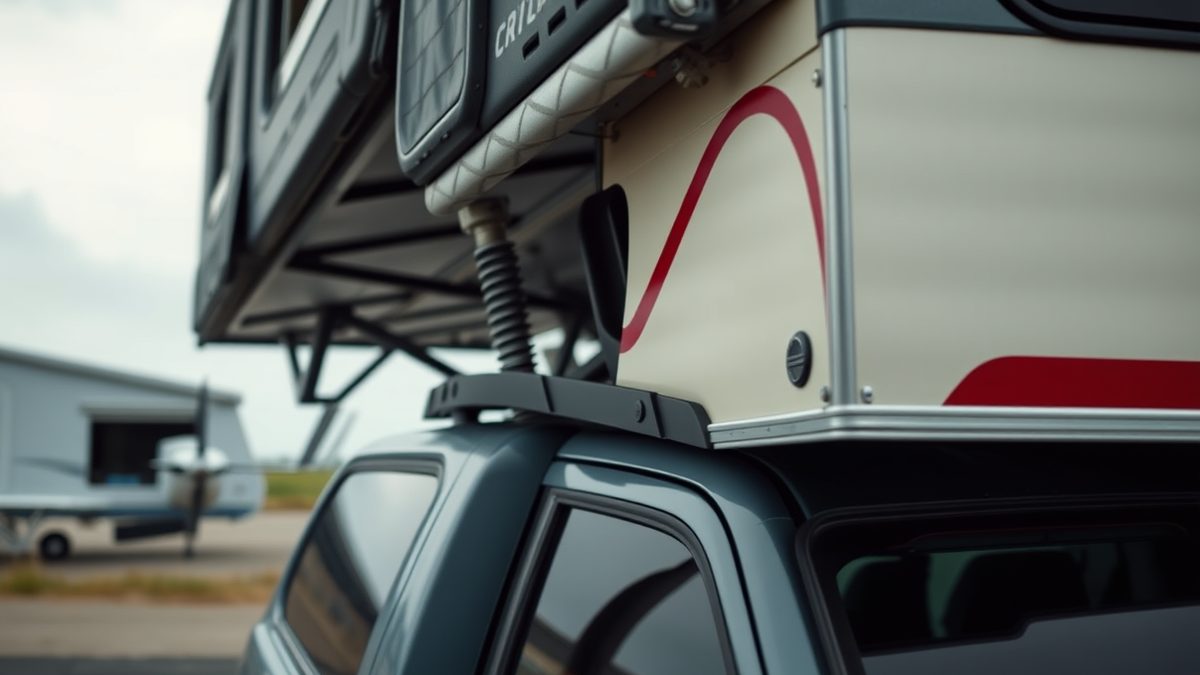
Toyota hoisted a 1,675 lb (760 kg) caravan 30 feet into the air with a crane and dropped it onto the roof of its electric Hilux at Bentwaters airfield in Suffolk, according to Electrek. Toyota said the truck powered up and drove off immediately.
The challenge was chosen after the company invited UK subreddits to vote on how to test the pickup, and hundreds called for a repeat of a 2003 Top Gear test. The Hilux BEV is Toyota's first electric pickup and first body-on-frame EV, with a 59.2 kWh water-cooled lithium-ion battery, a WLTP range of up to 160 miles (257 km), and DC fast charging of up to 125 kW that takes the pack from 10% to 80% in about 30 minutes. In the UK the base Hilux BEV Icon is available to order from £42,170 ($56,500) before VAT.
A patent, not a product
Tesla was granted a patent for an "Electric Fan Car" on 29 September, Electrek reported, its second fan car patent in just over a year. The grant, US 12,746,987 B1, was filed in January 2024 and traces back to a provisional application from 17 January 2023; eight inventors are listed, all but one based in the Los Angeles area.
The drawings show a Model S, which Tesla stopped building in April, so the more plausible home for the hardware is the Roadster, the only performance car Tesla still has in the pipeline. Electrek noted last week that a separate Tesla patent covers a hidden active rear wing good for up to 700 kg of downforce, drawn on a car that looks like the new Roadster. The idea is not new. Chaparral raced the 2J in 1970 with two fans driven by a separate snowmobile engine, Brabham's BT46B won the 1978 Swedish Grand Prix with Niki Lauda and was withdrawn right after, and Gordon Murray put a 400 mm fan on the back of the T.50 road car. McMurtry's Spéirling smashed the all-time Goodwood hill climb record in June 2022, about seven months before Tesla filed its provisional application.
None of that sells cars today. What sells cars, or fails to, is price and range, and here two launches this week show how crowded the top of the electric market has become.
The premium SUV pile-up
The Range Rover Sport Electric was revealed on 29 September, with a 118.5 kWh battery and an 800-volt architecture. JLR claims a WLTP range of up to 374 miles, which WIRED says should mean about 320 miles under the EPA's stricter testing, while InsideEVs reports the WLTP figure as 378 miles (609 km), a minor upgrade over the 373-mile figure of the larger Range Rover Electric. The pair of sources differ on the range number, and neither has an EPA rating to settle it.
The powertrain is the same as the Range Rover Electric: two 260-kilowatt motors, up to 550 PS and 850 Nm, 0 to 60 mph in 4.3 seconds in Dynamic Launch Mode. InsideEVs puts the motors at 349 horsepower each, 542 hp combined and 627 pound-feet of torque, and says the Sport is 0.2 seconds faster to 62 mph than the big Rangie and half a second quicker than the top-spec gas Range Rover Sport SV. Charging is up to 350 kW, with 10% to 80% in 22 minutes; WIRED says 136 miles of range can be added in as little as 10 minutes in ideal conditions. Prices start from £109,810 with no US pricing yet, and the model is not coming to the United States as a 2027 model, a company representative told InsideEVs.
The comparison that matters is the Lucid Gravity: a 123-kWh pack, 450 miles of range, charging at up to 400 kilowatts, and room for seven adults against the Range Rover Sport's five. WIRED notes the Porsche Cayenne Electric starts £20,000 cheaper than the Sport, and that Polestar was banned from selling cars in the US earlier this year because the brand is majority Chinese-owned, making it the first major casualty of a US rule banning Chinese software in new internet-connected vehicles.
That rule is one half of a wider divergence. The other half is the pace of adoption everywhere else.
Where the US sits
CleanTechnica reported on 30 September that the US was at 5.9% BEV share in the first half of 2026, against 45% for China in August and 26% for Europe in July. The piece cited reporting on Brazil, where BEV share has almost caught up with the US, and on Uruguay, where it has risen to 50%. The argument in the article is that US protectionism plus policy changes and automaker retreat have combined to leave the country at the back of the field.
The withdrawals are concrete. The same article notes the fully electric Ford F-150 Lightning was pulled from the US auto market. JLR announced earlier in September that it is cutting 4,000 jobs over the next two years.
Against that, the grid itself is becoming an investment story in its own right. A machine learning pipeline developed during a summer internship at Microsoft Research forecasts space weather risk across 66,935 substations in the continental United States, combining solar wind observations, forecasts of the Auroral Electrojet and Disturbance Storm Time indices, physics-informed constraints, local geological conductivity and grid infrastructure data. It detected nearly 80% of major space weather events during the evaluation period and can warn operators 30 to 60 minutes before a specific risk appears. The motivation is on the record: during the May 2024 geomagnetic storm, utilities across North America prepared for impacts as auroras extended far beyond their usual range.
The demand side of the grid is where the numbers get harder. NL Times reported on 30 September that the vast majority of European data centres keep their environmental impact secret, and that in the Netherlands less than a quarter of larger data centres publish electricity and drinking water usage figures. The European Energy Efficiency Directive obliges data centres with an installed capacity of at least 500 kW to report energy and water consumption, and has been in effect for three years, but few do.
The Dutch Datacenter Association counted 186 commercial data centres of 500 kW or more in the Netherlands at the end of last year, while the Netherlands Enterprise Agency, which collects the information for the EU, has data on only 104 of them. Public figures exist on the electricity usage of 44 and the water usage of 47, less than a quarter of the larger Dutch data centres. The RVO told Trouw it has more data on some centres but did not provide figures.
The consumption that is documented is already large. Statistics Netherlands figures show data centres used 5.1 billion kilowatt-hours of electricity in the Netherlands in 2024, 4.6% of the country's total and a near doubling in five years. Grid operator TenneT projects data centres will consume 10 to 15% of the country's electricity by 2030, at a time when a lack of grid capacity has businesses, institutions and housing developments on waiting lists. Data from the RVO revealed this summer that Microsoft's largest data centre in the Netherlands alone accounts for 1% of national electricity consumption; Google, which has two large data centres in the country, does not disclose the figure.
Who pays for the wires
The gap between what is promised and what is disclosed runs through the whole electrification story. OilPrice asked on 30 September whether the world can hit 35% electrification by 2035, framing the target against an estimate that grid investment must double to $1 trillion a year, a figure attributed to IRENA. The article did not resolve the question, and no single source in this week's material does.
What is measurable is the mismatch between targets and transparency. A directive in force for three years has produced public electricity figures for 44 Dutch data centres out of 186. A pickup can be dropped a caravan and drive away; a grid and its reporting obligations cannot be tested that cheaply.
The US may or may not finish last in vehicle electrification, as CleanTechnica asked. On the evidence of this week, it is not first, and it is not publishing the numbers that would settle the argument either.
Toyota said the electric Hilux can drive up to 236 miles (380 km) on the city cycle, against a WLTP figure of up to 160 miles (257 km).
One more detail from the Bentwaters test, for scale. The caravan weighed 1,675 lb, or 760 kg. The Hilux BEV can tow over 3,700 lbs (1,700 kg), is Toyota's first EV with Multi-Terrain Select, and its five drive modes adjust automatically to terrain. The truck that survived the drop is the same one buyers in the UK can order from £42,170 before VAT. It is not sold in the US.
Sources
8- 01Toyota dropped a 1,675 lb caravan on its electric truck, and it drove off unfazed [Video]EN
- 02Tesla patents 'Electric Fan Car' with 4 ducted fans ahead of Roadster revealEN
- 03Most data centers refusing to say how much water, electricity they useEN
- 04Range Rover Sport Electric: Price, Specs, AvailabilityEN
- 05The Range Rover Sport Electric Is Here To Take On The Lucid GravityEN
- 06Is The US Going To End DEAD LAST In Vehicle Electrification?EN
- 07Forecasting space weather risks on power gridsEN
- 08Can the World Hit 35% Electrification by 2035?EN
All figures and quotations in this text come from the sources listed below.
Content prepared by the editorial team with AI assistance.
Dr. Amara Patel
Comments
0- No comments yet — be the first.