Used EV batteries: what the data actually says about state of health
Battery analytics firms and auction data are starting to give used EV buyers hard numbers on state of health, but the reports disagree with each other and the standards are missing.
 Peter LindqvistSport, cars and travel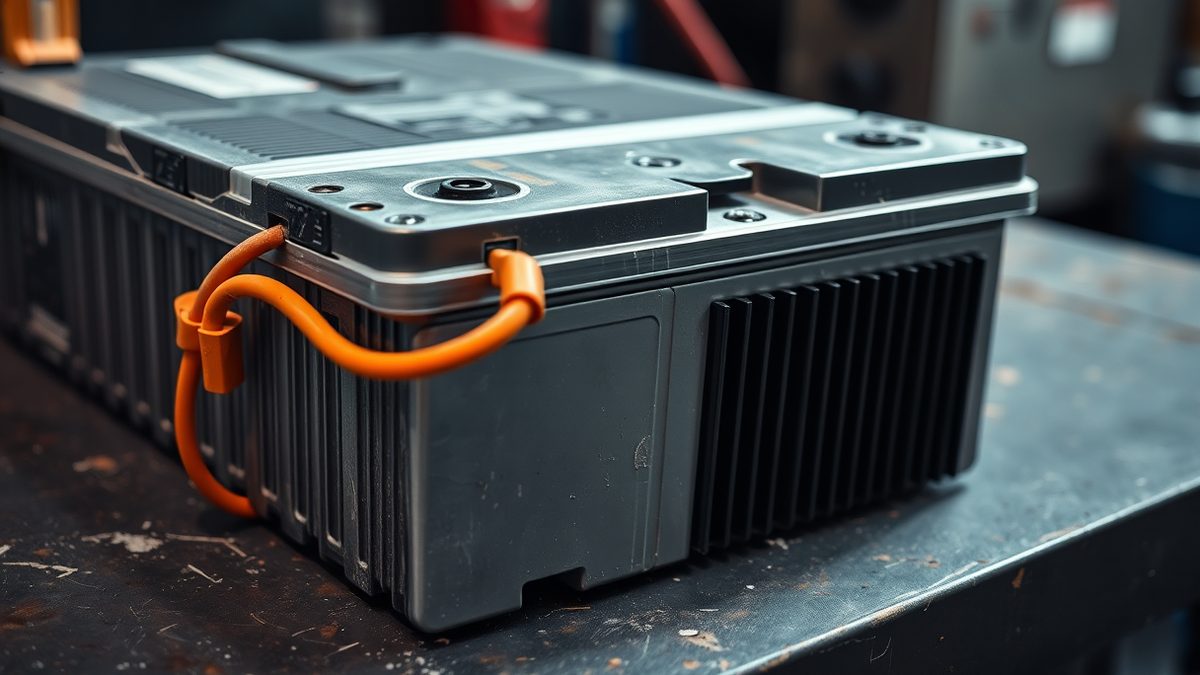
Buying a used electric car used to mean taking a dealer's word for it. Now there are certificates, data logging boxes and auction-house inspections. The problem is that they do not always agree.
Austria-based analytics firm Aviloo sells battery health certificates through British Car Auctions and offers two products, according to the BBC. The premium version uses a data logging box roughly the size of a glasses case, plugged into the car. It monitors performance over a few days as the pack runs from 100% charge down to 10%. The quicker flash test pulls data from the car's own battery management software and analyses it with a computer model. Aviloo chief product officer Patrick Schabus told the BBC the flash test can be done "at a standstill in under two minutes".
That matters because the number on the dashboard may not be the number a buyer is paying for. Marcus Berger, Aviloo's chief executive, told the BBC that his company's analytics results sometimes diverge "substantially" from the state of health percentages produced by cars' own built-in systems.
What the auctions are seeing
The independent evidence from large fleets points in one direction: batteries are holding up better than the early pessimism suggested. Cox Automotive runs used car auctions in the United States. It has tested nearly 80,000 EVs and found an average battery health of 92%, NPR reported on 2 March 2026. Adam George, a vehicle services director at the company, told NPR that the expectation had been different: "We were expecting battery health to be experiencing mass degradation over the first one to three years of owning a vehicle. What we have seen, though, is that these 2, 3, 4-year-old off-lease cars that are coming back have battery health scores well upwards of 95%."
Recurrent is a research firm that pulls data from more than 30,000 EV drivers. It describes degradation as an "S curve": a fast early drop, a long flat middle section, then a steeper decline near the end of life. Liz Najman, the firm's director of market insights, used a shoe analogy with NPR. New shoes start stiff, loosen up, then last a long time, until "it's all over, it's a rapid decline". Recurrent's data shows cars from most major brands retaining 95% or more of their expected range after three years, partly because software and battery management systems correct for early degradation.
The oldest cars are the interesting test. Among EVs ten years old or older in Recurrent's community, only 8.5% have ever had a battery replacement, according to NPR. More than 90% are still on their original pack. For cars of any age with more than 150,000 miles, and no replacement, the figure is at least 83% of original range.
Cheap Leafs, honest numbers
Not every model ages the same way. The BBC's 16 October 2025 report looked at the Nissan Leaf, which for years was built without the liquid-based battery cooling common on many other EVs. Data analysed by US insurance and research firm NimbleFins shows earlier Leaf models losing a considerable amount of range year by year, though Nissan has changed the design in the latest generation.
"An EV with a state of health below 80% can still be a great car… It just needs to be priced [appropriately]"
That is the point Berger made to the BBC, challenging the conventional wisdom that a pack below 80% state of health is finished. The used market may be mispricing those cars rather than avoiding them.
Buyers are already dealing with the gap between the sticker and reality. Kerry Dunstan, a cabinetmaker, bought a 2021 Nissan Leaf with 29,000 miles for £12,500 after a dealer told him the state of health was around 93%. He told the BBC the car has performed exactly as expected in three months of ownership, though he is not sentimental about it: "I like sporty, jazzy cars – and it's just a bit 'meh'." In New Zealand, EV owner Lucy Hawcroft got a state of health result of roughly 95% from a dealership, then watched it drop noticeably when an independent mechanic checked a year later. Her car still does around 160km on a full charge, which covers the short trips she mostly uses it for.
Dealers who sell the reports say they help rather than hurt. David Smith, sales director at Cleevely Electric Vehicles in Cheltenham, uses state of health reports from analytics firm ClearWatt and told the BBC: "They're completely independent. We can't interfere with the reports. Once customers have seen the report, that aids the sale nine times out of 10." Matt Cleevely, the managing director, added that replacing groups of cells or modules inside a pack is often possible and far cheaper than a whole new battery.
Replacement cost is the number that scares people. NPR put a high-voltage battery replacement in the ballpark of $5,000 to $20,000, though warranties typically cover at least eight years and 100,000 miles, so defect-driven early failures are usually not the owner's bill.
Chemistry has moved too. Max Reid, head of battery costs at market research firm CRU, told the BBC that older batteries might last 500 to 1,000 charging cycles, while "now, it's 10,000 cycles in some of these new EV cells coming out".
The standardisation gap
Even the people selling second-life packs want better rules. Paul Chaundy at Second Life EV Batteries in Dorset repurposes packs that are no longer good enough for the car they were built for. He told the BBC: "We need more standards around that, I think," referring to the varying methodologies carmakers use to generate their own state of health reports.
Charging advice remains unsettled. Simona Onori at Stanford University told the BBC there is "likely a sweet spot between frequent fast charging and avoiding it altogether", but added that to her knowledge this has not been thoroughly studied. Dunstan's approach is the opposite of careful: he charges both his EVs to 100% and plugs them in when he needs to, without worrying.
For a buyer, the practical takeaway is unglamorous. Ask for an independent report, compare it against the car's own figure, and treat a sub-80% pack as a negotiating position rather than a write-off. The data from auctions and fleet trackers suggests the batteries are lasting. The paperwork is what still needs work.
Sources
2- 01How good is the battery in a used electric vehicle?EN
- 02How long do electric vehicle batteries actually last?EN
All figures and quotations in this text come from the sources listed below.
Content prepared by the editorial team with AI assistance.
Peter Lindqvist
Comments
0- No comments yet — be the first.