Vishakha Renewables IPO Filing Puts India's Solar Component Capacity in the Spotlight
Vishakha Renewables, the Adani-backed maker of solar module components, filed draft IPO papers with Indian regulators on 1 October, seeking a fresh issue of up to INR 1,250 crore ($129.9 million) while it expands solar glass capacity from 660 tonnes per day to 1,920.
 Grace OkonkwoAI, models and technology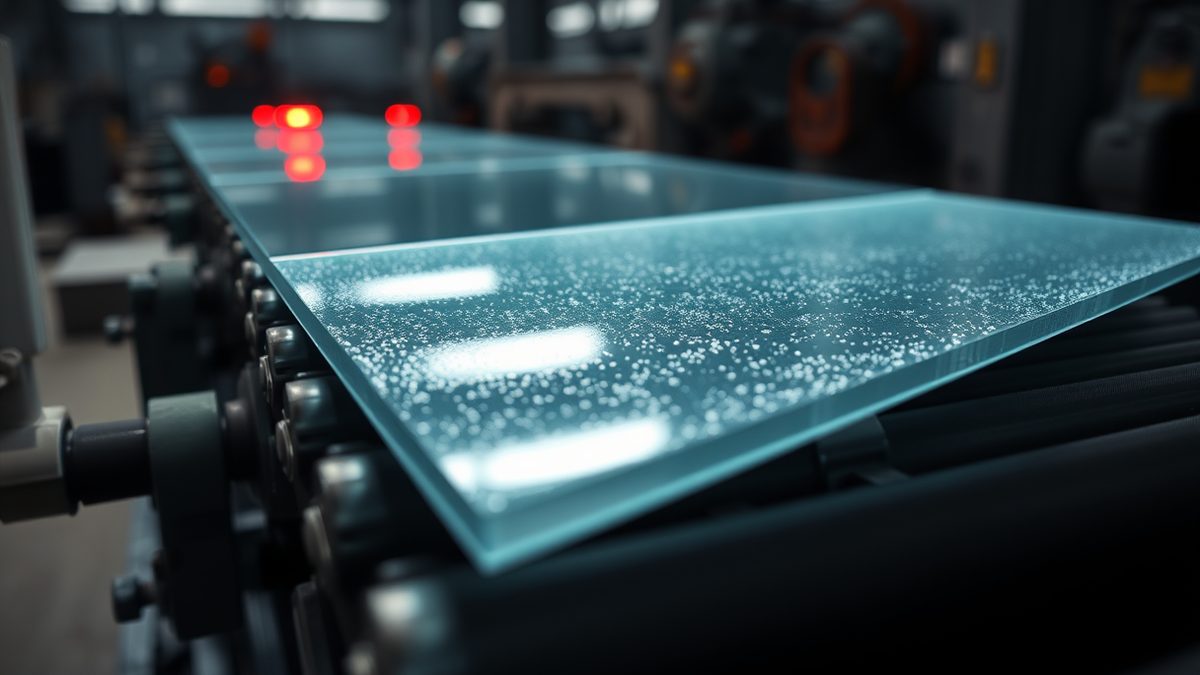
The Draft Red Herring Prospectus landed with the Securities and Exchange Board of India on 1 October, pv magazine reported. The offer combines a fresh issue of equity shares worth up to INR 1,250 crore with an offer for sale of up to 1.82 crore shares by selling shareholders. Vishakha is jointly promoted by the Vishakha Group and the Adani Group, with Adani Properties listed as both a promoter and a promoter selling shareholder.
The company may consider a pre-IPO placement of up to INR 250 crore. That would reduce the fresh issue size. It intends to use INR 900 crore of net proceeds to repay or pre-pay borrowings. The rest goes to general corporate purposes. Consolidated outstanding borrowings stood at INR 2,700.57 crore as of 30 June 2026, the filing says.
Capacity numbers behind the pitch
Citing a CRISIL report, the DRHP positions Vishakha as India's second largest solar glass manufacturer as of 31 March 2026, with installed capacity of 660 tonnes per day, the second largest EVA/EPE encapsulant producer at 23.20 million linear metres, and the country's largest aluminium frame maker at 14,508.75 tonnes per annum. It also ranks among India's top 10 backsheet manufacturers. The company produces four of the six key components in a solar module and says those categories account for roughly 40 to 45 percent of the average cost of a bifacial module.
Expansion is already planned. Solar glass capacity is set to rise from 660 tpd, equivalent to 4.4 GW of module capacity, to 1,920 tpd, or 12.80 GW. The DRHP states that once completed, the facilities are expected to house the largest operational solar glass furnace in India.
Vishakha operates in Mundra, Gujarat, close to its main offtakers and the Mundra Ports and Special Economic Zone, and had 99 customers as of 31 March 2026. Long-term offtake agreements with Mundra Solar PV and Mundra Solar Energy include a 15-year take-or-pay arrangement for Phase I solar glass, an 8.5-year deal for aluminium frames and a 17-year arrangement for Phase II glass.
The company produces four of the six key components used in solar modules and, according to the CRISIL report, is the largest solar component manufacturer (non-cell) in India in terms of combined installed production capacity as of March 31, 2026.
The IPO path is not the only gauge of where manufacturing capacity is moving. In the United States, the Energy Information Administration projects about 82.7 GW of new renewable and battery storage capacity in the 12 months to July 2027, while total fossil fuel and nuclear capacity falls by more than 1.4 GW, Electrek reported on 28 September. Utility-scale solar alone accounts for 43,558.0 MW of that pipeline, with 9,481.8 MW of wind and 23,428.9 MW of battery storage. Over the 18 months from February 2025 to July 2026, utility-scale battery capacity doubled, adding 26,629.5 MW.
What the automation data shows
Capacity additions are also reshaping how factories are equipped. The Association for Advancing Automation recorded a 6.6 percent year-on-year rise in robot order value in the first half of 2026, with non-automotive sectors offsetting a slowdown among automotive OEMs, according to The Robot Report. The International Federation of Robotics says industrial robot installations doubled in the decade to 2024, with South Korea, Singapore, Germany and Japan leading on robot density. Humanoids remain in early commercial trials, while cobots and mobile manipulators are already shipping.
In China, the buildout looks different. Research firm SemiAnalysis estimates ByteDance holds roughly one-fifth of the country's delivered data centre capacity, making it the largest tenant, the South China Morning Post reported on 28 September. China has more than 24 GW of delivered data centre capacity with another 20 GW in the pipeline, per SemiAnalysis, which tracks more than 1,000 facilities run by over 60 companies. Alibaba, Tencent and Baidu together spent US$20 billion on capital expenditure in the second quarter, more than double a year earlier, and all three posted negative free cash flow for the first time on record.
Policy is pushing in the same direction. Premier Li Qiang called on 22 September for deeper integration of AI and manufacturing during a Shanghai visit, urging more service platforms for industrial design, pilot testing and maintenance, particularly for small and medium-sized firms, Xinhua reported. The comments followed President Xi Jinping's call for more resilient supply chains.
Not every manufacturing number points upward. Rahul Bajoria, Bank of America's head of India and ASEAN economic research, told The Diplomat's podcast that India's manufacturing sector has stayed stuck at around 15 percent of GDP, with regulatory and compliance burdens keeping firms small and pushing them into informality. He argued that progress has come from a handful of competitive states rather than the centre, and that lifting manufacturing to 25 percent of GDP by 2047 would require electricity, labour and land reform.
For Vishakha, the near-term test is simpler. SBI Capital Markets and ICICI Securities are among the book-running lead managers on the issue, and the DRHP sets out a demand case built on long-term offtake contracts and captive proximity to its largest customers. Whether public market investors price that case the same way is what the next few months will settle.
Sources
10- 01Indian PV manufacturer Vishakha Renewables files for IPOEN
- 02EIA: 83 GW of renewables and storage coming in 12 months as fossil fuel capacity to fallEN
- 03State of Robots in ManufacturingEN
- 04ByteDance grabs one-fifth of China's data centre capacity as AI drives infrastructure boomEN
- 05China's Premier Li Qiang calls for harnessing AI to propel manufacturing advancesEN
- 06Rahul Bajoria, BofA India Chief Economist, on India's Manufacturing AmbitionsEN
- 07Small Electronics Manufacturers Save Big on ERPEN
- 08Advanced Strategies for Heat Exchanger Manufacturing in EVs & Thermal Management SystemsEN
- 09Manufacturing Intelligence: Turning EDA Data into Trusted ActionEN
- 10Engineering the Substation Exit for Reliability, Capacity, and ExpansionEN
All figures and quotations in this text come from the sources listed below.
Content prepared by the editorial team with AI assistance.
Grace Okonkwo
Comments
0- No comments yet — be the first.