Flock's first-responder drones spread across US cities as regulators and privacy advocates push back
Flock's Drones-as-First-Responder system, which launches remotely operated drones from rooftop docks in response to 911 calls, is now being tested or contracted in at least five US cities, according to a report by Tom's Hardware published on 2 October.
 Rachel NwosuAI, models and technology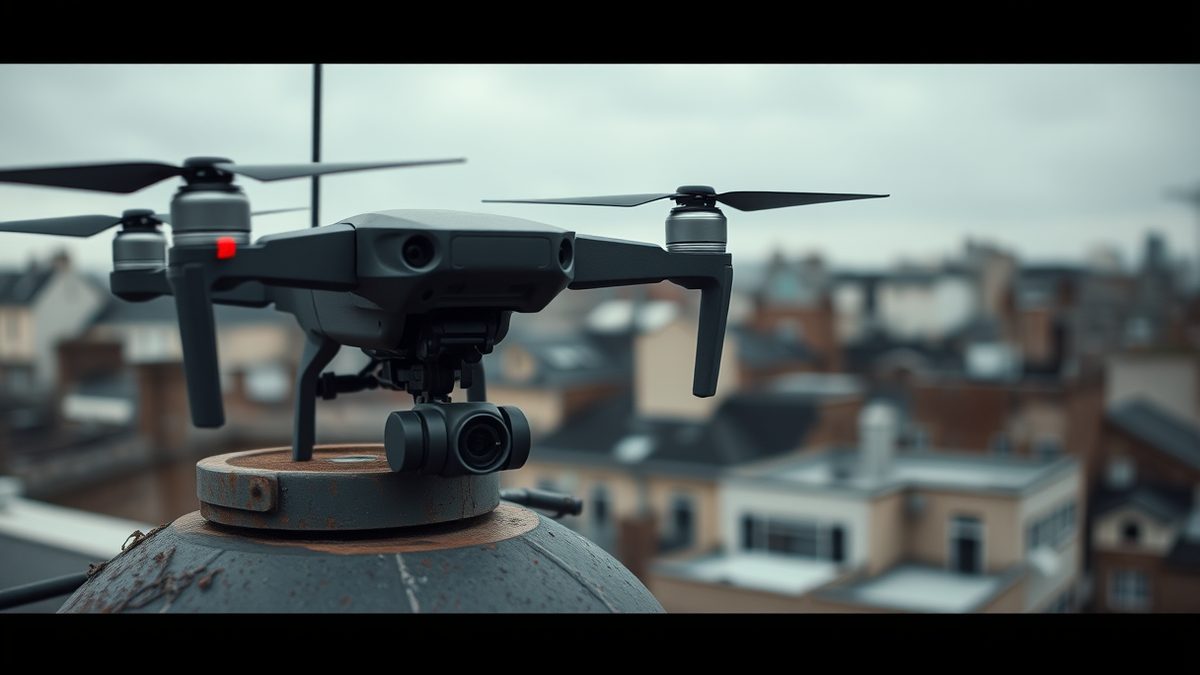
Flock's Drones-as-First-Responder (DFR) system is now being tested or contracted in at least five US cities, according to a Tom's Hardware report published on 2 October. The system launches remotely operated drones from rooftop docks and integrates them into emergency services dispatch, allowing them to be sent in response to a 911 call, a license-plate reader notification or a gunshot-detection alert. Once airborne, the drones stream live footage to dispatchers and officers in the field.
Fort Worth reported that during a two-month pilot, the drone was deployed to 162 emergency 911 calls with an average response time of 112 seconds. It was the first unit to arrive in 76 of those calls and allowed authorities to clear 11 of them without sending officers to the scene. The city said the drones only respond to calls and do not patrol, and that their cameras point at the horizon until they reach a scene. The list of cities considering, piloting or contracting the system includes Fort Worth, Texas; Castle Rock, Colorado; Dunwoody, Georgia; Fulton County, Georgia; and Middletown, Connecticut, according to Tom's Hardware.
Flock gained the drone capability when it acquired Aerodome, which sells drones with high-definition video, thermal imaging and other onboard sensors. Tom's Hardware also noted that at least one startup is advertising a Starlink-connected first-responder drone that can operate outside the range of its base station. The company has recently been surrounded by controversy, the report added, without giving further details in the excerpt available.
Regulation struggles to keep pace
The spread of DFR systems comes as regulators on both sides of the Atlantic try to work out how to fit autonomous and remotely piloted aircraft into existing airspace rules. In Europe, the collision between AI and U-space, the continent's framework for unmanned traffic management, remains unresolved, according to a headline from Unmanned airspace dated 28 September. The same outlet reported on 30 September that Qatar had modernised its airspace management with a comprehensive new set of drone regulations, and on 28 September that Estonia had put its drone roadmap into action.
In the United States, the Department of Homeland Security tested counter-drone technology with state and local law enforcement, Dronelife reported on 2 October. The FBI issued a strict no-drone-zone alert for the 2026 Albuquerque International Balloon Fiesta on 30 September, according to ladailypost.com. And Northglenn, Colorado, is planning the first delivery drone regulations in the Denver metro area, Westword reported on 29 September.
Germany's Berlin Airport deployed a drone detection system amid airspace disruptions, streamlinefeed.co.ke reported on 30 September. The anti-drone market is forecast to grow from $4.8 billion in 2026 to $12.6 billion by 2036, according to a market report covered on 29 September.
Patent fight and a $150 billion market
Underneath the regulatory wrangling, the industrial contest over drone technology is tightening. Chinese companies accounted for 44 per cent of the world's drone patent filings in 2024, against 17 per cent for American firms, according to a LexisNexis study published on Thursday and reported by the South China Morning Post on 1 October. But measured by value, US drone patents were on a par with China's, leaving the two countries roughly even in total global patent asset value, LexisNexis calculated.
DJI, the Shenzhen-based market leader, now holds only 4 per cent of the industry's total patent assets, barely ahead of US firms such as Boeing and Amazon, the study found. That compares with roughly 24 per cent at the end of 2018, when DJI held more than all the other companies in the top 10 combined. The civil unmanned aerial systems market is expected to add up to $150 billion between 2023 and 2032, according to the SCMP report.
Parallel battles: sensing, stablecoins, gas plants
Regulation is also reshaping automotive sensing, which shares supply chains and spectrum with drone systems. At AutoSens and InCabin Europe 2026 in Barcelona, more than 1,000 engineers, executives and semiconductor experts gathered to examine how safety and perception rules are influencing sensor design, EE Times reported on 2 October. Europe's Euro NCAP 2026 protocols put greater emphasis on driver and occupant monitoring, including child presence detection and impairment detection, pushing suppliers to combine cameras with RF sensing such as UWB and mmWave radar.
Calterah demonstrated its Dubhe CAL1106AQ SoC, which the company said is the first implementation of IEEE 802.15.4ab sensing in a FiRa 4.0-certified 2T4R UWB chip, capable of detecting tiny movements such as the chest of a breathing infant without a separate mmWave unit, according to EE Times. Infineon showed its XENSIV 60 GHz radar evaluation modules, and OmniVision demonstrated the OX05C1S GS HDR sensor with a package 30 per cent smaller. Aptiv said its camera-only Advanced Occupancy Classification software reached 100 per cent accuracy in Federal Motor Vehicle Safety Standard 208 tests.
Meanwhile, the Federal Reserve Board on 24 September requested public comment on two proposals to build a regulatory framework for Board-supervised payment stablecoin issuers under the GENIUS Act. The first would require full backing with permissible reserve assets such as short-term Treasury bills and set capital and risk management standards; the second would create a tailored application process for banks seeking to issue stablecoins. The comment period closes 60 days after Federal Register publication.
And in North Carolina, the state Utilities Commission on 21 September rejected Duke Energy's bid for a 255-megawatt gas plant in Richmond County, a facility estimated to cost $584 million and intended partly to serve data center demand, Canary Media reported. The 23-page order said the projected load growth was insufficiently reliable to justify approval now, and told Duke to show how new generating capacity would be consistent with the White House Ratepayer Protection Pledge. The decision came as New York and Texas paused some data center projects, Pennsylvania's governor signed an executive order on data center requirements, and Virginia's governor unveiled consumer and environmental proposals.
For drone operators, the through-line is the same: the hardware and the software are arriving faster than the rules that govern where they can fly, who can see the footage, and who pays when something goes wrong.
Sources
9- 01Flock drones with cameras deployed as first responders in some US cities amid privacy concernsEN
- 02China leads drone patent volume but US matches quality as start-ups drive innovation: studyEN
- 03AutoSens 2026: Regulation Drives Automotive Sensing ArchitecturesEN
- 04Federal Reserve Board requests public comment on two proposals related to establishing a regulatory framework for Board-supervised payment stablecoin issuers unEN
- 05Duke Energy wants to build a new gas plant. Regulators said not so fast.EN
- 06Designing Layered Drone Defenses for Data CentersEN
- 07US regulators back multi-cancer blood test – but Hong Kong doctors remain cautiousEN
- 08Four forces set to reshape technology in 2027 – OmdiaEN
- 09DeepSeek effect? How China's quant funds thrive amid tight regulatory scrutinyEN
All figures and quotations in this text come from the sources listed below.
Content prepared by the editorial team with AI assistance.
Rachel Nwosu
Comments
0- No comments yet — be the first.