Google's TPU reaches orbit as China, Canada and carriers redraw satellite plans
Alphabet put its first tensor processing unit into orbit on Thursday aboard a SpaceX Falcon 9, the opening test for a plan that Google's own researchers say would need Starship to launch roughly 1,800 times to make orbital data centres viable.
 Grace OkonkwoAI, models and technology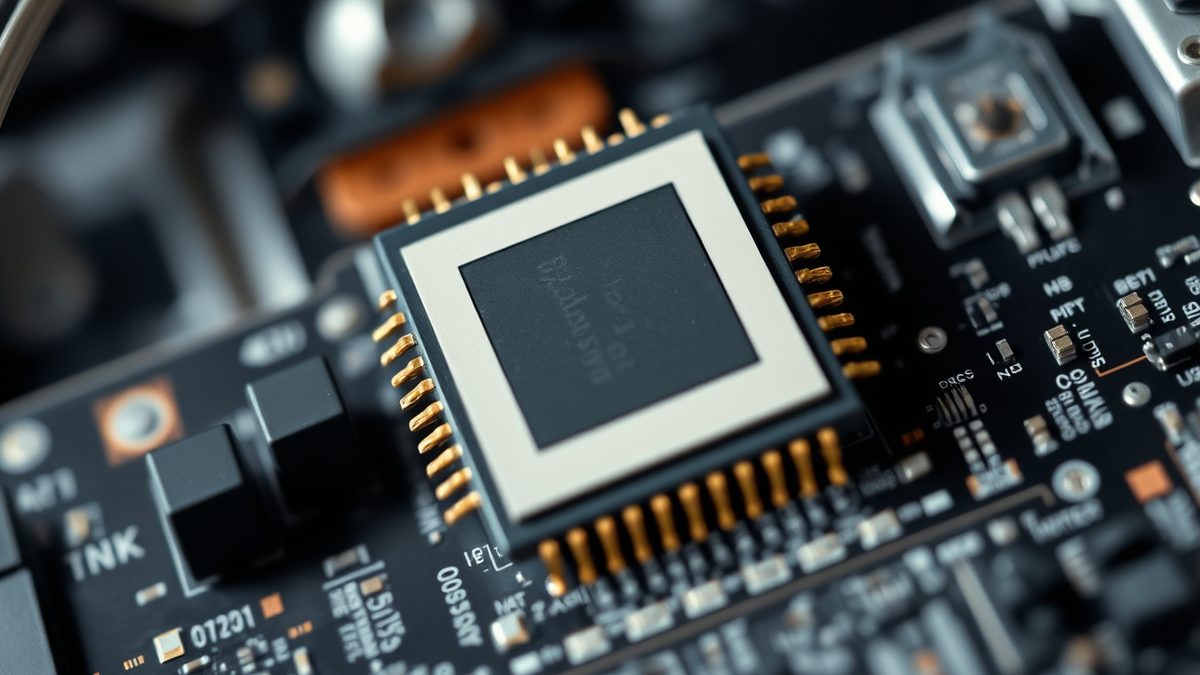
The Transporter-18 rideshare lifted off from Vandenberg Space Force Base at 11:32 a.m. PDT on 1 October, carrying 130 payloads, according to NASASpaceFlight.com. Among them was Google's Project Suncatcher M1, a Planet Labs satellite that will run a Tensor Processing Unit in 15-minute bursts to see how the chip copes with launch vibration, radiation and the thermal limits of low Earth orbit.
Google first revealed Suncatcher in November 2025. The white paper behind it, released in peer-reviewed form on Thursday and due for publication in Joule, argues that SpaceX has achieved a launch cost "learning curve" of about 20% a year since the Falcon 1 and could reach close to $200 per kilogram by 2035, TechCrunch reported. That is the number the whole idea rests on.
Starship, the bottleneck nobody can wish away
The same paper sets out the arithmetic that makes the near-term case awkward: Google estimates Starship would have to fly about 1,800 times before space data centres make sense at scale. Google's Travis Beals, who runs Suncatcher, told TechCrunch that the company is designing for workloads five years out because the rockets needed to scale orbital compute cheaply do not exist yet.
Google is not alone in the queue, and it is also an investor in the launcher. CNBC reported that Alphabet's stake in SpaceX, which went public in June in a record IPO, is worth more than $82 billion. SpaceX has said it will deploy "supercompute in space" in 2027, according to COO Gwynne Shotwell, and plans its own GPU-equipped satellite swarms built in Redmond, Washington.
Others are already selling into the gap. Satlyt, founded by former Google and SpaceX product manager Rama Afullo, raised an $8 million seed round it disclosed exclusively to TechCrunch, and its software flew on the same Falcon 9, aboard a spacecraft built by India's TakeMe2Space for customers including NASA and Stellerian. Afullo said a DeepMind Gemma model run on a Momentus spacecraft cut the size of a transmission about onboard software errors by more than 60%.
China counts down to 100 launches
China, meanwhile, is pushing launch cadence rather than orbital compute. SpaceNews reported that a Long March 8A lifted the 26th group of Guowang internet satellites from Hainan on 23 September, followed less than a day later by a Long March 6A carrying the fourth batch of Yaogan-40 spacecraft from Taiyuan on 24 September.
CASC said the Guowang satellites reached their planned orbits; US Space Force tracking put them in roughly circular 1,100 km orbits inclined 50 degrees, according to SpaceNews. Guowang is run by state-owned China SatNet and is planned to comprise around 13,000 satellites. The two launches took China to 70 orbital attempts for 2026, with at least 31 needed in the fourth quarter to pass 100 for the first time.
The next crewed mission, Shenzhou-24, appears likely for around November on a Long March 2F from Jiuquan, with an unconfirmed Pakistani payload specialist possibly aboard. SpaceNews noted the crew selection is not officially confirmed.
Carriers, Canada and the launch squeeze
On the ground, AT&T, T-Mobile and Verizon have signed a joint venture to pool spectrum and close US coverage gaps, naming Paul Roth as interim CEO, Light Reading reported on 1 October. The three carriers had flagged the plan in May.
The supply of rockets is the constraint everyone shares. Light Reading cited Analysys Mason figures of more than 230 constellation projects and 1.5 million planned satellites, most for orbital data centres, against a record 5,000 satellites launched in 2025. At that rate, launching the 133,000 non-data-centre satellites alone would take almost 27 years.
Canada is responding to the shortage and to its rupture with Washington. Ars Technica reported that Toronto-based Canada Rocket Company is skipping small launch entirely for its R-2 medium-lift rocket, capable of 12.5 metric tons to low Earth orbit and targeting a 2032 debut, after initial awards of $8.33 million CAD under the Launch the North programme.
Closer to flight, a Falcon Heavy was set to launch the classified NROL-97 for the National Reconnaissance Office from Kennedy Space Center late on 1 October, NASASpaceFlight.com reported, in the quickest turnaround yet between Falcon Heavy missions.
Sources
9- 01SpaceX launches Google AI chips into orbit in push toward space-based data centersEN
- 02Google thinks SpaceX's Starship has to launch 1,800 times before space data centers get off the groundEN
- 03Starfish Otter, other payloads launch on Transporter 18EN
- 04Satlyt, founded by a former Google and SpaceX product manager, raises $8M to run AI on satellitesEN
- 05China launches Guowang, Yaogan-40 satellites, sets up busy Q4 manifestEN
- 06AT&T, T-Mobile and Verizon launch joint venture to end dead zones; name Paul Roth interim CEOEN
- 07Starship launch reignites rocket shortage worries for Starlink rivalsEN
- 08As US relations fray, Canada gets serious about its own launch industryEN
- 09Falcon Heavy set to launch classified NROL-97 to high-energy orbitEN
All figures and quotations in this text come from the sources listed below.
Content prepared by the editorial team with AI assistance.
Grace Okonkwo
Comments
0- No comments yet — be the first.