AI data centres meet Europe's energy crunch as oil shock reshapes power markets
Newfoundland and Labrador confirmed on 29 September that companies have approached it about AI data centres, the same week oil hit $101 a barrel and US clean energy shed 36,949 jobs.
 Dr. Amara PatelEconomy, business and world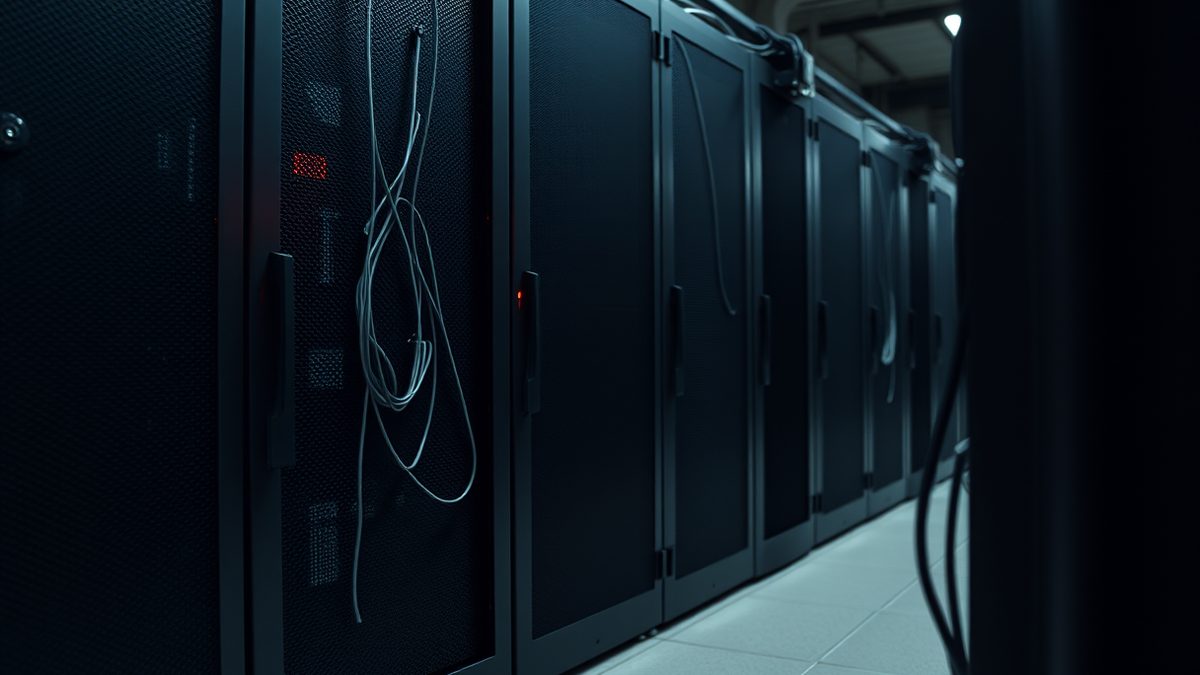
Newfoundland and Labrador's energy minister says the province is "open for business" to AI data centres. CBC News reported the statement on 29 September, during a special House of Assembly session on the Churchill Falls agreement. A department spokesperson told CBC the government has been approached by companies but would not comment on specific proponents or projects.
That is one province on one side of the Atlantic. The pitch still captures the collision shaping Europe's energy debate. AI's demand for electricity is arriving at the worst possible moment for a region still absorbing an oil price shock, a gas squeeze and a policy pivot away from clean energy subsidies.
Oil at $101 and the windfall question
The numbers behind the squeeze are stark. The Conversation published an analysis on 29 September. It put the price at the primary crude oil hub in the US at $66 a barrel in late February 2026, before the US and Israel attacked Iran. By 13 April it was $101 a barrel. The article, by an energy economist and an international trade economist, notes that when the Strait of Hormuz closed, prices rose sharply in a short period.
"The bulk of the money heads in the direction of the source of the oil itself, the oil companies," the authors write. Saudi Arabia's government owns and controls nearly all oil production there, so high prices benefit state finances. In West Texas, operators booked a windfall gain because prices rose faster than costs. Shareholders got the rest through dividends, debt reduction, buybacks and reinvestment.
"When there's less of something to go around, competition among consumers who want it and companies that need it can drive the price up."
That mechanism is textbook. The politics around it are not. Europe has spent the past three years trying to insulate households from exactly this kind of spike, and the dossier shows the effort is running into harder constraints.
Clean energy's first reverse
The most concrete number comes from the US, not Europe, but it matters for the supply chain both regions share. Electrek reported on 28 September that the US lost 36,949 clean energy jobs in 2025, the first annual decline since the pandemic. Employment fell to 3.52 million, erasing nearly 40% of the gains made in 2024. Losses reached 35 states; California shed nearly 21,000 jobs, the most of any state.
The figures come from E2, which analysed US Department of Energy employment data. E2's project tracker recorded 142 clean energy manufacturing, generation and storage projects cancelled or downsized in 2025. Electrek links the downturn to federal policy reversal under the Trump administration and a Republican-controlled Congress. The broader US energy industry shed an estimated 86,000 jobs, according to the same DOE data. Clean energy accounted for roughly 43% of that decline but remains the largest part of the workforce at more than 3.5 million people. Oil and gas employs 958,000, coal 125,000 and nuclear 70,000.
E2's full Clean Jobs America 2026 report, with state and county detail, is due in October.
Electrification's arithmetic
Against that political backdrop, the physics keeps pointing one way. Hannah Ritchie's Substack, published 29 September, walks through work by Oxford professor Nick Eyre. Eyre puts global final energy demand at 247 exajoules in a post-transition system, down from 416 EJ today. Electricity demand rises from 110 to 189 EJ, but total demand drops roughly 40% because electrification removes the waste of combustion.
The sector detail is where it gets interesting for industry. Ritchie notes that electric vehicles are around four times as efficient as petrol cars, with roughly 80% of energy converted to motion versus 20% in a combustion engine. Post-transition energy demand for cars and vans falls to about a quarter of current levels. Buildings drop significantly as gas boilers give way to heat pumps. Industry is harder. Some processes such as space heating can be electrified, but high-temperature industrial processes cannot, and are assumed to run on hydrogen.
"It doesn't assume any efficiency gains other than electrification or a move to hydrogen," Ritchie writes, adding that this likely underestimates the reduction. The model also excludes energy growth as countries develop, which she says should not affect the ratio between scenarios.
Who pays for the compute
The data centre boom is the demand-side wildcard. CBC's 29 September report quotes Paris Marx, a tech journalist and author of Hyperscale, a book about the rise in data centres: "These are products that are really computationally intensive. And, of course, what the tech companies found is that they needed a lot more computation in order to power them." CBC notes that Meta and Bell have announced billions of dollars for data centres in Alberta, Ontario and Saskatchewan this year.
Efficient Computer, a chip company, announced a $97 million Series B led by TQ Ventures in a blog post published 29 September. CEO and co-founder Brandon Lucia argues that narrowly specialised AI accelerators are a "devil's bargain" that forfeits programmability, and that Amdahl's Law caps the benefit of accelerating only part of a workload. "Even with an unrealistic, idealized accelerator that makes the accelerable 90% of your computation magically drop to zero time and energy cost, the maximum benefit you'll see is just 10x," he writes.
The company's claim is that efficiency, not raw throughput, is the binding constraint. European regulators have started to treat it that way too.
Brussels builds its own pipes
On 29 September, Light Reading reported that Orange Business has been selected as the trusted network partner for TESTA-EIRIS, the EU's Enhanced Infrastructure for Reliable Interconnectivity and Security. The contract covers a private communications backbone connecting EU institutions, bodies, agencies and member states, built on a single backbone with at least 12 points of presence across five European regions. Orange quotes 99.999% availability and says its Evolution Platform will replace dedicated hardware with software-based virtual services.
It is infrastructure news, not energy news. The logic is the same: sovereignty over the physical layer, whether that layer carries packets or electrons. The European Commission's DG DIGIT is designing and managing the ecosystem, per Light Reading.
None of this resolves the immediate problem. Oil at $101 feeds into diesel, fertiliser, plastics and shipping, and Europe's industrial base is already fragile. The dossier's context headlines point to idled acetyls plants, Rhine freight costs rising and gas forecasts under strain. The electrification case is strongest over a decade. The price shock is arriving this quarter.
Two older references in the dossier frame the gap. David MacKay's Sustainable Energy Without the Hot Air, first published in 2008 and still hosted at withouthotair.com, argued for doing the arithmetic before choosing a plan; the site was last modified in 2015 but remains a standard citation. The US Energy Information Administration's photovoltaic timeline, updated 29 September, records the arc from Bell Labs' 6% silicon cell to cells that today reach 40% conversion. Both are reminders that the technology curve has been steep and slow at the same time.
The industry question for Europe is not whether electrification works. It is who captures the value while the transition is still expensive. Oil producers captured the last spike, according to The Conversation's analysis. Data centre operators and their chip suppliers are positioning for the next one. The bill, as ever, lands somewhere in between.
Sources
8- 01AI data centres in N.L.? The door is 'open for business,' says energy ministerEN
- 02When oil prices spike, where does the money go?EN
- 03US clean energy jobs fell for the first time since the pandemicEN
- 04Electrification is efficiency: The world will need less energy after the transitionEN
- 05Solving computing's energy problem with Efficient Computer's $97M Series BEN
- 06Orange Business to provide European Union's backbone network for trusted data exchangeEN
- 07Sustainable energy without the hot airEN
- 08Energy Timelines PhotovoltaicEN
All figures and quotations in this text come from the sources listed below.
Content prepared by the editorial team with AI assistance.
Dr. Amara Patel
Comments
0- No comments yet — be the first.