Delhi Cut Grid Losses From 50% To 5%. Europe Is Still Counting Its Truck Maths
Delhi has cut electricity losses on its distribution network from around 50 percent to about 5 percent, according to an IEEE Spectrum feature published on 29 September, a rare documented case of a mega-city fixing a grid that most utilities treat as unfixable.
 Dr. Amara PatelEconomy, business and world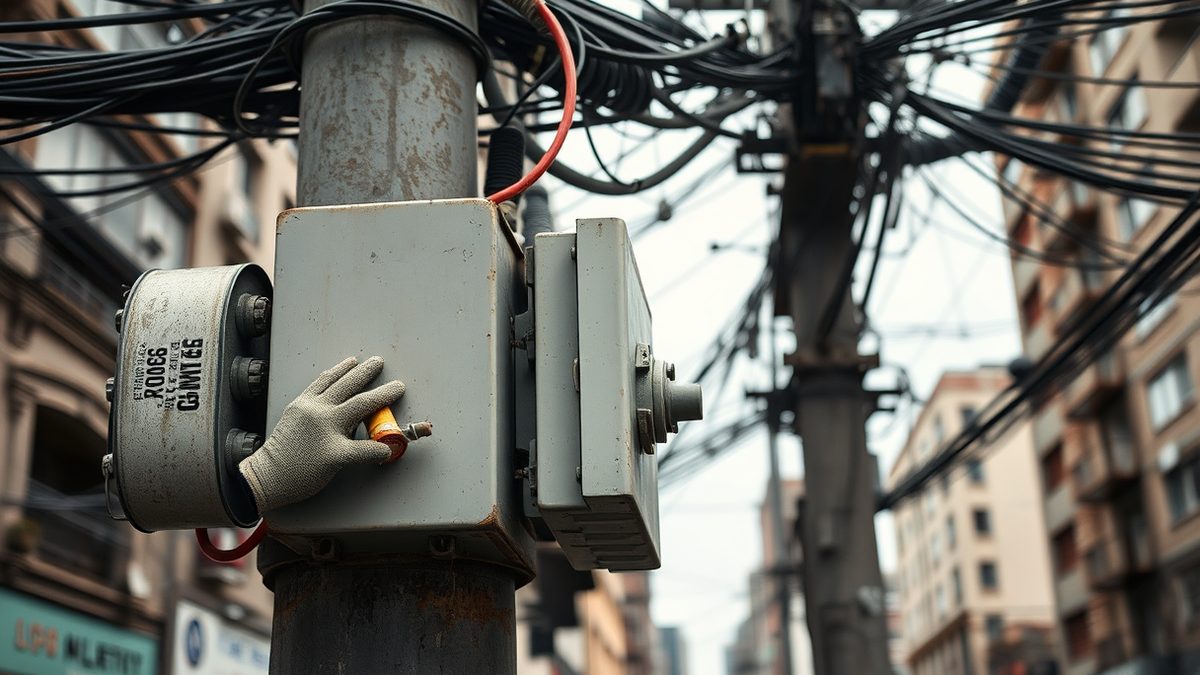
The number is the story. Delhi's aggregate technical and commercial losses, the share of power that enters a network and never gets billed or delivered, fell from roughly 50 percent to around 5 percent, IEEE Spectrum reported on 29 September.
No European capital has attempted a distribution turnaround at that scale this decade. Delhi managed it without a single piece of new generation. The same week, the European debate moved the other way: slower, more expensive, and mostly about who pays. Transport & Environment published a total cost of ownership analysis on 28 September. Electric trucks, it found, are already the cheapest option in six of nine major EU markets. Those six markets account for 46 percent of all new heavy trucks sold in the EU, according to the analysis.
Where the trucks already win
The T&E numbers are specific. In the Netherlands, electric trucks save operators up to €100,000 over five years. In Germany, up to €85,000. In Denmark, up to €69,000. The analysis says electric trucks pay back the price gap after two years. Run a Chinese-built truck instead of a European one and the five-year saving in the Netherlands reaches €128,000, CleanTechnica reported on 28 September.
T&E lists four drivers: scale, lower vehicle prices pushed by EU truck CO2 targets, national purchase subsidies and lower road tolls. The group argues a new European energy crisis is widening the gap between diesel and electric operating costs. By 2030, it says, electric trucks will be cheaper in all nine markets even if today's purchase subsidies are phased out or reduced. The recommendations are policy-shaped: keep the -43 percent 2030 CO2 target for trucks, implement the Eurovignette Directive so zero-emission trucks are exempt from road charges (100 percent until 2031, then 50 to 75 percent), and use RED III e-credits to cut depot charging costs in Sweden, France, Poland, Italy and Spain.
"Electrification is efficiency," the International Energy Agency says, a line quoted by Hannah Ritchie in her 29 September analysis of post-transition energy demand.
That sounds like a slogan. Ritchie, working from Oxford professor Nick Eyre's numbers, puts a figure on it. A fully electrified global energy system, with hydrogen covering the parts electricity cannot reach, would cut total final energy demand from 416 exajoules to 247 EJ. Electricity demand would rise from 110 EJ to 189 EJ. Electricity goes from about one quarter of final energy demand to about three quarters.
The reason is conversion loss. A petrol car turns roughly 20 percent of its energy into motion. An electric car turns about 80 percent, depending on regenerative braking. That is why post-transition energy demand for cars and vans falls to about a quarter of today's level. Heavy goods vehicles are modelled at roughly half electrified, with hydrogen fuel cells covering the rest. Buses reach 80 percent electrification, with only long-distance coaches on hydrogen. Short-haul aviation goes electric, medium and long haul does not, so only a third of aviation is electrified. Marine transport is modelled at just 10 percent, limited to short trips such as ferries.
The model assumes no efficiency gains beyond electrification and a switch to hydrogen. Ritchie notes that this probably understates the fall in demand. It also ignores energy growth as poorer countries develop, which changes the totals but not the ratio between the two scenarios.
The policy audit nobody scheduled
In Manila, the arithmetic is being tested against a statutory deadline. The 14th Philippine Electric Vehicle Summit opens in October. Raymond Tribdino argued in CleanTechnica on 29 September that the exhibition floor functions as an annual audit of the Department of Energy's Comprehensive Roadmap for the Electric Vehicle Industry, known as CREVI.
The roadmap, set under the Electric Vehicle Industry Development Act (Republic Act 11697), requires 311,700 registered electric vehicles and 7,300 dedicated charging stations nationwide by 2028. It then targets 50 percent fleet electrification by 2040 under the government's clean energy scenario. The 2028 deadline is two years away, and the summit floor will show where the ambition meets commercial reality.
Tribdino's argument is that 300,000-plus units cannot come from private passenger car sales. Premium electric SUVs and executive sedans dominate distributor marketing budgets, but their prices confine them to affluent households in Metro Manila and Metro Cebu. Volume, in the Philippine context, sits in two-wheelers, three-wheelers, delivery vans and modernised electric public utility vehicles. That is why the Electric Vehicle Association of the Philippines, which organises the summit, has shifted the exhibitor mix toward commercial fleet suppliers, light delivery vehicle builders such as NWOW International, and heavy transport fabricators such as Pioneer Trucks, alongside Toyota Motor Philippines, Nissan Philippines and ACMobility.
The legal lever is a fleet mandate: government agencies and commercial cargo operators must ensure electric vehicles make up at least 5 percent of their operational fleets. The fragile link is charging. As of mid-2026 the charging station count was still short of the 7,300 target. The piece is blunt that a vehicle target without a grid is meaningless.
Two carmakers, two bets
Volkswagen confirmed on 29 September that the ID. Tiguan, its third major nameplate to get an electric version after the ID. Polo and ID. Cross, will reach markets in early 2027. The world premiere is set for early October. The model will succeed the ID.4 and ID.5 and sit alongside the combustion and hybrid Tiguan rather than replace it.
The numbers Volkswagen supplied are a reminder of what is at stake in the transition. The Tiguan is currently the best-selling model worldwide for both the Volkswagen brand and the Volkswagen Group. Deliveries of the Tiguan and its sister model, the Tayron, exceeded one million units in the past year. The electric side is smaller but not small: more than 950,000 ID.4 and ID.5 units delivered since 2021, the company says. CEO Thomas Schäfer, in the release carried by CleanTechnica, said more than 8.3 million Tiguan vehicles produced demonstrate the strength and trust associated with the name.
Tesla's latest filing points somewhere else entirely. The USPTO granted US 12,746,987 B1 on 29 September for an "Electric Fan Car," as Electrek reported: four axial electric ducted fans in the rear diffuser, fed by an underbody inlet between the rear wheels, drawing air out from under the floor to create what the patent calls a suction region. Tesla filed the application in January 2024, and it traces back to a provisional from 17 January 2023. Eight inventors are listed, all but one based in the Los Angeles area near Tesla's Hawthorne design studio.
The drawings show a Model S, a car Tesla stopped building in April after 14 years, with the Fremont line being turned over to Optimus. It is Tesla's second fan car patent in just over a year, following an August 2025 filing using underbody fans and deployable skirts, and it lands two weeks before the company's next Roadster demo. Electrek's Fred Lambert reads the combination of fans and a recently reported active rear wing, good for up to 700 kg of downforce, as a full track aero package with only one car left to carry it.
The concept is not new. Chaparral raced the 2J in 1970 with two fans driven by a separate snowmobile engine. Brabham's BT46B won the 1978 Swedish Grand Prix with Niki Lauda and was withdrawn immediately afterwards. Gordon Murray put a 400 mm fan on the T.50 road car, and McMurtry's Spéirling used the same principle to take the all-time Goodwood hill climb record in June 2022, about seven months before Tesla filed its provisional.
Money, arrests and the boring part
Two other funding and enforcement stories landed on 29 September. Endpoints News reported exclusively that SK pharmteco plans to spend at least $200 million over the next five years building out its development and manufacturing infrastructure, a contract development and manufacturing organisation expansion the outlet attributes to its own reporting.
Dutch authorities confirmed they arrested a 24-year-old Amsterdam man this month in an investigation into the ShinyHunters group, according to a Politie Landelijke Opsporing en Interventies post on X reported by The Hacker News on 29 September. Police said he was expected to appear before the Rotterdam District Court on 29 September 2026. Security journalist Brian Krebs and DataBreaches.Net identified the man as Pepijn van der Stap, also known as Umbreon, previously arrested in 2023 over data thefts and extortions; DataBreaches.Net said the arrest happened on 15 September. ShinyHunters denied any connection to him. "That individual has no association with us. Frankly, we are laughing," the group told The Hacker News.
None of this is grid investment. That is the point. The electrification story is now mostly plumbing: distribution losses in Delhi, depot charging in Sweden, toll exemptions in Poland, a charging count in the Philippines stuck below 7,300. The headline numbers, cars and trucks, depend on whether those pipes get built, and on who is willing to pay for them before the demand arrives.
Sources
8- 01How Delhi cut electricity loss from 50 to 5 percentEN
- 02Are Electric Trucks Cheaper To Operate Than Diesel?EN
- 03Electrification efficiency: The world will need less energy after the transitionEN
- 04Op-Ed: Upcoming Philippine Electric Vehicle Summit is an Audit of National PolicyEN
- 05Electric Future, Established Name: The New ID. Tiguan Premieres in OctoberEN
- 06Tesla patents 'Electric Fan Car' with 4 ducted fans ahead of Roadster revealEN
- 07Dutch Police Arrest 24-Year-Old Amsterdam Man in ShinyHunters InvestigationEN
- 08SK pharmteco unveils $200M+ investment to expand CDMO capabilitiesEN
All figures and quotations in this text come from the sources listed below.
Content prepared by the editorial team with AI assistance.
Dr. Amara Patel
Comments
0- No comments yet — be the first.