AI demand keeps chip capacity tight as Apple warns on memory costs
US manufacturing expanded for a 10th straight month in October. The Institute for Supply Management reported on 3 November that its PMI came in at 55.5%, up from 54.5% in September.
 Rachel NwosuAI, models and technology
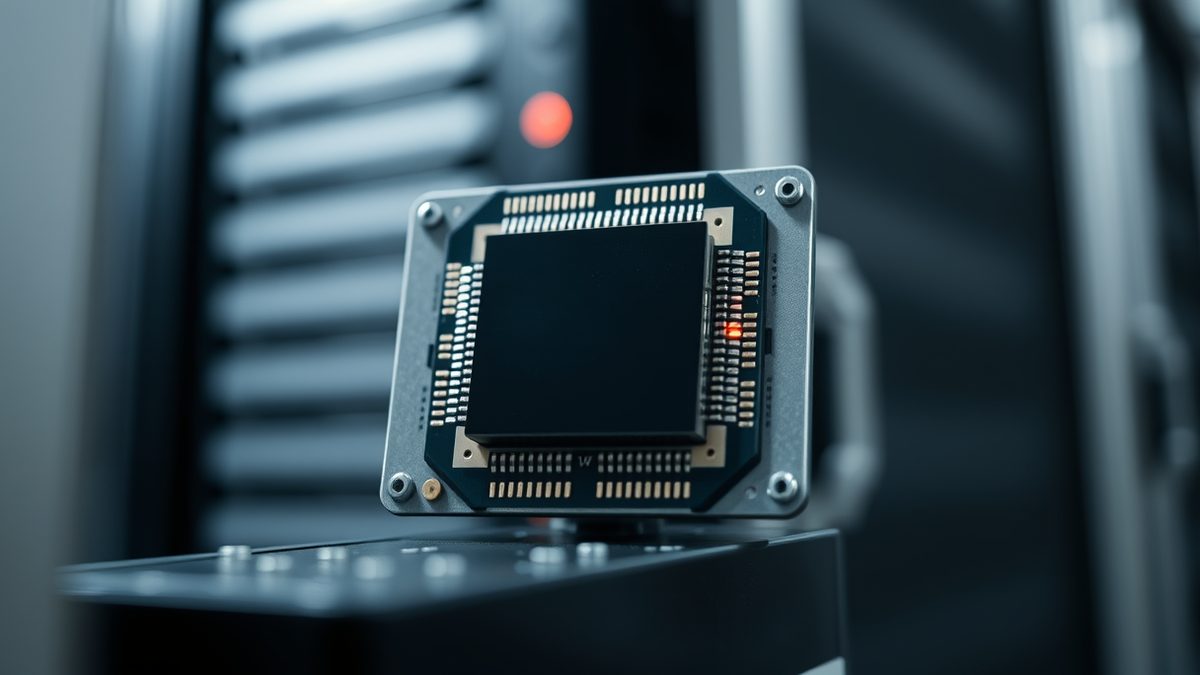
For chip buyers and device makers, the squeeze is already visible in prices and lead times.
Apple expects memory costs to rise again in the December quarter after calling current prices unprecedented. Suppliers are adding fab and packaging lines, but advanced packaging substrates and some HBM materials remain tight. For buyers, that means less room to negotiate on price or delivery. For device makers, it raises the risk of higher build costs and slower launches. The pressure is not limited to one vendor. The tightness covers both memory and packaging, two parts of the supply chain that device makers cannot easily swap. That combination is what makes the current squeeze hard to plan around.
Factory data shows the strain
The ISM's October reading was 55.5%, a full point above September's 54.5%.
It marked the 10th consecutive month of expansion after a 10-month contraction. Its Production Index climbed 2.3 points to 59.0%. That is the highest reading since November 2021.
Survey comments are blunter than the headline. One machinery executive described "explosive growth in the semiconductor and government/defense spaces" and said lead times that ran four weeks now run 50. The same panelist said a $2,000 item now costs $4,000. Another respondent said any commodity consumed by AI and data centers is "in a crunch, both for supply and pricing". Those comments point to demand outrunning capacity, not a single product line. They also show how quickly costs can move for buyers. It is also a warning for procurement teams.
Apple feels the memory squeeze
Apple is the clearest consumer-facing case. CEO John Ternus told the company's 2 November earnings call that "what we're seeing with memory pricing right now is unprecedented".
Tom's Hardware reported on 3 November that Apple's manufacturing bill has climbed by $33 billion in just a few months. Apple has softened the blow with cheaper inventory, cost cuts and price rises on Mac, iPad and iPhone, the report said. It has not announced another round of increases.
Suppliers are not promising relief. Samsung said memory demand would far exceed supply as AI infrastructure expands, and a senior executive warned the crunch could run to 2028 and beyond. SK Hynix says long-term agreements cover more than half of its 2027 and 2028 production capacity.
Tokyo Electron lifts forecasts
The equipment side is where the money shows up first. Tokyo Electron reported first-half revenue up 41.3% year on year and operating profit up 67.2%, according to a note.com analysis of the company's 30 October results. Operating margin rose to 30.4% from 25.6% a year earlier. For the year to March 2027 Tokyo Electron forecasts revenue up 51.4% and operating profit up 87.1%. That would be its first operating profit above ¥1 trillion. CEO Toshiki Kawai said customers are requesting earlier deliveries and additional purchases on AI server demand, and the company sees the 2027 wafer fab equipment market growing.
New lines, still tight
Capacity is being added anyway. BriefAsia reported on 3 November that several AI supply chain firms have announced fresh investment in chip fabrication, advanced packaging, optical components and data center infrastructure in recent weeks. Several cited order visibility extending into the first half of 2027. Taiwanese packaging houses are expanding interposer and chip-on-wafer-on-substrate capacity. In South Korea, memory makers have pulled forward high-bandwidth memory timelines. Clean-room space is arriving ahead of schedule.
The bottlenecks have not moved. Advanced packaging substrate availability remains tight, lead times for some HBM materials have extended, and PCB makers have flagged shortages of laminates for high-layer-count boards.
What to watch
Two risks sit under the forecasts. Tokyo Electron flagged China export regulations and the duration of AI investment as threats to its outlook. BriefAsia noted that analysts are questioning how long AI infrastructure spending can hold its pace, citing cloud provider utilisation rates and the long lead times between model improvements and revenue.
Apple expects memory purchases to get more expensive into 2027.
Sources
19- 01U.S. Manufacturing Activity Gains Momentum in OctoberEN
- 02Apple faces unprecedented memory cost increases as RAM prices continue to surge, manufacturing bill climbs by $33 billionEN
- 03The benefits of the AI boom are not limited to GPUs. The next growth area for semiconductor manufacturing as seen from Tokyo Electron's financial resultsEN
- 04AI Chip Suppliers Push Capacity Despite Downturn WarningsEN
- 05Waaree doubles Texas solar module manufacturing capacity to 3.2 GWEN
- 06Fast, Sub-Volt HZO Ferroelectric Capacitors For DRAM-Like Memory (SNU)EN
- 07Jobs in Singapore: “Why semiconductor manufacturing offers good opportunities for young graduates today” - Singapore Economic Development Board (EDB)EN
- 08Yingfa Ruineng establishes 7.5 GW PV manufacturing plant in IndonesiaEN
- 09 Putin demands Russian data centers supply capacity to the state in wake of Ukraine drone attacks EN
- 10AI Is Changing How Semiconductor Fabs Work — and Engineers Are Moving Faster Because of ItEN
- 11Bosch Creates Dedicated Semiconductor Division to Strengthen Automotive Chip DevelopmentEN
- 12AI, fuelled by advanced chips, set to power semiconductor manufacturing: industry veteranEN
- 13Cloud Revenue Hits $168B as AI Capacity ExpandsEN
- 14Bosch to form dedicated semiconductor division, targeting growth in new marketsEN
- 15Zero-GWP semiconductor chiller nears commercializationEN
- 16PSMC capacity crunch holds back Jeju Semiconductor's growthEN
- 17AI's Financing Problem Could Become the Semiconductor Industry's Next Downturn - Dr. Robert Castellano's Semiconductor Deep Dive NewsletterEN
- 18AWS Capacity Largely Sold out through 2027, with On-Demand Headroom ReservedEN
- 19Global High-Purity Quartz Market Size, Share, Growth, Trends, and Forecast, 2026-2036 | Market to Reach USD 4.04 Billion as Semiconductor and Solar Demand DriveEN
All figures and quotations in this text come from the sources listed below.
Content prepared by the editorial team with AI assistance.
Rachel Nwosu
Comments
0- No comments yet — be the first.