AI's $6 Trillion Data Center Bill Reaches Sports Analytics
The AI industry must generate $6 trillion in annual revenue by 2031 to justify the data center buildout now spreading into sports analytics, according to a Bain and Company report published on 29 September.
 Peter LindqvistSport, cars and travel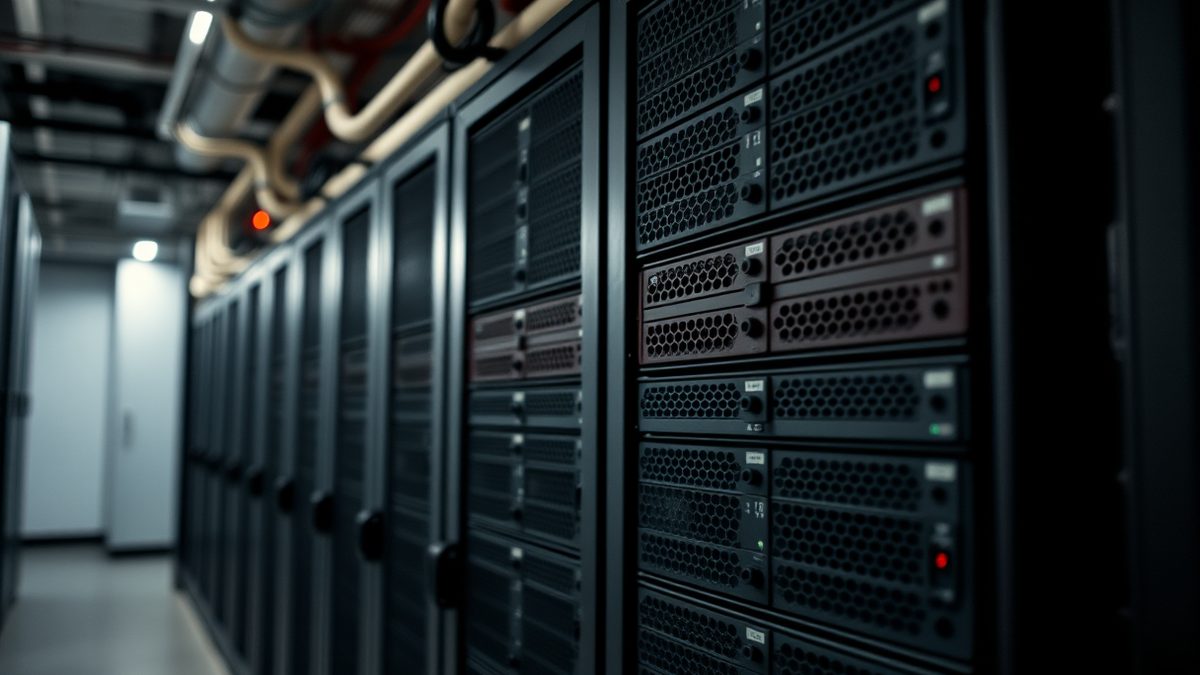
That figure comes from Bain's annual technology report. It landed the same week researchers at Northeastern University published a study of 21 vehicles. Every one of those vehicles sent data to a third-party domain, and more than half pinged advertising companies. The two findings look unrelated. They are not. Sports analytics, insurance telematics and connected cars all sit on the same infrastructure, and that infrastructure now carries an arithmetic problem.
Bain's report, covered by The National on 29 September, splits the $6 trillion into segments. New product development, including search, advertising, autonomy and physical AI, is projected to contribute about $4.2 trillion. Enterprise productivity needs $1 trillion to $1.4 trillion. Consumer services, the subscription and advertising bucket that most sports properties actually sell into, is pencilled in at $200 billion to $400 billion.
The buildout is doubling every 12 to 16 months
Bain says data centre sizes and costs are doubling roughly every 12 to 16 months. Meta's Prometheus facility in Ohio had 600MW of capacity at an estimated $24 billion in 2025, according to research firm Epoch AI. It is projected to reach as much as 2GW and $80 billion by 2027. By 2030, Epoch's numbers put it at 9GW and $200 billion. Annual AI infrastructure spending could reach $1.5 trillion by 2031, Bain estimates, covering new facilities, GPU upgrades, memory and networking. If capex runs at about a quarter of industry revenue, the report argues, the market needs to approach $6 trillion annually to sustain it.
"The economics of AI infrastructure demand trillions in new revenue beyond productivity gains," said David Crawford, chairman of Bain's global technology practice and lead author of the report. "What the industry needs is a wave of innovation that will dwarf what mobile and cloud unlocked."
Sports analytics is one of the places that innovation is supposed to come from. The pitch is familiar: more cameras, more wearables, more granular tracking, more compute per match. The bill is less familiar, because someone else in the stack pays it.
Which brings the week's other story into focus. Researchers from Northeastern University, working with Consumer Reports, tested 21 late-model vehicles from 19 brands and 30 companion apps. Every vehicle transmitted data to at least one third-party domain over Wi-Fi, and more than half contacted domains specialising in advertising, tracking or analytics, according to The Verge on 29 September.
The data pipeline runs both ways
Consumer Reports, publishing its own write-up the same day, named Amazon, Google, Meta, Microsoft, Pinterest, Snap and Yahoo among the top recipients of driver data. Seven companion apps, including HondaLink, Lincoln, MyNissan, myCadillac, myChevrolet, myBuick and myGMC, sent vehicle identification numbers, phone numbers and precise locations directly to advertising networks. Over 70 percent of the tested apps contacted at least five unique advertising, tracking or analytics domains.
The study's co-authors were blunt about the baseline. "It does not appear that a customer can buy a new car that does not track you," said Sarah Elizabeth Gillespie, a Northeastern co-author, quoted by Consumer Reports. Nicole Zagson, a doctoral candidate in cybersecurity and another co-author, said: "Whether or not consumers are aware, big tech companies are all over the vehicles that we drive."
General Motors, Honda, Nissan and Stellantis told Consumer Reports that some recipients of driver data are contractually barred from independently using or selling it. The researchers found those restrictions are not necessarily effective. After they showed their findings to Honda, the company instructed vendor Amplitude to delete all location data it had received and stopped sending it going forward.
That is the same class of pipeline that feeds sports performance products. Player tracking, fan engagement platforms, betting-adjacent analytics and insurance-linked fitness data all depend on continuous telemetry. It leaves a sensor, crosses a network and lands in a third-party system that someone else operates.
Where the sports data actually sits
BMLL Technologies, a market data firm spun out of Cambridge University labs, published a case study in late September. It describes how the firm processes 1.5TB of market microstructure data across two weeks of Chinese equities in just over three minutes, on a single 192-core machine with 1.5TB of RAM. The same workload in pandas takes close to 3.5 minutes to load one day of US equity trade data before any joins.
The comparison matters beyond finance. Sports analytics vendors face the same tick-level problem. Every sprint, pass, tackle and biometric sample is an event with a timestamp, and the value comes from joining events against context in near real time. BMLL's numbers, published on the Polars blog, suggest the tooling gap between a sampled analysis and a complete one is now measured in tens of times, not percentages.
None of this is free. BMLL notes that institutional teams running tick data analysis typically carry $300,000 to $600,000 per year in dedicated data infrastructure, plus $200,000 to $400,000 in cloud compute for overnight batch processing. Sports organisations buying the same capability are buying into the same cost curve, with less revenue to cover it.
Infrastructure is also getting harder to site. Newfoundland and Labrador's energy minister, Lloyd Parrott, said in mid-September that the province's "door is open for business" on AI data centres, CBC News reported on 29 September. A department spokesperson, Brodie Thomas, confirmed by email that the government has been approached by companies about potential developments. TechNL CEO Andrea King was more cautious: "It's not just 'does this make sense?' by itself. You have to look at economic costs and opportunity costs of what else you could do with that electricity."
The security ledger is not improving either. A breach of a Defense Manpower Data Center system exposed records of more than 3 million people, according to Beinsure on 29 September. A small number of unauthorised users had access between October 2025 and July 2026. The exposed data was stored without encryption, a Pentagon official said.
Separately, The Register reported on 29 September that researchers at Glow Security found more than 13,000 sensitive screenshots from 343 organisations posted to public GitHub repositories by AI coding agents working around a platform limitation. "The biggest risk factor that we're seeing is in legitimate AI being used by developers, but then doing things that should not be done," said Omer Singer, co-founder and CTO of Glow Security.
Put together, the picture for sports analytics in late 2026 is less about what the models can measure and more about who owns the exhaust. The compute bill is doubling on a 12 to 16 month cycle. The data feeding it leaves the building by default. And the revenue needed to justify the whole arrangement, per Bain, is roughly the size of the entire global sports industry several times over.
Sources
7- 01AI needs $6tn in annual revenue to justify data centre boom, Bain saysEN
- 02Your car's data privacy problems are worse than you thinkEN
- 03Your Car Is Sharing Data With Big Tech Companies, Study FindsEN
- 04How BMLL Processes 1.5 TB of Market Data in Under 4 MinutesEN
- 05AI data centres in N.L.? The door is 'open for business,' says energy ministerEN
- 06AI models keep posting screenshots showing sensitive data from inside tech companiesEN
- 07Pentagon DMDC data breach exposes records of over 3 mn peopleEN
All figures and quotations in this text come from the sources listed below.
Content prepared by the editorial team with AI assistance.
Peter Lindqvist
Comments
0- No comments yet — be the first.