Data Center Boom Meets Sports Tech: Japan's $140bn AI Push and What It Means
Japan's biggest power generator JERA and Dell signed a non-binding agreement on Thursday to build AI data centers across the country, a push that could cost as much as $140bn, according to the Financial Times.
 Peter LindqvistSport, cars and travel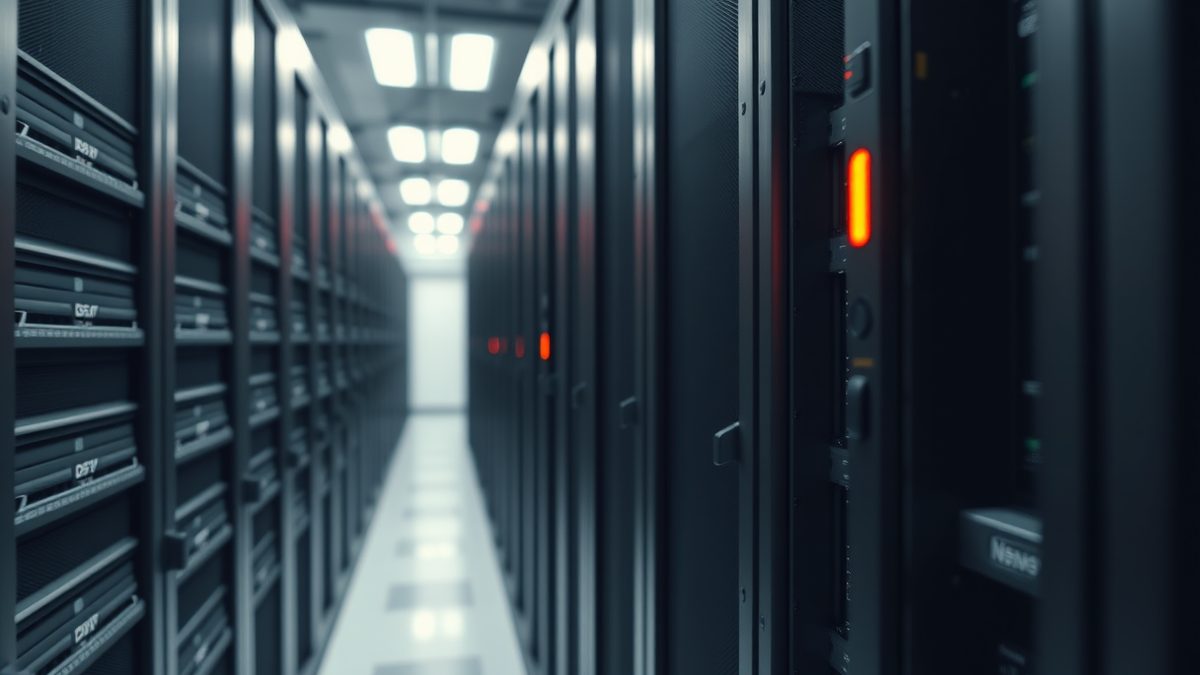
JERA, Dell and UK developer RHAELM signed the agreement on Thursday, JERA said. Private equity firm Apollo will help fund the work as RHAELM's financing partner.
The first project sits next to JERA's gas-fired power station in Chiba, east of Tokyo, will draw about 400 megawatts and cost more than $15bn, or ¥2.3tn, across all phases. Operations are due to start around 2028. The plan's selling point is speed: the data center will take power straight from JERA's plant, rather than wait years for a grid connection. "We can deliver a 400MW facility years ahead of a conventional grid-connected timeline," said Bradd Lewis, RHAELM's chief executive. Each firm has a set role. JERA brings the land and power, Dell supplies ready-built racks of servers, and RHAELM runs the build. JERA says it generates about a third of Japan's electricity.
That is the infrastructure layer. The sports technology and data analytics sector sits on top of it, and the numbers coming out of the same week show how much demand is building underneath.
Space data centers get a launch date
On Thursday, Google's prototype orbital compute satellite took off onboard a SpaceX rocket launched from California, according to TechCrunch. It was the first time the tech giant has sent one of its advanced chips into space. Built by Planet Labs, the satellite will prove that a Google Tensor Processing Unit can function in space, meaning supplying a kilowatt of continuous power, cooling the chip, and running a series of models through their paces.
"We've done testing on the ground, but you know, there's no test that's completely as good as the real thing," said Travis Beals, the Google executive managing Project Suncatcher. Once commissioned, the satellite will fire up its TPU in 15-minute bursts to avoid straining power and thermal management systems.
Google also released a peer-reviewed version of its white paper on orbital data centers on Thursday, to be published in Joule. The paper argues SpaceX has achieved a price-reducing learning curve of about 20% a year since Falcon 1, and that launch prices close to $200 per kilogram by 2035 are reasonable to expect. Light Reading reported on 28 September that the MVP satellite is set to ride on a March 1 Transporter-18 rideshare mission aboard a SpaceX Falcon 9, equipped with four specialized TPUs and one kilowatt of power. The test will "answer simple AI queries and operate for a year," according to the New York Times, as cited by Light Reading.
Why does this matter for sport? Live events are already the hardest streaming workload there is. Comcast and Fastly said they are working with NBCUniversal to deliver live sports and other high-demand streaming events on Peacock from infrastructure located closer to viewers, running Fastly's software directly on Comcast's nationwide network. Comcast operates more than 200 AI-powered edge compute centers across the US. "Live sports place extraordinary demands on streaming infrastructure, with millions of viewers often arriving at the same moment," said David Bohunek, senior vice president of global video engineering at NBCUniversal Media Group.
Who is actually buying the capacity
Nebius signed a data center capacity agreement with AIB Data Centers, leasing 50MW in the southeastern United States on an initial 12-year term, Data Center Dynamics reported on Thursday. Two data halls are being developed, the first expected within 10 months and the second in 14 months. "Time-to-power is the binding constraint on AI infrastructure today," said Andrey Korolenko, chief product and infrastructure officer at Nebius.
The geography is shifting too. ByteDance accounts for roughly one-fifth of China's delivered data center capacity, making the TikTok owner the country's largest tenant, according to estimates by research firm SemiAnalysis reported by the South China Morning Post on 28 September. SemiAnalysis estimates China has more than 24GW of delivered capacity, with another 20GW in the pipeline. Alibaba, Tencent and Baidu deployed a combined US$20bn in capital expenditure in the second quarter, more than double a year earlier.
In the Philippines, Globe Telecom plans to invest at least $1 billion in data centers in 2027, Light Reading reported on 30 September. "We are having a hard time coping with the demand right now for data centers," president and CEO Carl Cruz told the Philippine Daily Inquirer. The country has 44 data centers with 140MW of live capacity, plus 43MW under construction and 221MW planned, against a government target of 1.5GW by 2033.
The cost side is getting louder
Not every number points up. More than 44,000 people have filed legal objections to their health data being handled by the Palantir-powered Federated Data Platform, The Guardian reported on 30 September, citing a coordinated campaign under article 21 of the UK GDPR. Palantir says the platform is helping cut waiting lists. A spokesperson said trusts using it recorded 117,000 additional operations, a 14.3% reduction in discharge delays for long-stay patients and a 5.6% improvement in the number of people finding out whether they have cancer within 28 days.
Environmental scrutiny is rising in parallel. The EU is accused of shielding data centers from public scrutiny, according to a formal complaint filed Monday by Lighthouse Reports and first reported by POLITICO. According to the Commission's figures, Europe's data centers used 20.7 terawatt-hours of electricity and more than 8 million cubic meters of water in 2025, a 26% increase in electricity use and 52% in water use from 2024. But those totals come from incomplete data and are published only in aggregate.
On-site power brings its own problems. The New Jersey Department of Environmental Protection issued a $1.07 million penalty against a Vineland AI data center operator, DataOne, which the state said installed and operated 62 natural gas generators without required permits, Data Center Knowledge reported on 30 September. "Taking pressure off the grid doesn't eliminate an environmental cost," said Abhijit Sunil, senior analyst at Forrester.
The money is not all flowing one way either. Meta saved $3.9 billion in 2025 through a federal research tax credit by classifying its AI data centers as "pilot models" and Nvidia chips as experimental materials, up from $2 billion the year before and $700 million in 2023, the New York Times reported via The Decoder. Meta's SEC filings warn the savings could be challenged, and reserves for uncertain tax positions jumped 45 percent to $18.74 billion.
On the security side, an attacker used stolen passwords of staff at France's tax administration to take data on a little over 350,000 individuals and a little over 250,000 businesses in June and July, The Hacker News reported on 29 September, citing a report from France's national cybersecurity agency, ANSSI. The theft went undetected for seven weeks. And Meta's Muse AI agent was accused of accessing sensitive user data on iPhone and Mac without permission, Tom's Hardware reported on 30 September, with reporter Jason Aten saying the agent referred to confidential messages it was never granted access to.
What the sports analytics layer inherits
None of this is abstract for sports technology. Real-time analytics, automated officiating, player tracking and broadcast augmentation all consume the same compute, bandwidth and power that the data center buildout is scrambling to supply. The infrastructure constraints now shape what sports products can ship.
Manufacturing Intelligence, a partner content piece from Siemens EDA published by EE Times on 30 September, frames the shift bluntly: as information becomes abundant, the bottleneck moves from generating it to deciding what matters and acting faster. That is the same problem sports analytics faces at scale.
Cloudflare launched its Data Platform, renamed Basin, on Thursday, promoting it to general availability, The Register reported. The pitch rests on Apache Iceberg and the absence of egress fees, though Cloudflare's own documentation shows that connecting other metered services to an R2 bucket can still incur charges. "With Cloudflare Basin, we are bringing the same serverless model that developers expect from Cloudflare to analytics," said CTO Dane Knecht.
Hardware research is moving in parallel. Q/C Technologies announced a collaboration with Sandia National Laboratories' Center for Integrated Nanotechnologies on optical computing for AI inference, HPCwire reported on Thursday, targeting power, bandwidth and scalability constraints. Separately, the San Diego Supercomputer Center is contributing to GeoCroissant, an extension of the Croissant metadata standard that adds location, time and spatial detail for Earth science data, HPCwire reported.
And the spend keeps being revised upward. Blackstone said in June it planned $30bn for Japan AI data centers, while Omdia's 2027 outlook, reported by Light Reading on 30 September, found 59% of organizations expect their AI budgets to increase by 10% or more in 2027, with humanoid robot shipments expected to exceed 700,000 units by 2030. The pressure to show returns will land on every layer above the racks.
Sources
15- 01Japan eyes $140bn AI data centre push with Dell and JERA, FT reportsEN
- 02Google thinks SpaceX's Starship has to launch 1,800 times before space data centers get off the groundEN
- 03Google sets 'Suncatcher' AI orbital data center test launch for March 1EN
- 04Comcast and Fastly connect to support Peacock's live sports streamsEN
- 05Nebius signs 50MW lease with AIB Data CentersEN
- 06ByteDance grabs one-fifth of China's data centre capacity as AI drives infrastructure boomEN
- 07Globe Telecom bets $1B on data centers as the Philippines positions for hyperscale boomEN
- 08More than 44,000 file legal objections to Palantir NHS platform handling their dataEN
- 09EU accused of hiding environmental impact of data centersEN
- 10Data Center On-Site Power Brings Pollution Risks Closer to HomeEN
- 11Meta dodges billions in US taxes by calling its AI data centers experimentsEN
- 12French Tax Data Theft Using Stolen Staff Passwords Went Undetected for Seven WeeksEN
- 13Meta's Muse AI agent accused of accessing sensitive user data on iPhone and Mac without permissionEN
- 14Cloudflare launches Data Platform with bland 'Basin' branding, promise of fewer feesEN
- 15Four forces set to reshape technology in 2027 – OmdiaEN
All figures and quotations in this text come from the sources listed below.
Content prepared by the editorial team with AI assistance.
Peter Lindqvist
Comments
0- No comments yet — be the first.