Battery news round-up: iron-lead flow cells pass 10,000 cycles as GM and Geely chase cheaper packs
A Spanish research centre said on 1 October that it has completed 10,000 charge-discharge cycles on an iron-lead redox flow battery, a design built from abundant materials for multi-hour grid storage. The same week brought a $1bn upgrade for GM's LMR cells in Tennessee and a megawatt-charging battery from Geely.
 Daniel FisherSport, cars and travel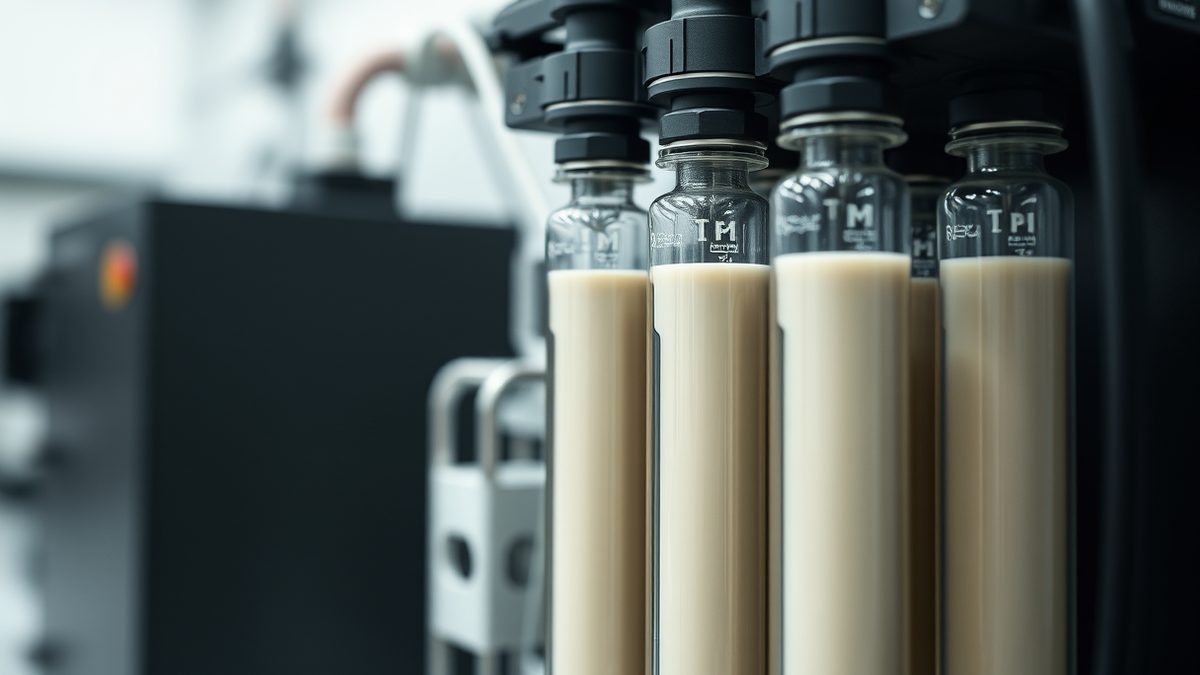
CIC energiGUNE, a Spanish research centre, ran the test. pv magazine reported the result on 1 October. The cell was tested between 25C and 30C. It uses iron and lead as active materials and pairs a single electrolyte loop with a fluorine-free membrane intended to cut internal resistance. The centre says both materials already have established industrial and recycling supply chains. The next step, it says, is kilowatt-scale modules built through simulation, system design and experimental validation.
That framing matters because flow batteries store energy in external tanks, so capacity scales with electrolyte volume while power depends on the size and number of stacks. CIC energiGUNE argues that separation suits solar and wind integration, grid-scale storage, microgrids and industrial energy management. It is also working on vanadium-based flow batteries and on ways to cut their cost and vanadium consumption.
GM puts $1bn behind manganese-rich cells
The more commercially consequential news came from Tennessee. CleanTechnica reported on 30 September that General Motors will upgrade its Ultium Cells plant in Spring Hill to build LMR, or lithium manganese-rich, cells, with combined LFP and LMR investment reaching $2bn by 2030. GM's vice president of battery and sustainability, Kurt Kelty, said high-nickel chemistry remains for long-range markets while LMR targets affordability. Manganese is Earth-abundant and cheaper than some competing materials, but the formula has historically suffered from short lifespan and voltage decay.
Ford has also spent research money trying to make the material behave in an EV battery, CleanTechnica noted in the same piece. The announcement followed a broader retreat: GM pulled back on EV plans last year and pivoted into stationary storage using LFP. The Ultium upgrade is therefore a signal about where the company expects demand to return, not a statement about the current market.
Geely, meanwhile, is attacking the opposite end of the problem. InsideEVs reported on 30 September that the group's Ultra Short Blade Battery can peak at nearly 1,100 kilowatts, and that a Lynk & Co 10 charged from 10% to 97% in 8 minutes and 40 seconds in a demonstration. Geely said megawatt speeds accounted for 60% of heat generated in the battery, with about 35% from electrochemical reactions. CEO Jerry Gan said: "We do not advocate fast-charging technologies at the expense of lifespan." The company extended the pack's warranty from eight years and 150,000 km to eight years and 200,000 km.
The scale of those numbers is easier to read against Western hardware. InsideEVs put the fastest US models at around 400 kW, with the upcoming Mercedes-AMG GT at 600 kW, and said most mass-market cars average about 30 minutes for a 10-80% charge.
A price crossover, on one model at least
TechCrunch reported on 30 September that BMW's 2027 3 Series now comes in petrol and electric form with the EV cheaper: the i3 50 xDrive at $61,500 against $65,900 for the M350 xDrive, both before destination charges. That is a 6.7% gap in the EV's favour. The two cars sit on different platforms, with the i3 on BMW's newest chassis. BMW quotes 468 miles of range for the i3 and fast charging that adds 208 miles in 10 minutes. A cheaper petrol 330 exists at $49,900, but it has no electric equivalent yet.
A second, lower-priced i3 arrived the same week. InsideEVs reported on 30 September that the i3 40 xDrive carries an 82.8 kWh battery charging at up to 300 kW, with a WLTP range of 441 miles and a 10-80% time of 21 minutes. It is 254 pounds lighter than the 50 xDrive and starts at EUR59,900 in Germany, EUR6,000 below its more powerful sibling. US pricing has not been announced.
Not every launch is heading to America. Land Rover's Range Rover Sport Electric was detailed by InsideEVs and WIRED on 29 September, with an 118.5 kWh battery, 800-volt architecture, up to 350 kW charging and a WLTP range quoted at 378 miles by InsideEVs and 374 miles by WIRED. A company representative told InsideEVs the model is not coming to the United States as a 2027 model. WIRED noted the Sport starts at GBP109,810 and that JLR is cutting 4,000 jobs over two years.
Fleets move faster than consumers
Commercial buyers are proving less hesitant. FedEx has ordered 2,000 electric delivery trucks from California startup Harbinger for the United States and Canada, worth $300M, with delivery before the end of 2027, according to The Next Web on 1 October. Harbinger estimates each truck saves about $20,000 a year against diesel, or $40M across the fleet, though those are manufacturer projections rather than measured results. FedEx led Harbinger's $160M Series C late last year and placed an initial order for 53 trucks at the same time.
The Next Web contrasted the order with Europe, where Volta Trucks raised roughly EUR600M and filed for bankruptcy in 2023 with about 5,000 pre-orders, and Tevva went into insolvency in May 2024. It also noted that a European logistics depot needs ten to twenty times its current power capacity to run a fully electric fleet. Harbinger's Class 5 and 6 trucks start at $103,000 before incentives.
Ports are making a similar calculation. CleanTechnica estimated on 1 October that the global battery-electric reach-stacker fleet stands at roughly 1,500 machines, perhaps 15% to 16% of a worldwide fleet of about 9,300, and that electric machines may already be close to one-fifth of current production. It cited Reliance Transport in New Zealand, whose 74-tonne SANY machine uses about 33 kWh per operating hour across full eight-hour shifts and around 100 container moves on busy days. An APM Terminals and DP World analysis from 2023 put battery-electric reach stackers at about 15% higher total cost of ownership than diesel, but expected parity within roughly five years.
Rail is following. Electrek reported on 30 September that Chicago's Metra has ordered eight battery-electric FLIRT trainsets from Stadler, with the first arriving this week for display at the American Public Transportation Association conference in Chicago. The sets seat up to 112 people, with a trailer car adding 46, and Metra expects passenger service before the end of 2027. A fully charged trainset is quoted at 45 to 65 miles of range, with a 20-80% charge in about 30 minutes.
Where the cells come from
Europe's ability to supply all this remains contested. Transport & Environment said on 30 September that by 2030 there will be enough Made-in-EU cells for the vehicles covered by the Industrial Accelerator Act, which includes corporate and private EVs receiving public support, provided all projects materialise, including medium-confidence ones. It added that local content requirements for cells and cathode active materials could add 34% to EU battery demand in 2027 versus the current baseline, and that China controls up to 90% of global pCAM and CAM production capacity depending on chemistry, and 95% for LFP.
The BBC reported on 29 September on Unigrid, a San Diego company shipping a 9 kWh sodium-ion home battery, with 100 units shipped and 1,000 expected before the end of the year. Its cells are currently made in China. The pack uses chromium-3 in its cathode; Professor Dame Clare Grey of the University of Cambridge said chromium-3 may form toxic chromium-6 under certain conditions, while Ivana Hasa of Warwick Manufacturing Group said this can be mitigated by voltage control. Unigrid CEO Darren Tan called the toxicity concerns "overblown" and said third-party tests could not produce chromium-6.
On the demand side, the US Energy Information Administration estimated that light-duty electric vehicles consumed 8% more electricity in the first half of 2026 than in the second half of 2025, down from the 13% to 24% growth seen in recent six-month periods, as CleanTechnica reported on 1 October. New EV sales fell 19% in 1H26 compared with 2H25, after the New Clean Vehicle Credit ended on 30 September 2025. EVs were 2% of registered light-duty vehicles in 2024.
Two other numbers worth holding onto. New York State awarded contracts to eight grid battery projects totalling 950 MW by 2030, Canary Media reported on 28 September, against just 80 MW of operational bulk storage as of March. And in Germany, grid operator Mitnetz Strom told heise online on 1 October that it had received more than 10,000 storage registrations by mid-September, a surge its managing director Lutz Eckenroth called a "tsunami" of applications. Eco Stor CEO Georg Gallmetzer predicted nine of every ten megawatts applied for will never connect.
Sources
15- 01Spanish researchers validate 10,000 cycles for iron-lead flow batteryEN
- 02GM Really Wasn’t Kidding About Those New LMR EV BatteriesEN
- 03How Geely's New Megawatt-Charging EV Battery Fights DegradationEN
- 04BMW built the same car for gas and electric. The EV is $4,400 cheaper.EN
- 05BMW’s Cheaper i3 Has A Smaller Battery, But Its Range Is Still ImpressiveEN
- 06The Range Rover Sport Electric Is Here To Take On The Lucid GravityEN
- 07Range Rover Sport Electric: Price, Specs, AvailabilityEN
- 08FedEx is buying 2,000 electric trucks for $300M, and investing in the company building themEN
- 09Reach Stackers Look Like A Hydrogen Use Case. Ports Are Buying Batteries.EN
- 10Chicago Metra calls its new battery-electric locomotive a first of its kindEN
- 11Ready to Scale: Europe Will Have Enough Cells to Meet Demand and Grow Its Domestic Battery Value Chain IndustryEN
- 12The start-ups hoping to return battery making to the USEN
- 13U.S. Electricity Use For Electric Vehicles Increasing At A Slower Pace In 2026EN
- 14Will New York's 1GW storage contracts finally break the state's big battery impasse?EN
- 15Batteriespeicher-Boom lockt SpekulantenEN
All figures and quotations in this text come from the sources listed below.
Content prepared by the editorial team with AI assistance.
Daniel Fisher
Comments
0- No comments yet — be the first.