Belden and Betacom test private 5G at MxD without publishing throughput figures
Belden and Betacom said they tested private 5G for industrial equipment at Digital Manufacturing and Cybersecurity Institute (MxD) with Belden's NetModule NB1810 router and two CBRS setups. Belden said data transfer speeds met expectations but did not disclose the figures.
 Rachel NwosuAI, models and technology
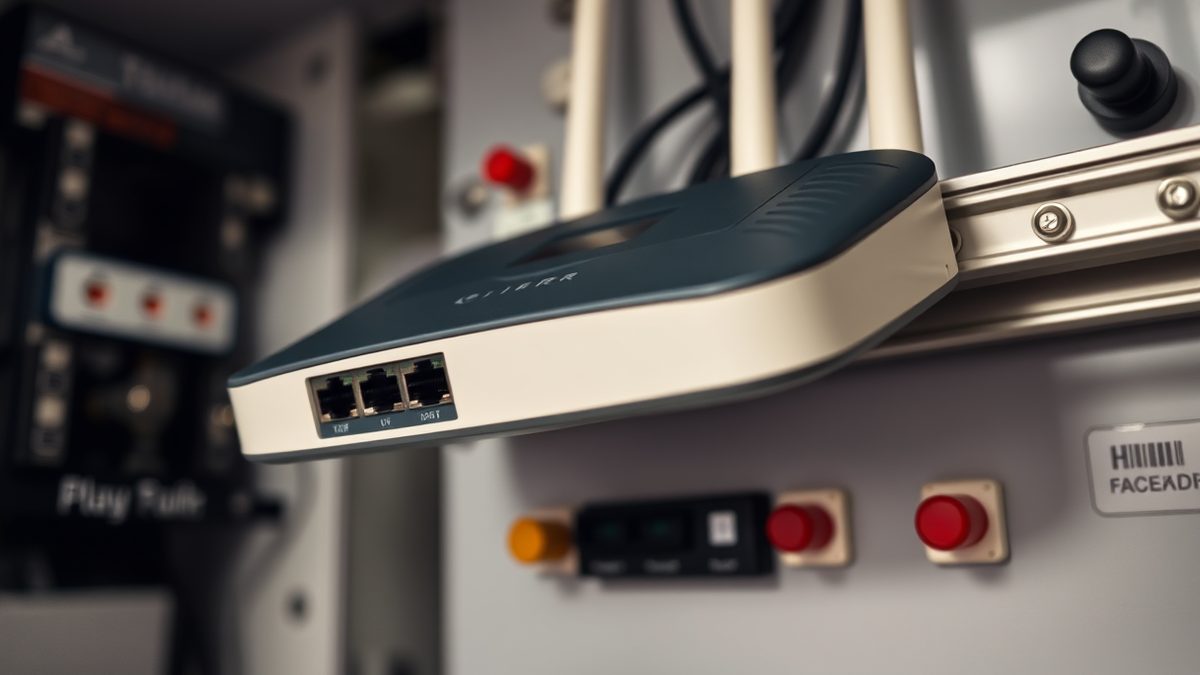
For factory operators, the result settles a narrow question. It leaves the expensive ones open. The test shows an existing industrial router can reach a private 5G core and move data to a cloud application. It does not show how fast the link runs, how reliably it works under motion, or whether timing-sensitive industrial protocols survive the trip. Belden published no comparison with Wi-Fi.
What the MxD test actually showed
Belden and Betacom ran two standalone private 5G setups on the CBRS n48 band inside MxD's laboratory. Several wireless systems were operating there at the same time. The first paired Moso radio equipment with a Druid Raemis 5G core. The second was an Open RAN setup using LG core and radio equipment.
Belden's NetModule NB1810 industrial router connected to both networks and passed the checks the companies set: Dynamic Host Configuration Protocol, static IP addressing and data transfer. An Everged L2 electric vehicle charging station connected through the router and Betacom's private 5G network. It exchanged data with its cloud management platform and received remote configuration and pricing updates.
That is the whole public result. It includes no packet loss rates, no latency percentiles and no comparison with Wi-Fi. For a plant engineer, those figures decide a deployment.
Why factory buyers should care
The appeal is retrofit. The NB1810 lets compatible industrial equipment join a private 5G network without a cellular modem built into the machine. Existing fleets stay in place instead of facing a hardware refresh.
Belden flagged the limit itself. An IP connection does not confirm compatibility with industrial communication protocols that need precise timing or synchronisation, the company said. Belden also named two problems for mobile equipment such as automated guided vehicles: connectivity interruptions during Wi-Fi handovers and inconsistent response times.
The evidence gap: lab only, no throughput
Randy Romanaux, author of Belden's technical article, wrote that "mobility and latency performance are the next areas to evaluate in a production environment".
Published research points at the same wall. An IEEE Access study from April 2026 tested private 5G, public cellular networks and Wi-Fi on a mobile robotic platform. None of the individual connections met the study's 99.9% reliability target on its own. Configurations that combined private 5G and Wi-Fi through packet duplication met or exceeded it. The researchers reported greater stability with private 5G during mobility. They tied that to the single-cell architecture in their tests.
A buyer choosing between the two technologies needs throughput, latency and handover behaviour under load. None of those numbers is public from the MxD work.
Other 5G trials show the same demo-to-deployment gap
NATO's DiBaX 2026 exercise ran between 19 and 30 October. It tested whether ordinary 5G towers could passively detect and track drones. The exercise tried three methods of using commercial 5G in Latvia with the United States, Canada, Germany, Finland, Lithuania and other allies. Some tests failed, according to Tom's Hardware.
"We have connected systems that were never designed to communicate with each other, using artificial intelligence to overcome interoperability barriers," said Admiral Pierre Vandier, NATO's Supreme Allied Commander Transformation.
In the United States, AT&T and Ericsson demonstrated drone detection over 5G outside AT&T Stadium in Arlington, Texas. The system tracked drones flying at altitudes between 300 and 400 feet. Tom's Hardware described the demo as an early taste of 6G, which formally includes both communications and sensing. The Register reported on 2 November that Ericsson says it can detect and track drones using only mobile networks.
Commercial rollouts are moving on a separate track. ZTE and du said they had activated Upper 6 GHz radio equipment on du's live 5G-Advanced network in the UAE. They described it as the first commercial end-to-end U6GHz connection using commercially available customer premises equipment. The setup uses 350 MHz across the 6775 to 7125 MHz band.
Hu Kun, ZTE's president for the Middle East, said the activation "represents an important achievement" in the two companies' strategic collaboration.
What happens next
Belden has named its next step: mobility and latency testing in a production environment. It has not said when that work will happen.
Until a vendor publishes throughput and latency figures from a working factory, the private 5G case rests on connectivity demos. That is a lower bar than most plant managers can buy on.
Sources
19- 01Belden and Betacom test private 5G for industrial connectivityEN
- 02Ericsson says it can detect, track drones using only mobile networksEN
- 03Military explores commercial 5G networks for enemy drone defenseEN
- 04ZTE and du Achieve the World's First Commercial End-to-End Upper 6 GHz Connectivity on UAE Live NetworkEN
- 05Adding Network Security to AI, HPC and Data CentersEN
- 06Community detection in complex networks via node similarity, graph representation learning, and hierarchical clusteringEN
- 07 What is Starshield? A look at SpaceX's military satellite network EN
- 08CVSS 10.0 LXD, MicroCloud Flaw Lets Attackers Impersonate Trusted Clients Without a Private KeyEN
- 09A Shared ChatGPT Link Could Run Attacker Code in Your Session and Read Private ChatsEN
- 10Cloudflare Reports 18.2 Million Network-Layer DDoS Attacks in Q3, Up 38%EN
- 11FCC moves to knock down copper network retirement roadblocks in CaliforniaEN
- 12AI, fuelled by advanced chips, set to power semiconductor manufacturing: industry veteranEN
- 13China enterprise survey: navigating the digital transformation of industries and the B2B opportunity - GSMA IntelligenceEN
- 14Lumen redefining networking for AI and quantum eras with three new initiativesEN
- 15AI traffic growth could strain India's networks as telcos face monetization challengeEN
- 16Launch HN: Momentic (YC W24) – Agents that catch bugs by using your appEN
- 17French government mulled blocking social networks and mobile internet amid protestsEN
- 18Ukrainian startup, GomSpace test satellite for future communications networkEN
- 19Rethinking networks in space with Aalyria’s Brian BarrittEN
All figures and quotations in this text come from the sources listed below.
Content prepared by the editorial team with AI assistance.
Rachel Nwosu
Comments
0- No comments yet — be the first.