Berlin behavior scanners: police want to train AI on real data
Berlin's police are testing AI-assisted video surveillance. A new police law allows real data to be processed further for testing and training, including at private companies.
 Rachel NwosuAI, models and technology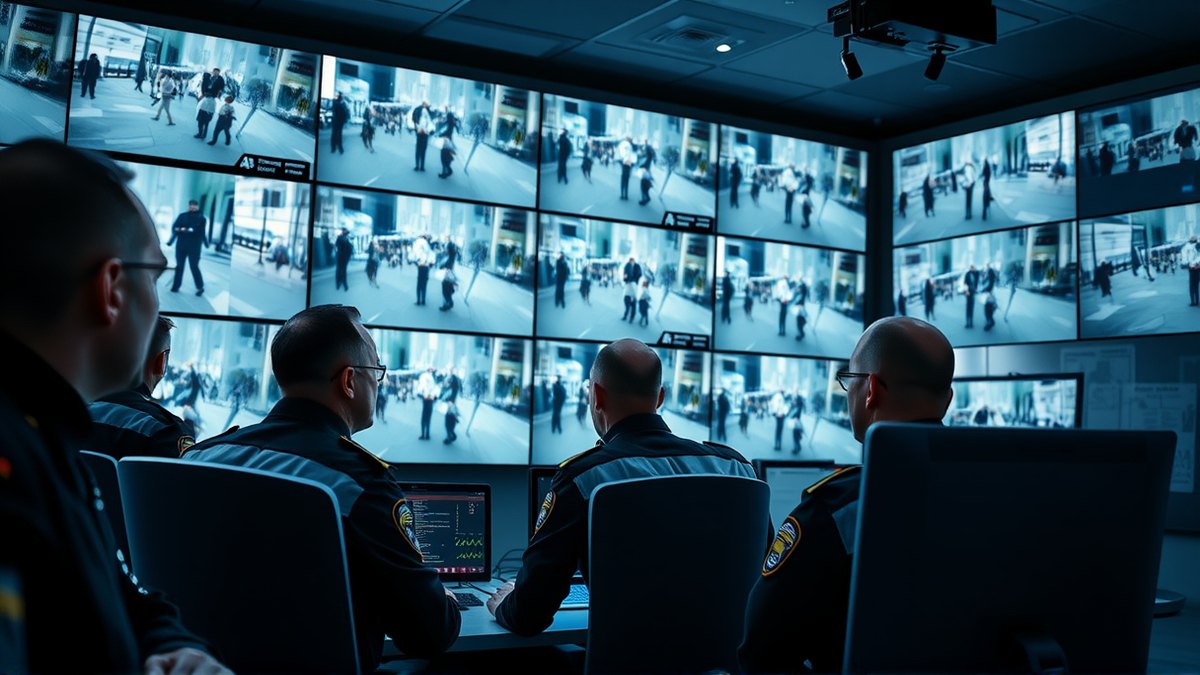
Berlin is pushing ahead with AI-assisted video surveillance. On 7 September 2026, netzpolitik.org reported that the specification for the "project to test AI-assisted video technology" had become public. The news landed amid an IT attack on the Berlin administration. According to the authors, around 1.5 million files were leaked.
What the behavior scanners are supposed to do
The plan covers fixed and mobile camera systems as well as drones. According to the description, the system captures everything that moves around objects requiring protection. It is then supposed to trigger an alarm when objects or movement patterns stand out. A police officer checks the hit afterwards. The software does not decide on its own, but it does pre-sort.
The conflict lies in exactly this pre-selection. Behavior scanners draw on features that can be captured from a distance, and they produce hit lists for the people who ultimately decide. Error rates and systematic distortions are therefore not a downstream operational problem, but part of the technology itself.
New law, new data paths
The second building block follows a good week later. On 15 September 2026, netzpolitik.org reported on the amendment to the police law. It contains rules under which personal data may be processed further in order to test or train AI systems. A minor interpellation by the Left party asked whether non-anonymized data flows to private companies. The answer shows that effectively or irreversibly anonymized data sets are transmitted, unless anonymization stands in the way of the purposes of testing or training. As an example of the companies involved, the report names Staige GmbH, which is counted as part of the Adesso SE environment.
The classification
That shifts the question. It is no longer the testing itself that is at the center, but the data basis: images from public space that accumulate during operation can become training material. Anyone who has once created the archives of surveillance may later decide how much of it lives on in models.
What remains open concerns the assessment: how often and in which situations the system actually triggers an alarm, whether the cameras hang only at protected objects such as embassies or courts or also capture open squares, and which deletion periods apply to training data. These figures are essential for the debate about proportionality. Without them, the assessment of the technology currently stays with the declarations of intent in the specification.
The police officer decides in the end, the system selects beforehand, and in future may learn from images from exactly this operation.
Sources
2- 01netzpolitik.org: Kameras und Drohnen in Berlin – Was Verhaltensscanner erkennen sollenDE
- 02netzpolitik.org: KI-Training – Berliner Verhaltensscanner sollen Privatfirmen mit Echtdaten fütternDE
All figures and quotations in this text come from the sources listed below.
Content prepared by the editorial team with AI assistance.
Rachel Nwosu
Comments
0- No comments yet — be the first.