Border cameras spread from Taraba to the Caribbean as accountability questions linger
International Organization for Migration director-general Amy Pope said AI-fuelled false information turns public anxiety into suspicion and migrants into targets at the International Dialogue on Migration in Geneva. An explainer set out who is legally answerable; rarely the vendor.
 Dr. Amara PatelEconomy, business and world
A trust warning and an accountability primer
Pope's warning was blunt. Facts and figures alone will not win back public confidence, she said.
Pope spoke at the opening of the International Dialogue on Migration in Geneva. She said economic uncertainty, conflict and climate pressures were straining governments and communities. Misleading narratives spread through social media and generative artificial intelligence, she said. Institutions have to listen and act, she said, even when what they hear is uncomfortable. Declining trust, she added, limits governments' ability to cooperate on migration. It also increases the dangers facing people who travel across borders.
Kenya Today published an explainer on a narrower question: which party is legally responsible for each function in a border system.
That question matters more as the hardware spreads. Travellers meet cameras and pre-travel data systems. Their operators, retention rules and costs are often unpublished. When something goes wrong, a vendor and a ministry can point at each other.
The scale behind the argument
The numbers behind the argument are large. More than 304 million people live outside their countries of birth, including 168 million migrant workers, according to the IOM.
Almost half of international migrants are women and girls. Many face heightened risks of discrimination, violence and exploitation. Remittances sent home support about 1 billion people, roughly one in eight people worldwide. The money pays for food, education and healthcare. Pope argued that technology used in migration systems should protect personal information and prevent discriminatory bias. Reliable data and the experience of affected communities, she said, should guide policy.
Nine cameras in Taraba State
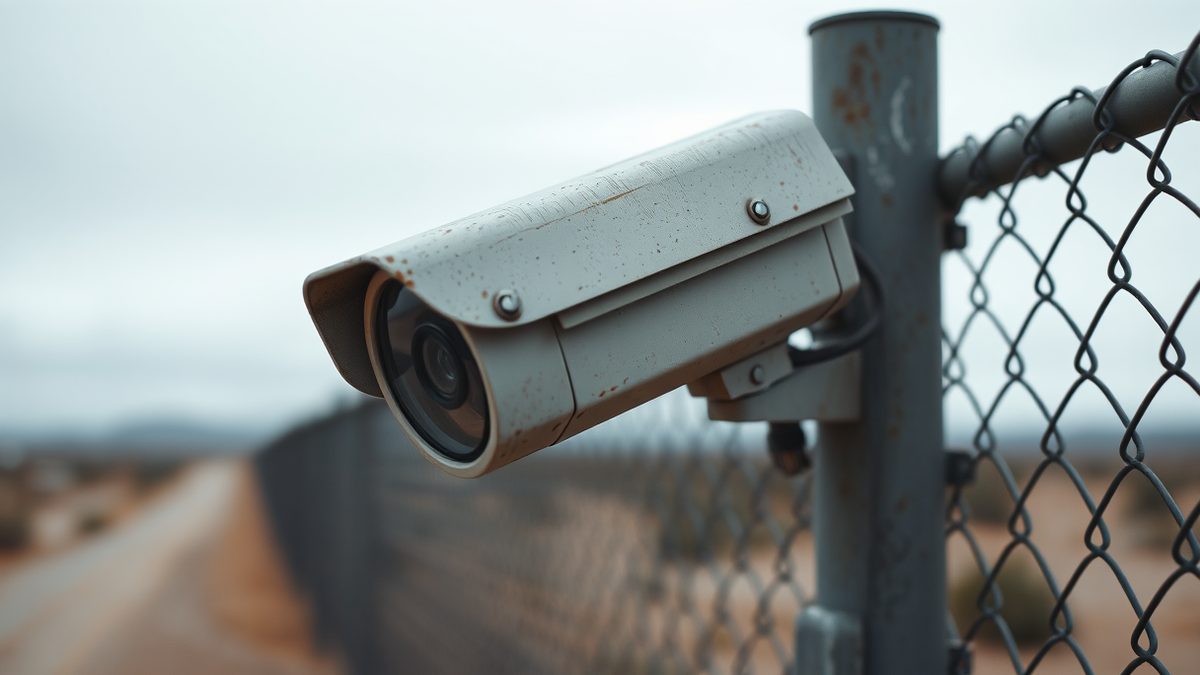
Cameras are already going up. The Nigerian Immigration Service has deployed an electronic border surveillance system across parts of Taraba State. It has installed nine surveillance cameras to monitor cross-border movements.
The cameras form part of the third phase of the federal government's e-border surveillance project. The federal government introduced the project in 2024. It watches areas without permanent immigration personnel. Earlier phases built a mega-site control room at the command headquarters in Jalingo. They built a medium-site at the Gembu Area Office and mini-sites in Morofi and Sardauna. The infrastructure currently covers Sardauna, Kurmi and Takum local government areas. More locations are under consideration.
Nine cameras in three local government areas is a modest footprint. The point is the direction of travel. Monitoring is being extended to places where no immigration officer is permanently posted.
Saratu Ibrahim, controller of Immigration in Taraba State, gave the details during a familiarisation visit by the management of Radio Nigeria GIFT-FM. She said the service deploys officers across all 16 local government areas. The officers document foreign nationals and track migrants living in the state.
Five roles, and who signs for each
Kenya Today's explainer sets out five roles. They are the sovereign authority that decides who may enter. The other roles are the system owner or public contracting authority, airlines and carriers, the technology supplier, and auditors, regulators and data protection authorities.
One organisation may perform more than one of those functions, the explainer says. Each function still needs separate legal authority and accountability. In the United States, Customs and Border Protection is the public authority for the biometric entry-exit programme. Airlines, airports, contractors and vendors take part in implementation. A Government Accountability Office review examined privacy notices, system performance and audits of commercial partners. It did not suggest that the existence of a vendor transferred sovereign border authority to that vendor.
The EU Entry/Exit System follows a comparable split. eu-LISA operates the central system. Participating countries apply it at their borders. National authorities remain responsible for border checks.
The European Data Protection Board has a coordinated supervision framework. It places national data protection authorities and the European Data Protection Supervisor inside the accountability structure.
For a traveller, the practical test is simple. Ask who holds the data, how long the holder keeps it and which body hears complaints. The explainer's answer is that those questions belong to the contracting authority, not the supplier.
What is still unanswered
Elsewhere the answers are thinner. According to tourism minister Kishore Shallow, the software vendor has made a formal presentation to Cabinet in Saint Vincent and the Grenadines. The presentation covered a digital border management system already in use in Saint Kitts and Nevis.
A Vincentian delegation led by Michelle Forbes assessed the system on site. Forbes is the permanent secretary responsible for national security, immigration and disaster management. Shallow said he had reviewed its front-end and back-end operations earlier this year. The government has not announced a final Cabinet decision or a contract award. It has not released total cost, financing, implementation timelines or data protection frameworks.
That silence is the story. Pope said trust is earned one step at a time. She said every agreement honoured and every person treated fairly makes cooperation stronger.
CounterPunch argued on 30 October that borders are coercive social systems rather than lines on a map. It said mainstream descriptions of them obscure that.
Sources
20- 01AI-fuelled migration misinformation erodes public trustEN
- 02Who actually controls a border system? Government, operator and vendor roles explainedEN
- 03Taraba Immigration Targets Unmanned Borders With TechnologyEN
- 04St. Vincent considers St. Kitts digital border system to streamline immigrationEN
- 05Borders as Technologies of DominationEN
- 06Anthropic is working on a system to prove AI models’ identityEN
- 07 China deploys 'world's first' 800-volt DC power system for massive AI data center EN
- 08 Steam Survey shockwaves felt as proportion of 32GB RAM systems drops by more than 5% EN
- 09Meta Quest 2: Meta stellt Entwicklung neuer Systemfunktionen einEN
- 10Inside Automotive DMS & OMS: Technology, Challenges & Power Solutions EN
- 11Shift Left Is Becoming A System-Level ProblemEN
- 12A mysterious star system just 16 light-years away may be hiding habitable planetsEN
- 13EU lawmakers slam new border force powers to surveil social mediaEN
- 14How Beta Technologies Is Clearing the Runway for Electric FlightEN
- 15Scientists discover a hidden 100-million-year-old volcanic systemEN
- 16Violet Teaming in Practice: Lessons from a Pilot Expert Workshop on Governing Complex AI SystemsEN
- 17MAKING MOBILITY MATTER: When Technology Acts Beyond Its Authority - Newland ChaseEN
- 18Report warns use of AI in immigration system is creating an ‘automated hostile environment’ for migrants - Electronic Immigration NetworkEN
- 19Frontex gets power to track migration talk on social mediaEN
- 20TechnoMile Recognized as a 2026 Inc. Power Partner Award WinnerEN
All figures and quotations in this text come from the sources listed below.
Content prepared by the editorial team with AI assistance.
Dr. Amara Patel
Comments
0- No comments yet — be the first.