Apple warns memory prices are unprecedented as smugglers feed China's AI chip demand
Apple warned on 2 November that memory chip prices are rising at an "unprecedented" pace, and said costs in the fourth quarter will be higher again than in the three months before. Separately, Tom's Hardware reported that smugglers are using a trade-control loophole to move banned high-bandwidth memory into China.
 Dr. Amara PatelEconomy, business and world
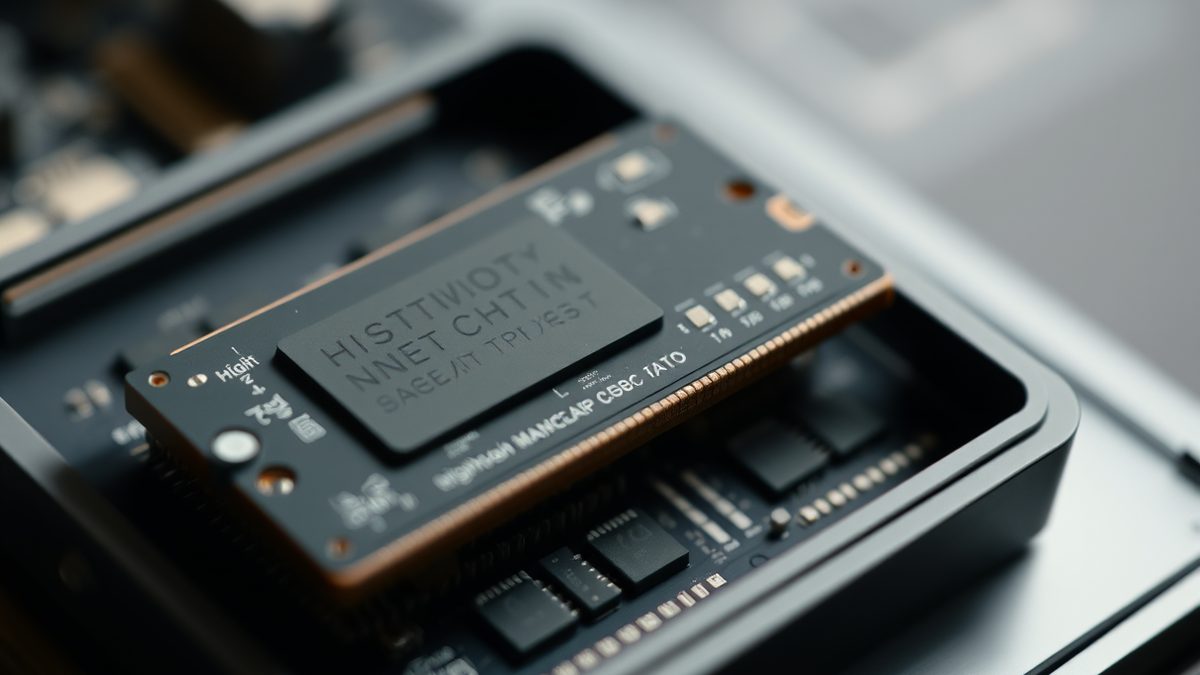
Apple says memory costs are unprecedented
John Ternus, Apple's new chief executive, told a conference call on Monday that memory pricing was "unprecedented". He said memory costs in the fourth quarter would be higher again than in the previous three months. The company also told investors the increase will eat into its profit margins. Apple had already raised iPad and MacBook prices in June, then iPhone prices in September, which Ternus said had "provided some offset". Ternus took over in September.
The results themselves beat expectations. Revenue rose 12% to $114.5bn from $102.5bn a year earlier. Earnings rose 12% to $30.71bn, or $2.10 a share, from $27.47bn, or $1.85 a share. Analysts polled by FactSet had expected $1.99 a share on revenue of $113.4bn.
Apple shares fell 2.75% in after-hours trading on Wall Street.
Apple's results bucked a downward trend for tech companies this quarter. Alphabet, Amazon and Intel all reported disappointing quarterly figures.
Jacob Bourne of Emarketer pointed to record iPhone revenue and strong growth in China. He said both showed the resilience of Apple's business. Bourne argued that Apple's "tepid approach" to AI infrastructure spending had helped preserve its cashflow, while rivals face investor doubts over their own AI budgets.
Ben Barringer, head of technology research at Quilter Cheviot, called the quarter "OK, if on the disappointing side". He noted that iPad and wearables disappointed, while services grew 10%, below the group average. Barringer also said there was "a lot of interest" in the iPhone Duo, though the product is not yet on full release.
Why memory is the bottleneck
Memory is the tightest part of the AI supply chain. Samsung and SK hynix together control more than 80% of the global HBM market. Each AI chip needs six to eight HBM units, so the memory alone can cost up to $32,000. Prices on the grey market show the squeeze. Smuggled HBM3E has jumped from a few hundred dollars to around $4,000 per unit in a year, according to a broker in Shenzhen cited by The Decoder.
The black market does not run on smuggling alone. Older Nvidia GPUs stripped for parts and excess inventory from chip designers who scrapped projects also feed supply.
Apple is not the only buyer feeling it. Memory prices feed into phones, laptops and the servers that run AI models. Apple is competing with datacentres for the same memory.
The processor loophole
Tom's Hardware reported how that memory reaches China. A smuggler who owns a chip design firm builds cheap, low-performing processors that fall below the threshold of US and South Korean export controls. Those processors are paired with HBM from Samsung and SK hynix that is banned for export to China on its own. The rules look at the performance of the server processor, not at the other components attached to it. That lets the memory travel inside a package that counts as a legal export.
The packages land in Hong Kong and are carried into Shenzhen in the luggage of commuters who cross the border daily. In workshops there, technicians heat the boards to soften the solder, lift the memory chips and discard the rest. The failure rate is high. The price of HBM makes the work lucrative anyway.
Huawei pushes buyers to find memory
Huawei has told some customers to source the memory for its AI chips themselves, according to The Information, which effectively pushes buyers onto the black market. Huawei's Chinese suppliers cannot produce enough HBM. US export rules block direct purchases from Samsung and SK hynix. The company plans to launch the Ascend 960DT early next year, which it says will double the performance of its current chips.
That plan depends on memory Huawei cannot buy directly.
China's alternative and the enforcement bill
CXMT defended its bet on a risky new DRAM architecture meant to circumvent US chip curbs, the South China Morning Post reported.
Enforcement is lagging behind the trade. South Korea's customs authority had uncovered violations worth $560m by May, already above the previous full-year record. A third of that total involved strategic goods such as chips exported without proper authorisation or with false declarations.
How much smuggled HBM reaches China is not public. Nor is how long the shortage will last.
The two stories share a cause. Rules written around processor performance have left the memory market to price signals and to smugglers.
Sources
28- 01Apple warns of 'unprecedented' rise in memory chip pricesEN
- 02AI chip smugglers exploit trade control loophole to bring banned HBM from South Korea into ChinaEN
- 03Huawei tells customers to find their own AI chip memory, effectively outsourcing procurement to the black marketEN
- 04China's CXMT defends bet on risky new DRAM architecture to circumvent US chip curbsEN
- 05Mitsui Chemicals to buy Japan chip material maker JSR for over $8.2bnEN
- 06Chip Industry Technical Paper Roundup: Nov. 3EN
- 07Samsung chief visits Japanese unit, discusses chip packaging: Report - electronics.economictimes.indiatimes.comEN
- 08Bosch gives chips their own division, eyeing €5bn in sales by 2030EN
- 09AI, fuelled by advanced chips, set to power semiconductor manufacturing: industry veteranEN
- 10Japan AI Market 2026: Market Size, Investment and Adoption - Digital in AsiaEN
- 11Congress Is Cutting Off Transportation Investments that Help Families Save MoneyEN
- 12The ETS Investment Engine: Scaling Europe’s Strategic E-fuel Market for Shipping & AviationEN
- 13Is There Room for Small-Scale OSATs in India’s Chip Packaging Boom?EN
- 14Japan's JIC Nears $8.2 Billion Exit From JSR With Sale to Mitsui ChemicalsEN
- 15OpenAI deepens Abu Dhabi foothold as Sam Altman inks deals spanning energy, government and investmentEN
- 16European tech weekly recap: Over €1.3B invested across 60+ dealsEN
- 17 Rocket Lab launches Japanese Earth-observing satellite on 99th mission to date (video) EN
- 18Marvell Snaps Photonics Chipmaker Lumentum to Bolster AI ConnectivityEN
- 19Vietnam works to bridge gap between chip research and commercialisation - Vietnam+ (VietnamPlus)EN
- 20Waymo picks Toyota bZ4X as its next robotaxi, starting in Japan in 2027EN
- 21Xiaomi follows Li Auto with planned Sunwoda EVB investment to deepen battery tiesEN
- 22Big Oil Cashes in on Trump Campaign Investment, Doubles Earnings Compared to Last YearEN
- 23Can Southeast Asia pitch itself as an ‘all-in-one’ chip hub? - FortuneEN
- 24Li Auto launches 2026 i6 with unchanged starting price, upgraded in-house chip and batteryEN
- 25SoftBank teams up with five Japanese firms to build quantum-based platformEN
- 26As AI cyber risks grow, Chinese chip expert urges shared ethics standards with US rivalsEN
- 27On a Remote Island, Japan Puts Its Deep-Sea Mining Ambitions on DisplayEN
- 28Japan Advances Deep-Sea Mining as Support for a Moratorium GrowsEN
All figures and quotations in this text come from the sources listed below.
Content prepared by the editorial team with AI assistance.
Dr. Amara Patel
Comments
0- No comments yet — be the first.