Bosch opens its fabs as mature-node chip capacity changes hands
Bosch will put its semiconductor business into a dedicated division from January 2028 and open its manufacturing to outside customers, targeting around €5bn in annual chip revenue by 2030.
 Rachel NwosuAI, models and technology
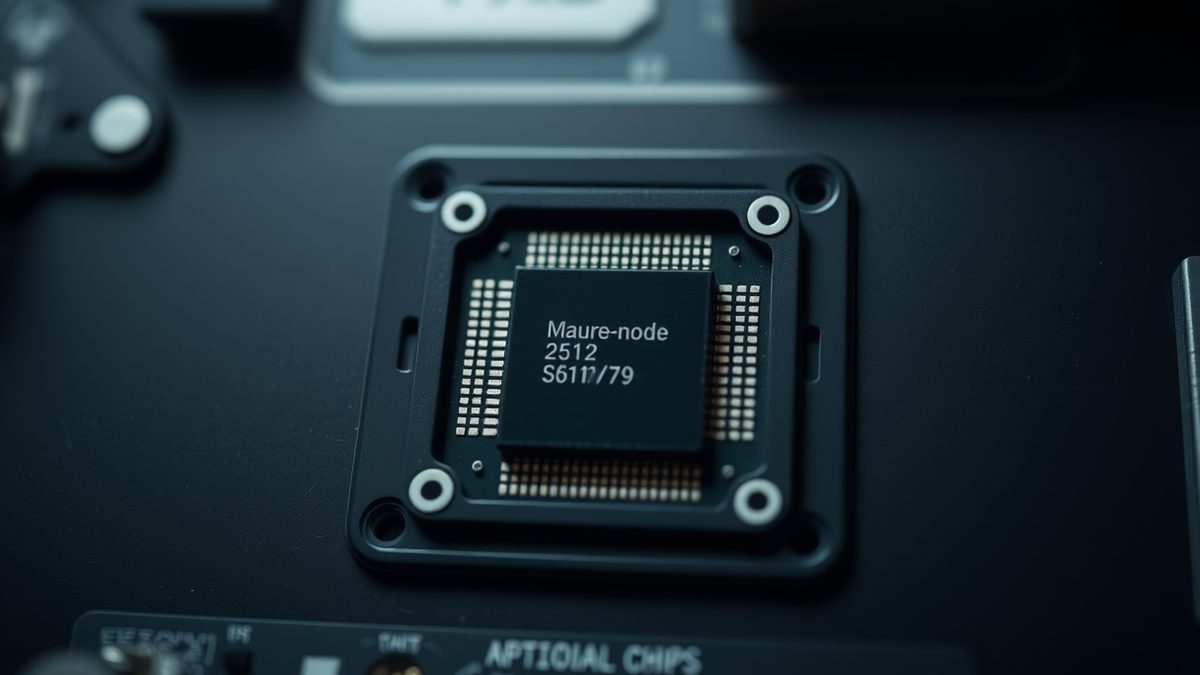
Bosch carves out a chip division
Bosch said the new unit, called Semiconductors, will start in January 2028. It will remain part of Bosch, not a separate company. The chip business currently sits inside Mobility Electronics. That unit will keep making electronic control units for vehicles.
Bosch plans to open its manufacturing facilities to outside clients. It will expand its foundry business. It named robotics, factory automation, AI data centres, phones and wearables as target markets. No customer names are public. Neither Bosch nor its rivals have said how much of the new capacity already has commitments.
The target is around €5bn in annual semiconductor revenue by 2030. Bosch already runs about 40 chip sites worldwide. It has invested roughly €3bn in its Dresden and Reutlingen wafer plants. It is spending around $2bn to convert its Roseville, California facility to silicon carbide.
Erik Rein heads Bosch's chip business. He said: "With the founding of a dedicated unit, we are opening a new chapter in our more than 60-year semiconductor history".
The squeeze is in the old nodes
Samsung is accelerating cuts to its 8-inch mature-node production, according to a TrendForce bulletin dated 19 October 2026. It is also preparing price increases across its lineup heading into 2027. TrendForce expects 8-inch capacity to shrink through the first half of 2027.
Prices are already moving. Nexchip raised foundry fees by 10% from June 2026. Prices on some nodes at SMIC and HuaHong have climbed by roughly 10%.
HuaHong's capacity utilisation reached 102.8% in the second quarter of 2026, above nominal full capacity. SMIC's second-quarter profit more than tripled to $479.2m on revenue of over $3bn. A Samil PwC report published on 26 October said Chinese competition would heat up first in conventional memory, mature-node manufacturing, and packaging and testing. It urged South Korean chipmakers to defend profitability in commodity memory.
China adds wafers as Samsung walks away
SMIC is adding roughly 40,000 12-inch equivalent wafers of monthly capacity by the end of 2026. That comes on top of about 50,000 12-inch wafers it added in 2025. Nexchip is spending CNY 35.5bn. Nexchip launched its Phase IV project in January 2026. It targets a 12-inch line with 55,000 wafers a month. The line will support 40nm and 28nm logic, CMOS image sensors and OLED driver processes.
Wafer output at SMIC "significantly exceeded initial forecasts", co-CEO Zhao Haijun said. The company is looking at adding equipment to factories that still have open floor space, rather than building from scratch.
Capacity is shifting toward Chinese foundries. Samsung is redirecting fab space toward advanced packaging and logic for AI accelerators.
India's opening is packaging, not fabs
Sahasra Semiconductors runs a packaging plant in Bhiwadi, Rajasthan. It built the plant with an investment of more than ₹1.5bn, about $15.8m, according to a May 2026 government announcement. It spans 5,295 square metres and has a stated annual capacity of 60 million units, roughly 164,000 a day. Tata Electronics' OSAT facility in Assam cost ₹270bn, about $3.25bn. Its approved capacity is 48 million units a day. CG Power plans a ₹76bn plant in Sanand, Gujarat for 15 million units a day. Kaynes Technology's ₹33.07bn facility, also in Sanand, has a design capacity of more than 6.33 million units a day.
Nitin Dodia, a semiconductor consultant, put the cost of a mature-packaging facility at ₹1.5bn to ₹2bn. He said the bigger test is an anchor customer. A new OSAT should have one buyer committed for three to five years, he said.
What happens next
Bosch's Semiconductors division begins operating in January 2028. TrendForce expects 8-inch capacity to shrink through the first half of 2027. Samsung plans price increases for 2027.
Apple is feeling the same market. On its earnings call on Monday, chief executive John Ternus called memory pricing "unprecedented". He predicted memory costs in the fourth quarter of this year would be even higher than in the previous three months. CXMT plans to send customers samples of its first server-grade DRAM by the end of this year. The DRAM uses the 4F² architecture. CXMT did not disclose a mass production timeline.
Sources
26- 01Bosch gives chips their own division, eyeing €5bn in sales by 2030EN
- 02Samsung retreats from legacy chips as Chinese foundries grab the gapEN
- 03South Korea urged to guard chip profitability as China's CXMT and YMTC gain market shareEN
- 04Is There Room for Small-Scale OSATs in India's Chip Packaging Boom?EN
- 05China's CXMT defends bet on risky new DRAM architecture to circumvent US chip curbsEN
- 06Apple warns of 'unprecedented' rise in memory chip pricesEN
- 07AMD Forecast Exceeds Estimates After AI Chip Demand SoarsEN
- 08 AI chip smugglers exploit trade control loophole to bring banned HBM from South Korea into China EN
- 09Huawei tells customers to find their own AI chip memory, effectively outsourcing procurement to the black marketEN
- 10Chip Industry Technical Paper Roundup: Nov. 3EN
- 11 New 'Star Trek: The Original Voyages' book traces the stellar legacy of the bold sci-fi brand EN
- 12Chainstack Reports Production Systems Breach Exposing Customer Data and Password HashesEN
- 13Barracuda Flaws Could Be Chained to Bypass Authorization and Gain Root AccessEN
- 14AI’s Expansion Hits the Limits of Local PowerEN
- 15Marvell Snaps Photonics Chipmaker Lumentum to Bolster AI ConnectivityEN
- 16Li Auto launches 2026 i6 with unchanged starting price, upgraded in-house chip and batteryEN
- 17The First Few Tokens Matter: Understanding Chain-of-Thought ControllabilityEN
- 18Opening the Box Changes the Cat: LLMs Detect Chain-of-Thought Monitoring - What now?EN
- 19Chainalysis Confirms Intrusion Into Internal Tools and Exposure of Customer Identity DataEN
- 20As AI cyber risks grow, Chinese chip expert urges shared ethics standards with US rivalsEN
- 21ESI supplying solar array components to missile defense programsEN
- 22AI, fuelled by advanced chips, set to power semiconductor manufacturing: industry veteranEN
- 23Chinese AI chipmaker Iluvatar CoreX says new GPU matches Nvidia’s H200 as chip gap closesEN
- 24Oracle Cloud to Offer Google TPUs and New AI ChipsEN
- 25Huawei’s Tau Scaling Law roll-out reaches base stations in blow to US chip curbsEN
- 26Possible Roberts Road Expansion as SpaceX pushes for Flight 16EN
All figures and quotations in this text come from the sources listed below.
Content prepared by the editorial team with AI assistance.
Rachel Nwosu
Comments
0- No comments yet — be the first.