AI chip packaging capacity grows as CoWoS prices are reported to climb
AI supply chain firms are still committing capital to new chip packaging lines, with order visibility stretching into the first half of 2027, BriefAsia reported on 3 November. The same buildout is running into a repricing, with foundries and assembly houses reported in late October to be preparing 10% to 20% increases for advanced packaging.
 Grace OkonkwoAI, models and technology
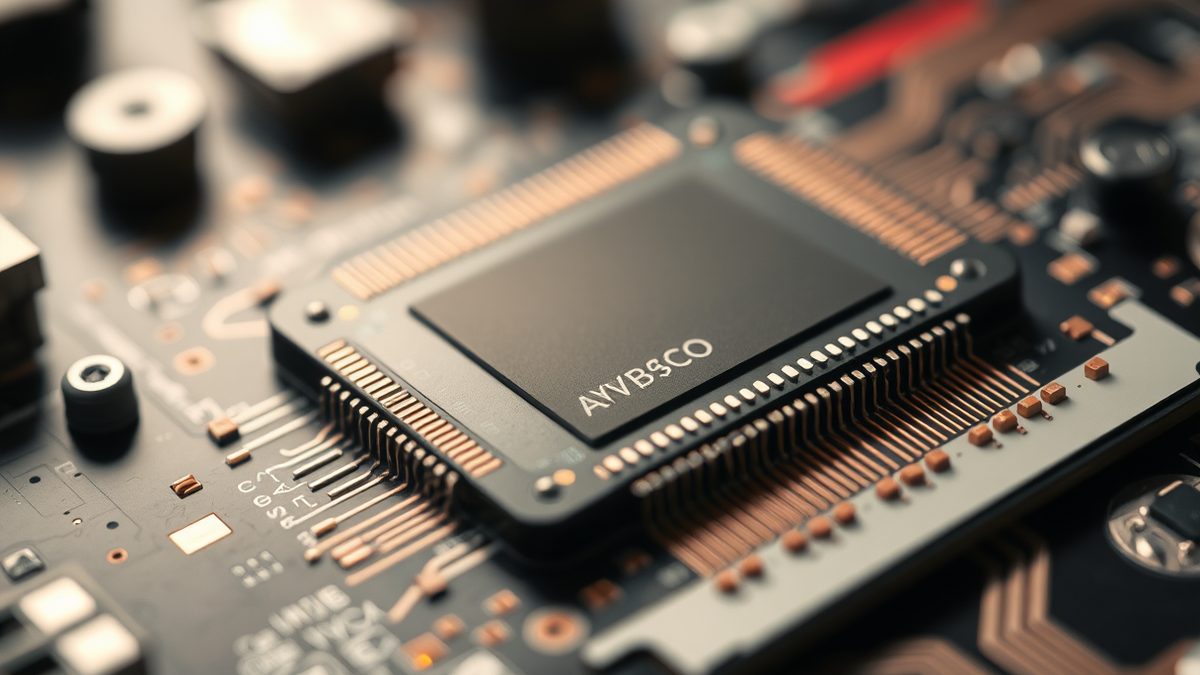
Buyers of AI accelerators face packaging prices reported to be rising by 10% to 20%, and equipment lead times of six to eight months mean new lines cannot arrive quickly. What stays unknown is whether the reported CoWoS increase happens at all: the figures came from industry sources quoted by the Commercial Times, not from a TSMC announcement.
Capacity keeps going in
The money is still moving. BriefAsia reported on 3 November that multiple firms across the AI supply chain announced fresh manufacturing investment in recent weeks.
The commitments span chip fabrication, advanced packaging, optical components and data centre infrastructure, according to the same report. Third-quarter results showed revenue and margin improvements tied to AI orders, and several companies cited order visibility into the first half of 2027. In Taiwan, multiple packaging houses are expanding interposer and chip-on-wafer-on-substrate capabilities. South Korean memory makers have pulled forward next-generation high-bandwidth memory timelines, with clean-room space coming online ahead of earlier schedules.
That is a lot of capital chasing one bottleneck.
The price signal from CoWoS
The Commercial Times reported that foundries and outsourced assembly and test providers were preparing 10% to 20% increases for chip-on-wafer-on-substrate packaging, Investing.com wrote on 27 October. Demand has spread beyond GPUs to server CPUs and custom ASICs, while longer testing times for AI chips add pressure on packaging and test capacity. Equipment lead times have lengthened to six to eight months from three to six months previously.
No company has confirmed those numbers, and no effective date has surfaced.
How much capacity is coming
TSMC's CoWoS monthly capacity is expected to exceed 130,000 wafers in 2026 and reach 200,000 in 2027, according to analyst estimates cited by the Commercial Times.
The packages themselves are getting bigger. AI chip packaging sizes are approaching four times the reticle limit, with the 2.5D roadmap battle extending to 2028, biggo reported on 27 October. Equipment suppliers are already feeling it: ASMPT's sales jumped 49% on AI chip packaging, Startup Fortune reported on 27 October, while its core equipment unit missed.
India's smaller bet on mature packaging
Sahasra Semiconductors' facility in Bhiwadi, Rajasthan, involved an investment of more than ₹1.5 billion, about $15.8 million, according to a government announcement. The plant covers 5,295 square metres and has a stated annual packaging capacity of 60 million units, or roughly 164,000 units a day. Tata Electronics' ₹270 billion, about $3.25 billion, OSAT facility in Assam has an approved capacity of 48 million units a day. CG Power's ₹76 billion Sanand plant is planned for 15 million units a day. Kaynes Technology's ₹33.07 billion Sanand facility is designed for more than 6.33 million units a day.
Consultant Nitin Dodia estimated a facility focused on mature packaging technologies could be built for ₹1.5 billion to ₹2 billion, about $15.8 million to $21 million. He told EE Times a new OSAT should secure at least one customer committed to buying over three to five years. Without that anchor, equipment sits idle.
What stays tight
Advanced packaging substrate availability remains tight, and lead times for some materials used in high-bandwidth memory have extended, BriefAsia reported.
Printed circuit board manufacturers have flagged shortages of specific laminates needed for high-layer-count boards, which has put upward pressure on component pricing. Memory suppliers have responded by prioritising high-bandwidth memory over commodity DRAM. That shift carries implications for server and consumer electronics buyers.
Sources
28- 01Is There Room for Small-Scale OSATs in India's Chip Packaging Boom?EN
- 02AI Chip Suppliers Push Capacity Despite Downturn WarningsEN
- 03TSMC to raise advanced chip packaging prices by up to 20%, report saysEN
- 04AI Chip Packaging Sizes Approach 4x Reticle Limit as 2.5D Roadmap Battle Extends to 2028EN
- 05ASMPT sales jump 49% on AI chip packaging as core equipment unit missesEN
- 06TSMC Weighs 20% CoWoS Hike for Nvidia Chips [2026]EN
- 07Fast, Sub-Volt HZO Ferroelectric Capacitors For DRAM-Like Memory (SNU)EN
- 08Bosch gives chips their own division, eyeing €5bn in sales by 2030EN
- 09Waaree doubles Texas solar module manufacturing capacity to 3.2 GWEN
- 10 AI chip smugglers exploit trade control loophole to bring banned HBM from South Korea into China EN
- 11Huawei tells customers to find their own AI chip memory, effectively outsourcing procurement to the black marketEN
- 12Venture Kick backs Apolarion with €164K to advance plasma-based seed treatmentEN
- 13Apple warns of ‘unprecedented’ rise in memory chip pricesEN
- 14Chip Industry Technical Paper Roundup: Nov. 3EN
- 15 Putin demands Russian data centers supply capacity to the state in wake of Ukraine drone attacks EN
- 16AI, fuelled by advanced chips, set to power semiconductor manufacturing: industry veteranEN
- 17Li Auto launches 2026 i6 with unchanged starting price, upgraded in-house chip and batteryEN
- 18Cloud Revenue Hits $168B as AI Capacity ExpandsEN
- 19Marvell Snaps Photonics Chipmaker Lumentum to Bolster AI ConnectivityEN
- 20Camtek Can Defend 3D Chip Metrology, but 2D Inspection Risks, Pricing Pressure Weighing on Valuation, Morgan Stanley Says - Yahoo FinanceEN
- 21China’s CXMT defends bet on risky new DRAM architecture to circumvent US chip curbsEN
- 22AWS Capacity Largely Sold out through 2027, with On-Demand Headroom ReservedEN
- 23As AI cyber risks grow, Chinese chip expert urges shared ethics standards with US rivalsEN
- 24Chinese AI chipmaker Iluvatar CoreX says new GPU matches Nvidia’s H200 as chip gap closesEN
- 25GitHub Launches npm Firewall to Block Malicious Packages Before InstallationEN
- 26TSMC CoWoS price increase reportedly under consideration as Nvidia packaging demand strains supply - remioEN
- 27Oracle Cloud to Offer Google TPUs and New AI ChipsEN
- 28Huawei’s Tau Scaling Law roll-out reaches base stations in blow to US chip curbsEN
All figures and quotations in this text come from the sources listed below.
Content prepared by the editorial team with AI assistance.
Grace Okonkwo
Comments
0- No comments yet — be the first.