Brussels drafts a Quantum Act as the AI Act's high-risk rules slip
Brussels is drafting a Quantum Act for November to keep Europe in the race with the US and China in quantum computing, POLITICO reported on 31 October. The proposal lands as the EU's high-risk AI rules remain delayed and Nvidia has committed USD 10 billion to European companies and research institutions.
 Dr. Amara PatelEconomy, business and world
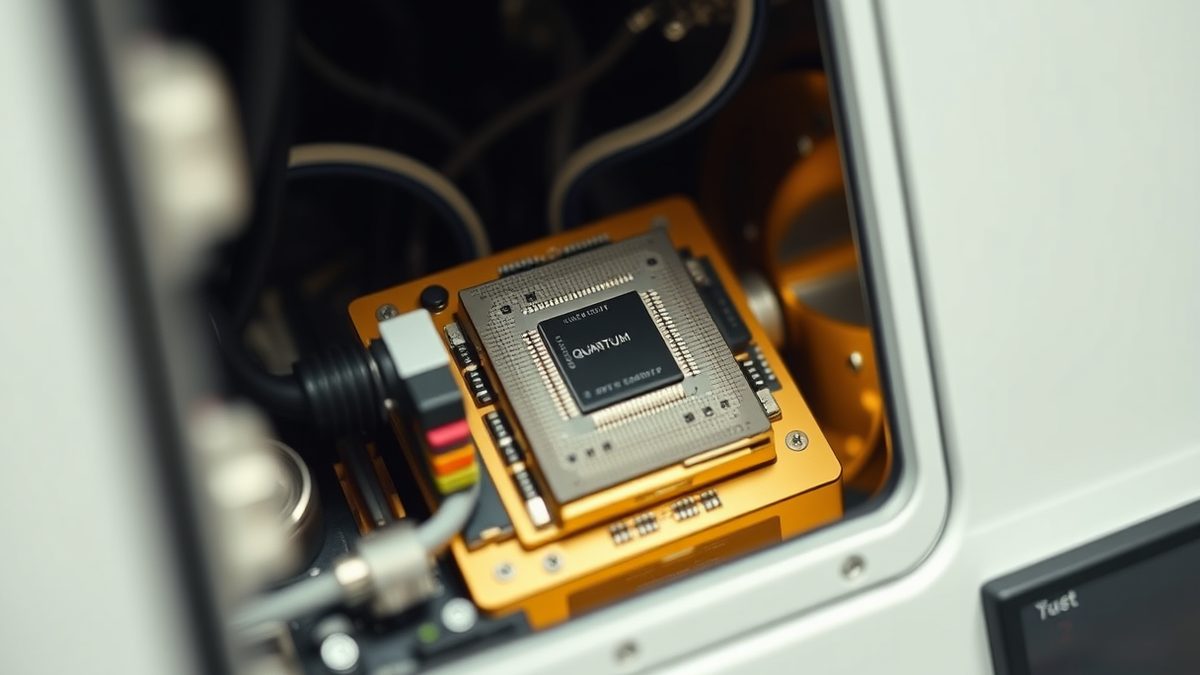
Brussels puts a Quantum Act on the table
Brussels is drafting a Quantum Act. POLITICO reported on 31 October that the November proposal is meant to keep Europe ahead of the US and China in quantum computing.
For AI vendors selling into the EU, the AI Act timetable matters more than the quantum headline. Brussels has delayed application of its high-risk AI rules. It also eased some administrative burdens, giving compliance teams a longer runway before strict checks bite. For European startups, the test is whether the money announced now turns into commercial scale. Still unknown: the final AI Act timetable, the Quantum Act's budget, and whether data protection rules survive the lobbying fight. That leaves two clocks running at once.
The draft pushes EU governments to band together instead of running separate national programmes.
The text is framed around the failures that held Europe back in artificial intelligence. There is too little money to turn research into products that sell, and no clear route to scale globally. Europe has spent the AI boom as a perennial also-ran, and the quantum plan is presented as a chance to learn from that. The draft is a proposal, not adopted law. Quantum is the race Europe thinks it can still win. The draft treats it as the counterpoint to a decade of watching the US and China set the pace in AI.
Implementation work is already underway
Dentons published five proposals for implementing AI regulatory sandboxes on 30 October. The paper is practical, not political.
The Law Society published an AI practice note and looked at what agentic AI means for legal work on 28 October. Guidance of that sort fills the space between a regulation and a working compliance process. Both documents land before the high-risk obligations apply. Brussels frames its administrative easing the same way: rules companies can actually follow. That timing gives compliance teams something to work with while the political timetable stays open.
The AI Act timetable slips
The AI Act timetable has already moved. The EU recently delayed application of its regulations on high-risk AI and eased some administrative burdens.
Investment announcements have arrived alongside the easing. Nvidia said it would put money into four German startups at the Invest in Germany Summit in Berlin, according to CNBC on 20 October. The targets were Agile Robots, Avelios Medical, Mirelo and Reflex Aerospace. The German deals sit inside a plan to commit USD 10 billion, about USD 10.2 billion, to companies, universities and research institutions across Europe. Nvidia has also announced plans to invest in four French startups and discussed AI infrastructure with President Emmanuel Macron. In the UK it lined up five companies working on AI drug discovery, infrastructure prediction and quantum computing. In Sweden it plans an AI innovation hub with a local foundation, alongside work with Volvo Cars on autonomous driving.
Nvidia did not disclose how much each German company gets. That leaves the size of each cheque open.
The two tracks run in parallel. One offers relief from paperwork, the other capital for the companies the rules apply to. For compliance teams, the first track sets the deadline. For founders, the second sets the runway. The AI Act has a legal clock; the investment plan has a commercial one. Both are still running. Neither track waits for the other.
The investment gap in numbers
The gap is stark. ECB President Christine Lagarde said last year that the US developed 59 notable AI models and China 35, while the UK and France produced one each.
She stressed the need to expand Europe's computing capacity to keep pace with demand. Speaking at the Hofburg Dialogue in Vienna, Lagarde also said the US accounts for 75% of global AI computing capacity through its data centers, against 5% for Europe. Nvidia's answer includes USD 250 million, about USD 255 million, of computing resources for AI safety research in the UK over the next five years. Private capital is moving too, from a low base. Tech.eu tracked more than 60 European tech funding deals worth over €1.3 billion last week. AI took €815.6 million of that, ahead of healthtech on €121.1 million and fintech on €104.1 million. The UK alone accounted for €1 billion of the total, with Switzerland on €74.4 million and Spain on €59.5 million. The list includes a £577 million Series C for UK-based Fractile and a $106 million term loan for NexGen Cloud.
One week of deals does not close that gap. The numbers are a snapshot, not a trend.
Data protection is the fault line
Data protection is where the argument gets sharpest. Corporate Europe Observatory published "The Big Tech campaign to kill data protection in Europe" on 28 October.
The title is the thesis: industry lobbying is aimed at privacy rules as much as at the AI Act. The EU's delay of high-risk AI rules and its administrative easing arrive as investment pressure builds. The Quantum Act draft is framed around learning from Europe's AI mistakes, which makes those mistakes the political benchmark. The two debates are separate on paper. Whether that produces simpler rules or weaker ones is the open question. That question will run through the autumn. It will not be settled by a single proposal.
The Quantum Act is due in November. The AI Act's high-risk rules have already slipped.
Sources
18- 01Forget AI, Europe has a plan to win the next tech revolutionEN
- 02"Regulatory Easing Energizes Investment": Europe's AI Ecosystem Gains Growth Momentum as Defense Startups Advance Amid RearmamentEN
- 03European tech weekly recap: Over €1.3B invested across 60+ dealsEN
- 04AI regulatory sandboxes: Five proposals for effective implementationEN
- 05AI practice note and what agentic AI means for legal: 7 technology stories you might have missedEN
- 06The Big Tech campaign to kill data protection in EuropeEN
- 07Randomized Caches in HW: Overheads And Limitations (RUB, Max Planck, Georgia Tech)EN
- 08The TechCrunch Founder Summit agenda is only half the reason to be in Boston on Nov. 4EN
- 09Tomorrow: TechCrunch Founder Summit takes over Boston and when pass rates increaseEN
- 10Chip Industry Technical Paper Roundup: Nov. 3EN
- 11London-based LO:TECH lands $12M Series A led by MMCEN
- 12ARIA’s Scaling Inference Lab Deploys Lumai’s Optical Compute TechEN
- 13The biggest conversations in health techEN
- 14Palantir AI tech unused or little used by 29 NHS trusts said to be benefiting from itEN
- 15Inside Automotive DMS & OMS: Technology, Challenges & Power Solutions EN
- 16How Beta Technologies Is Clearing the Runway for Electric FlightEN
- 17Media rights squeeze, US investment and AI tech: The sports business trends from Sportel 2026EN
- 18TechnoMile Recognized as a 2026 Inc. Power Partner Award WinnerEN
All figures and quotations in this text come from the sources listed below.
Content prepared by the editorial team with AI assistance.
Dr. Amara Patel
Comments
0- No comments yet — be the first.