ByteDance buys land for AI in Beijing. Already 8.7 billion yuan this year
ByteDance has bought a plot in Beijing's southern Olympic Park at the starting price of 2.61 billion yuan. It is the company's third Beijing plot this year, and together they have cost more than 8.7 billion yuan.
 Dr. Amara PatelEconomy, business and world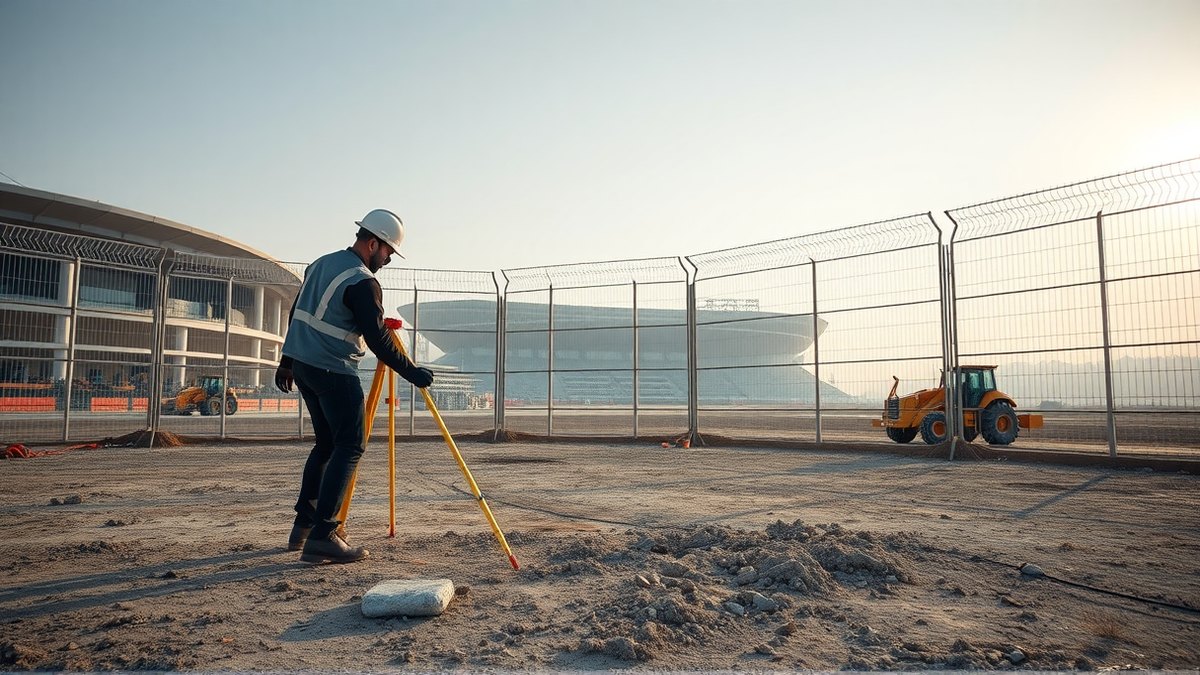
Chinese technology companies are buying space as hard as they are investing in computing power. Jiemian reports that on 21 September the plot OS-15 in the southern Olympic Park in Chaoyang district went to Beijing Yunrui Changshi Technology, a ByteDance investment vehicle set up on 10 June 2026 with registered capital of 1.6 billion yuan. The deal closed at the starting price of 2.61 billion yuan.
The plot's parameters are as concrete as the price: 22,361.1 m² of land and a permitted building area of up to 91,700 m². The site is zoned for commercial and financial development.
This is ByteDance's third land purchase in Beijing this year. In February a subsidiary, Beijing Yunyue Changshi Technology, bought two plots in Haidian district at a starting price of 2.8 billion yuan, HD00-1603-01 and HD00-1603-03A. Together they cover 39,522.111 m², with planned development of around 96,811.5 m². The company is to hold the buildings itself for 20 years. Construction is to begin within 12 months of signing the contract and finish within three years. Land use rights run for 40 years for commercial purposes and 50 years for office use. In total, this year's purchases in Beijing have exceeded 8.7 billion yuan.
These investments have a second side, which the Chinese press describes in parallel: the regulatory one. At a forum devoted to the relationship between technology and the humanities, reported by the Yicai agency, the rector of the Shanghai University of Finance and Economics, Liu Yuanchun, argued that AI is not an ordinary technological change but a "supertechnology". Its impact on economic growth, he said, has a different force, a different time horizon and a different mechanism than previous industrial revolutions.
The economist pointed to three layers of the problem: the limits of human agency, the relationship between efficiency and fairness, and the pace of regulation. He recalled an open letter of 13 July signed by nearly 200 researchers and entrepreneurs, including 16 Nobel laureates, which spoke of the scale of the changes and called on governments to build oversight mechanisms. He also cited the work of the economist Daren Acemoglu on the impact of AI on employment structure and inequality. The conclusion was unambiguous: if regulation is to work, its threshold must be moved much earlier.
Purchasing decisions are part of a broader debate about the limits of this technology. At the end of September, at a forum in Shanghai, Liu Yuanchun argued that artificial intelligence is not an ordinary technological change but a supertechnology that sets a completely different growth path than previous industrial revolutions. In his view this is already visible in academic structures, where the humanities are losing significance and students.
The economist recalled the open letter of 13 July, signed by around two hundred researchers and entrepreneurs, including sixteen Nobel laureates. The signatories agreed on three things: that this technology differs from previous ones, that the scale of its impact exceeds the imagination, and that states must build regulations and a social safety net in advance. Liu also cited Daren Acemoglu's research on the impact of AI on employment and wealth polarization, as well as the warnings formulated in the American debate around successive generations of models. The conclusion was one: the regulatory gate must be moved much further forward before the technology finds itself beyond control.
Sources
2All figures and quotations in this text come from the sources listed below.
Content prepared by the editorial team with AI assistance.
Dr. Amara Patel
Comments
0- No comments yet — be the first.