China's Lijian-2 flies 18 Qianfan satellites in first batch deployment
China launched 18 satellites for its Qianfan internet constellation on Tuesday 3 November, the first large batch deployment for CAS Space's Lijian-2 rocket, state media reported.
 Grace OkonkwoAI, models and technology
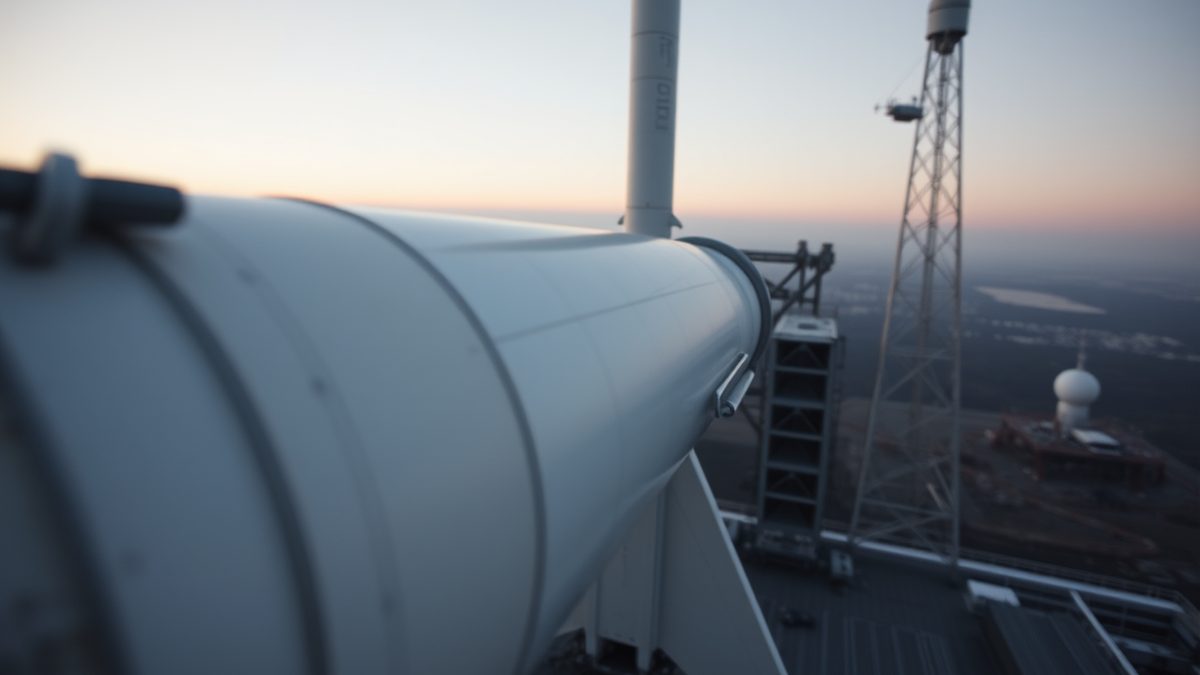
The Lijian-2 Y2 lifted off at 8:15 a.m. Beijing time, Xinhua reported. It rose from the Dongfeng Commercial Space Innovation Pilot Zone in northwestern China. CAS Space, the rocket's developer, said all 18 satellites reached their planned polar orbits.
For the market, cadence matters more than this batch. State-owned Shanghai Spacesail Technologies runs the Qianfan constellation. The constellation has 276 satellites in orbit against a planned 12,000, according to CCTV's account carried by NEWS.am. No consumer pricing, speeds or commercial service date have been published.
The rocket is CAS Space's bid for that launch work. Lijian-2 is China's first vehicle built around a "universal booster core" design, the company says. In that design, three identical cores combine like building blocks. CAS Space quotes 8 tonnes of payload to a 500 km sun-synchronous orbit. It quotes 12 tonnes to a 200 km low Earth orbit. Deployment of the constellation began in August 2024. The satellites use the Ku, Q and V bands. Tuesday's flight was the second for Lijian-2. The maiden launch on 30 March carried the Qingzhou prototype cargo spacecraft. This was the 18th launch in the Lijian series.
Yang Haoliang is CAS Space's chief commander and chief designer for Lijian-2. He cast the flight as a production test, not a technology demonstration.
"We often say the maiden flight verified whether it could fly, while Lijian-2 Y2 verified whether it can fly in batches and deliver reliably. Once this step is taken, we can say Lijian-2 has become a true commercial launch vehicle that can operate at commercial scale."
He spoke in a Bastille Post report about the launch. Lian Jie is the rocket's deputy chief designer. In the same report, he said Lijian-2's design focused on high payload capacity, low cost and high launch frequency.
According to Xinhua, the wider Lijian series has placed one spacecraft and 139 satellites in orbit. Xinhua says total payload mass is above 27 tonnes and nearly 40 customers are at home and abroad. Anadolu reported that Tuesday's mission marked the first time Lijian-2 deployed a large-scale satellite internet constellation.
The batch number depends on who is counting. WAM, citing CAS Space, called the payload the 21st batch of the polar-orbit constellation. CCTV, via NEWS.am, called it the 17th batch to join Spacesail. Both agree on 18 satellites.
China's launch schedule has been dense. TelecomTalk reported that a Long March-8A put up the 28th group of low-orbit internet satellites from Hainan on 25 October. That was 15 days after a Long March-12 launched the 27th group from the same site on 10 October. NASASpaceflight's preview had listed Tuesday's mission for a 28-minute window opening at 00:10 UTC. It refers to the vehicle as Kinetica 2. UA.News, citing ECNS, reported the same 8-tonne and 12-tonne payload figures as CAS Space.
SpaceX still sets the pace. A Falcon 9 launched 27 Starlink satellites on 31 October, Space.com reported. The launch pushed the network past 11,000 spacecraft. That was the 118th Falcon 9 flight of 2026. More than 70% of the year's missions have gone to Starlink. Starlink operates at about 550 km. It serves customers in more than 160 countries, according to a Space.com explainer.
Qianfan has not shown a paying retail customer. Pricing, speeds and a service launch date remain unpublished.
Sources
10- 01Update: Chinese Lijian-2 rocket launches new group of satellitesEN
- 02China's Lijian-2 rocket steps toward commercial launchesEN
- 03Chinese private rocket launches 18 satellites, boosting low-orbit internet constellationEN
- 04Chinese rocket places batch of Qianfan internet satellites into orbitEN
- 05Launch Preview: Falcon 9 to launch USSF missions, China to launch internet satellitesEN
- 06China launches 18 satellites for Spacesail constellation - ECNSEN
- 07China launches 18 satellites for Spacesail internet constellationEN
- 08China Expands Satellite Internet Network With Two Launches in 15 DaysEN
- 09SpaceX launches 27 Starlink satellites to orbit from CaliforniaEN
- 10What is Starshield? A look at SpaceX's military satellite networkEN
All figures and quotations in this text come from the sources listed below.
Content prepared by the editorial team with AI assistance.
Grace Okonkwo
Comments
0- No comments yet — be the first.