Glencore's own-sourced cobalt output falls 52% in first nine months of 2026
Glencore produced 13,700 tonnes of own-sourced cobalt in the first nine months of 2026, down 52% from 28,500 tonnes a year earlier, the company said on 29 October, blaming DRC export quotas and a focus on copper.
 Dr. Amara PatelEconomy, business and world
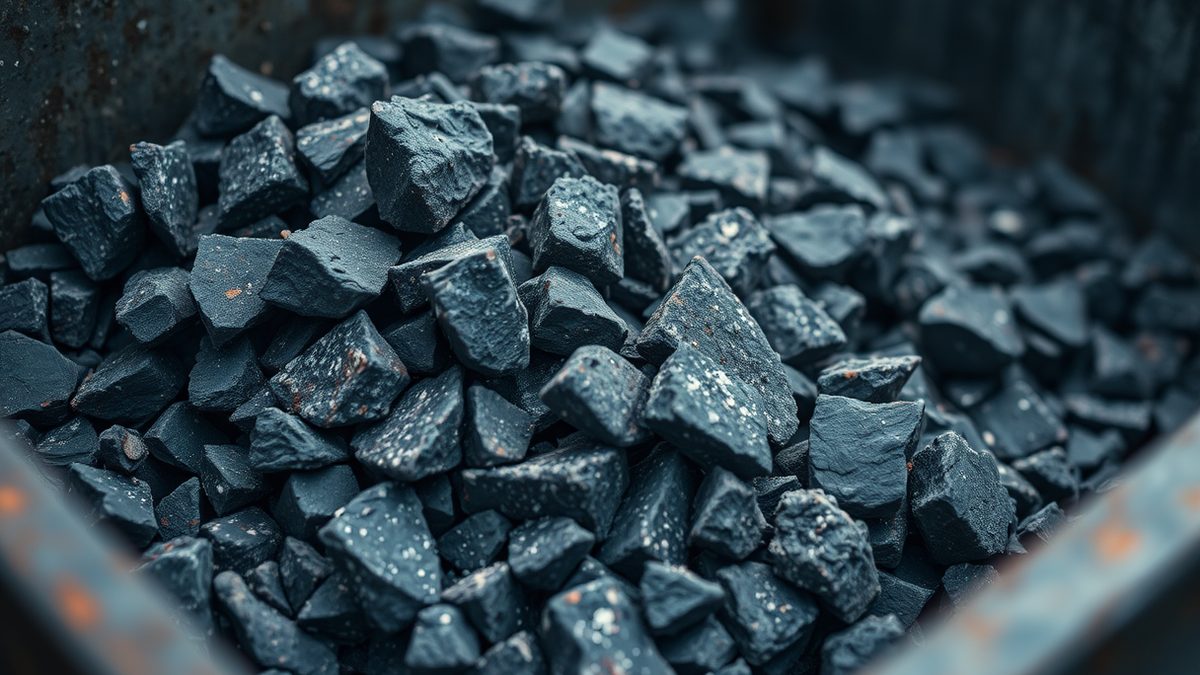
Third-quarter cobalt output came to 3,500 tonnes, 20% below the second quarter, according to the production report. Glencore is one of the world's largest cobalt producers.
Mutanda recorded no cobalt production at all in the nine months, against 8,800 tonnes in the same period of 2025. KCC, the Kamoto Copper Company joint venture, produced 11,600 tonnes of cobalt through September, down 34% year on year, including 2,900 tonnes in the third quarter, 19% lower than the previous three months.
Own-sourced copper output rose 3% to 598,600 tonnes from 583,500 tonnes, as higher mining rates and grades at African Copper and richer ore at Antamina offset weaker output at Antapaccay and Collahuasi.
Metal left in solution
The fall is not only a matter of less rock mined. Glencore said it is increasingly retaining cobalt contained in mixed ore in solution rather than converting it into saleable hydroxide, which cuts near-term processing costs.
That material is excluded from reported production, and Glencore expects to recover its value as export regulations evolve. The volume held in solution is undisclosed, making it hard to judge how much additional supply could reach the market. The company said KCC and Mutanda hold enough cobalt stocks to meet near-term export allocations.
The quota system
The DRC introduced its cobalt export quota system in October 2025, replacing a ban that ran from February to October 2025, and has set quotas through the end of 2027. For 2026 the base quota is 87,000 tonnes of cobalt contained in hydroxide, or 7,250 tonnes a month. The government can add a discretionary strategic quota of 9,600 tonnes, taking the total to 96,600 tonnes.
That is less than half of national output. The DRC produced about 220,000 tonnes of cobalt in 2024, so even the 96,600-tonne total for 2026 and 2027 is well under half of it.
The base quota is allocated to producers on historical exports, with the 9,600-tonne strategic portion reserved for ARECOMS, which can also buy back production above an operator's allowance. Business Insider Africa, citing a regulatory notice seen by Reuters, said quotas allocated for the first half of 2026 and left unused by 30 June would expire and be reassigned to that strategic quota. The regulator also tightened export procedures: only shipments declared in the customs system by 5 July would qualify, with the measures taking effect on 1 July.
Patrick Mpoyi Luabeya, ARECOMS chairman, told Fastmarkets that a quota cut is possible. If the imbalance "were to persist or deteriorate", he said, "a reduction in export quotas may be considered in order to help restore market balance". The DRC accounts for more than 70% of mined cobalt, according to the US Geological Survey, so its allocation decisions set the terms for everyone downstream.
The February 2025 ban followed a glut that had pushed prices to about $10 a pound, African Business reported.
Prices and demand
Fastmarkets assessed cobalt hydroxide at $22.00-23.00 per lb CIF China on 11 August 2026. That is down from $26.00-26.25 per lb on 13-27 April, but four times the assessment on 20 February 2025, the day before the export ban.
In its January 2026 preview, Fastmarkets said cobalt metal prices more than doubled in 2025 and hydroxide prices more than quadrupled.
Fastmarkets projected the market would swing into a deficit in 2026 as a direct result of the DRC's export restrictions.
What happens next
ARECOMS said it does not, at this stage, intend to modify the quota volumes allocated for the coming months.
The regulator declined to comment on individual companies' applications for increases, citing confidentiality reasons. Fastmarkets reported on 6 August that Jinchuan is seeking more quota for its Musonoi mine and MMG for its Kinsevere mine.
Sources
15- 01Glencore cobalt output sinks 52% under DRC quotasEN
- 02Glencore's Cobalt Production Falls 52% YoY in 9M 2026, with Mutanda Reporting Zero Cobalt OutputEN
- 03DRC may reduce cobalt quota if market needs rebalancing, ARECOMS says: exclusiveEN
- 04Africa's biggest cobalt producer tightens grip on global supply with tougher export quota rulesEN
- 05Column: Can the Congo tame the wild cobalt market?EN
- 06Dried-up feedstock pipeline sends cobalt prices soaring in 2025, deficit seen next year: 2026 previewEN
- 07IXM CEO Ives urges cobalt downstream demand to return: LME Week 2025EN
- 08Fears that DR Congo's cobalt quotas could deepen corruptionEN
- 09DRC bans copper and cobalt concentrates exportsEN
- 10Why Congo’s Cobalt Quota Shift Makes Glencore plc’s (GLNCY) Battery Recycling Footprint More StrategicEN
- 11DRC’s cobalt exports contain unreported uranium – our study estimates the global nuclear riskEN
- 12DRC probes how 5,000 tonnes of uranium ‘leaked’ into cobalt exportsEN
- 13Chinese automakers reportedly head to Beijing for talks on EU hybrid export quotasEN
- 14Chery October sales rise 5.3% as NEVs hit record and exports top 200,000 againEN
- 15Glencore's Cobalt Production Falls 52% YoY in 9M 2026, with Mutanda Reporting Zero Cobalt OutputEN
All figures and quotations in this text come from the sources listed below.
Content prepared by the editorial team with AI assistance.
Dr. Amara Patel
Comments
0- No comments yet — be the first.