China tightens AI diagnostic device rules as Europe delays its AI Act deadlines
China's revised medical device quality rules took effect on 1 November, adding a compliance gate for AI diagnostic software that already needs NMPA registration. Europe's amended AI Act timetable, set out in October 2026, pushes the main high-risk requirements to 2 December 2027 and 2 August 2028.
 Sofia MarchettiScience and health
China's two gates
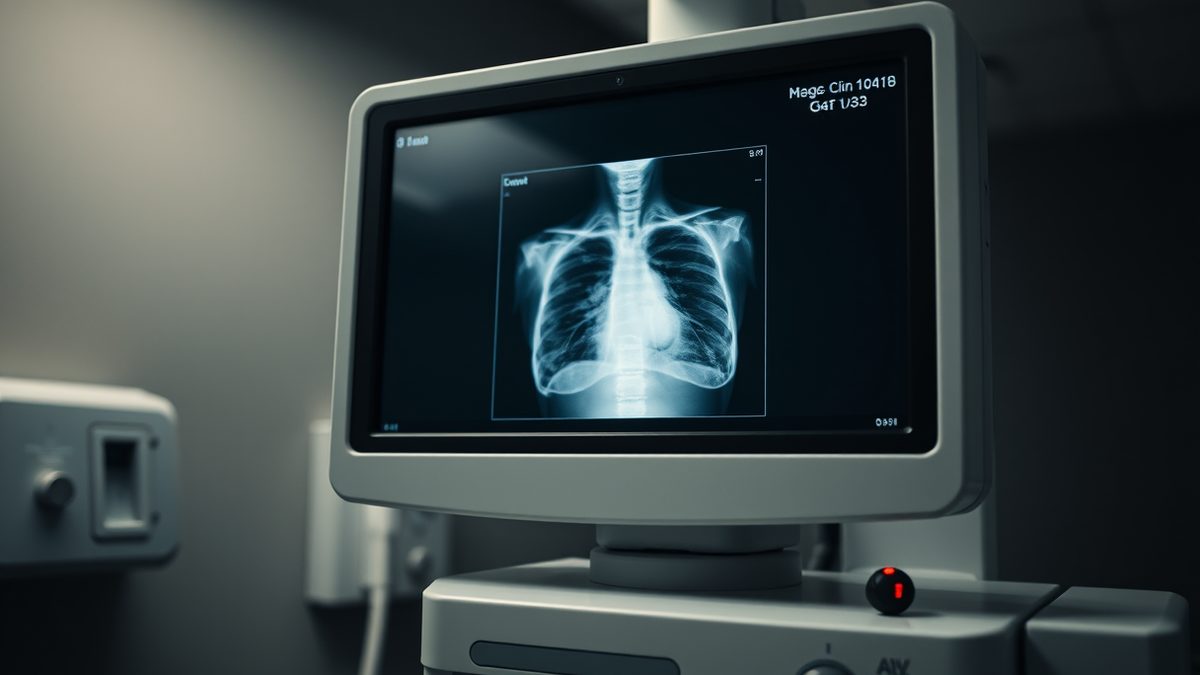
China treats AI software that diagnoses, triages or guides treatment as a medical device. It must be registered with the National Medical Products Administration before sale or hospital use. That is the first gate. The data used to train or run the software must also follow the Personal Information Protection Law, the Data Security Law and the Cybersecurity Law. The revised medical device GMP, which took effect on 1 November, adds quality-system requirements to that stack. In mid-September 2026, the NMPA also released draft guidelines on AI medical devices and on clinical evaluation of multi-disease AI decision tools.
Most diagnostic AI lands in Class III, the strictest route. A 2026 analysis of approvals through June 2025 found 154 AI device approvals since 2020, up from 9 in 2020 to 45 in 2024, with 79.9% in Class III. That makes the strictest route the default for most diagnostic AI.
For developers, China is not one gate but two: product approval and data compliance. Foreign manufacturers cannot register directly and need a legal agent in China. Clinical evaluation is usually the longest step. The draft guidelines are not final, so the precise evidence bar for multi-disease AI tools remains open.
Europe's later deadline
Europe is moving on a different calendar. The AI Omnibus, Regulation (EU) 2026/1744, entered into force on 27 July 2026. It moves the relevant high-risk requirements to 2 December 2027 for systems classified through Article 6(2) and Annex III. For systems classified through Article 6(1) and Annex I, the date is 2 August 2028. Older summaries that give August 2026 or August 2027 as the applicable deadlines can mislead procurement teams. A later AI Act deadline does not remove the medical-device requirements already applicable to a product. The June 2025 joint European guidance on medical devices and the AI Act remains useful for classification, but its original timetable must be read against the amendment.
The device rules apply first. That distinction matters for products like a neonatal positioning system developed by researchers at HUN-REN SZTAKI, Semmelweis University and Pázmány Péter Catholic University. The proof-of-concept uses continuous video in neonatal intensive care units and was published in Pediatric Research in June 2026. A clinical version would likely qualify as medical device software under the EU Medical Devices Regulation. Depending on its intended purpose, it could be Class IIa, IIb or III, requiring a notified body. As an AI system under Article 6(1) of the AI Act, it would generally be high-risk, with the relevant requirements applying from 2 August 2028. The researchers called for multicentre validation and prospective studies before clinical adoption.
Products are reaching patients faster than those rules settle. Athenahealth has launched AthenaPatient MCP, a server that connects Anthropic's Claude to patient health records. It is available only to Claude Pro and Claude Max users, at $20 and $100 per month. Patients must sign in with their Athenahealth credentials, choose what Claude can access and can revoke access at any time, according to the company. The tool takes lab results, vitals, medications, conditions, immunizations, visit history, diagnostic reports, allergies, procedures and care plans into account when answering questions. Athenahealth says the data cannot be used to train Anthropic models. Sam Lambson, vice president of product management, data and ecosystem at Athenahealth, said the tool does not provide medical advice.
The demand is already there. A Pew Research Center survey found that 34% of US adults have talked with a chatbot for medical advice.
Neither China nor the EU has created a single approval route for AI diagnosis. China's GMP is live now; Europe's high-risk AI deadlines are not. The NMPA has not published final versions of the two draft guidelines. For hospitals and developers, the practical question is which version of a product is being governed, and by which rule, at the point of care.
Sources
8- 01AI Healthcare Regulations in China: Medical AI Compliance - Asian Hospital & Healthcare ManagementEN
- 02Athenahealth patients can ask Claude about their medical records nowEN
- 03Healthcare AI regulation must follow the product as it changesEN
- 04Hungary: From research to bedside: the regulatory journey of AI in neonatal careEN
- 05Should a medical diagnosis reshape the past? (2025)EN
- 06AI – From operational efficiency to competitive advantage in diagnostics - Medical BuyerEN
- 07How AI is helping improve diagnosis in prostate cancer, Alzheimer's disease and heart disease - PhilipsEN
- 08ReplayRCA: Measuring Post-hoc Diagnosis and Live Oversight of Agent Failures by Counterfactual ReplayEN
All figures and quotations in this text come from the sources listed below.
Content prepared by the editorial team with AI assistance.
Sofia Marchetti
Comments
0- No comments yet — be the first.