Eli Lilly reports Zepbound revenue up 49% to $5.35 billion in third quarter
Eli Lilly said on 29 October Zepbound revenue rose 49% to $5.35 billion in the third quarter with expanded US obesity-care coverage among drivers [11]. It is the first hard number on what Medicare's $50 obesity-drug benefit does to demand.
 Sofia MarchettiScience and health
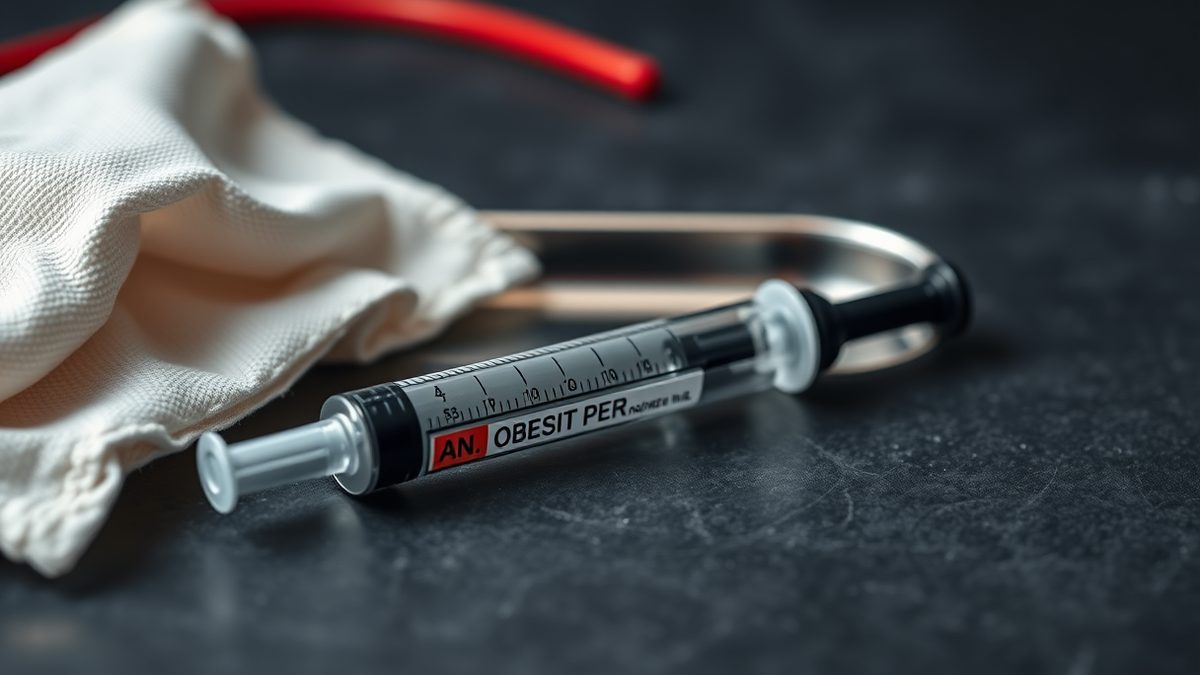
Eli Lilly said on 29 October that Zepbound revenue rose 49% to $5.35 billion in the third quarter. It listed expanded US coverage for obesity care among the drivers [11]. That is the first hard number on what Medicare's $50 obesity-drug benefit does to demand.
Patients see the difference in cash. They pay a flat $50 a month, not $299 to $699 for the Zepbound KwikPen bought out of pocket [1][11].
For Eli Lilly and Novo Nordisk, the rule decides how fast newly eligible seniors start treatment. Eli Lilly is capturing most of them so far [7]. Nobody can say yet whether the coverage survives past 31 December 2027 [1]. Mounjaro shares Zepbound's active ingredient and is approved for type 2 diabetes. It brought in $10.72 billion, up 65% [11]. The two drugs made up about two-thirds of Eli Lilly's quarterly revenue [11]. Total revenue reached $24.4 billion, up 39%. Eli Lilly raised its full-year forecast to $91 billion to $92 billion from $85 billion to $87 billion [11]. Foundayo, its oral GLP-1, added $184 million [11].
Overall sales volume rose 53%, while the prices Eli Lilly actually collected fell 15% [11]. Volume up 53% against a 15% price decline is the plainest signal in the report [11].
What the Bridge program actually covers
Federal law barred Medicare from paying for drugs prescribed solely for weight loss. The program needed a workaround [1][5]. The Bridge program runs from 1 July 2026 to 31 December 2027 [3][4]. Enrollees need Part D and a body mass index of 35 or higher. They can also qualify at 27 or higher with a condition such as prediabetes or heart disease [3][5]. The $50 copay does not rise with the dose, unlike cash prices [3]. Approval does not go through the patient's own Part D insurer. Doctors submit prior authorization to a central system run by CMS contractor Humana. Medicare handles claims and pays pharmacies [3][5].
Physicians have warned the process may be cumbersome. Some expect demand to strain clinics and pharmacies [1].
700,000 new seniors, seven in ten on Eli Lilly
Dave Ricks, Eli Lilly's chief executive, told CNBC that about 700,000 new seniors have started GLP-1 drugs since coverage began in July. Roughly seven in 10 of them are on Eli Lilly medicines [7]. One-third of new patients on oral GLP-1s use Foundayo, he said [7].
The eligible pool is far larger. KFF put the number of Medicare beneficiaries with obesity or overweight at about 13.7 million, based on 2020 data [5]. Novo Nordisk and Eli Lilly estimate that 15 million to 20 million older adults qualify [1]. Medicare had more than 69 million beneficiaries as of late June. So 13.7 million is roughly a fifth of the program [1][5]. Neither company reports patient counts. Sales cannot be read as headcount: revenue depends on dose, rebates and months of supply [11].
How the program got here
CMS had planned something broader. BALANCE would have had the agency negotiate directly with manufacturers for state Medicaid offices and Part D plans [2].
CVS Health declined to take part. On UnitedHealth's 21 April earnings call, Bobby Hunter, chief of government programs, cited "notable challenges and outstanding questions" [2][4]. CMS postponed BALANCE indefinitely and extended the Bridge instead [2][4]. Truist Securities put up to about $500 million in peak Zepbound Medicare Part D sales at risk from CVS Health's exit [2]. That would reach around $3.3 billion if every pharmacy benefit manager opted out [2]. Eli Lilly shares closed nearly 2% lower. Novo Nordisk fell 4% [2].
What happens after 2027
The Bridge program expires on 31 December 2027 unless the administration extends or replaces it. Permanent coverage would need a change in federal law [1]. "It's good news that Medicare is rolling out this program, but it is temporary," Juliette Cubanski, director of the Program on Medicare Policy at KFF, said [1].
Private coverage is heading the other way. A Mercer survey published on 11 June found about 6% of large employers will drop GLP-1 weight-loss coverage in 2026. Another 5% will drop it in 2027 [5].
Sources
17- 01Zepbound Sales Climb 49% to $5.35 Billion as Lilly Sells More Weight-Loss Medicine at Lower Prices - Medical DailyEN
- 02Eli Lilly Just Got a Big Boost From Medicare's GLP-1 ExpansionEN
- 03Medicare will start covering obesity drugs for the first time. Here's what patients should know - CNBCEN
- 04Some Medicare beneficiaries can now get popular obesity drugs for $50 a month - NPREN
- 05Medicare will help pay for weight-loss drugs Wegovy, Zepbound. What to know - USA TodayEN
- 06GLP-1 weight-loss drugs will still be cheap with Medicare, but there's a catch - USA TodayEN
- 07Lilly, Novo dip as proposed Medicare coverage for GLP-1 pilot thrown off balance - BioSpaceEN
- 08Trump strikes deal to lower cost of Wegovy, Zepbound weight loss drugs - NBC NewsEN
- 09This New Zepbound Study Could Be Great News for Eli Lilly InvestorsEN
- 10Eli Lilly Just Got a Big Boost From Medicare's GLP-1 ExpansionEN
- 11This New Zepbound Study Could Be Great News for Eli Lilly InvestorsEN
- 12STAT+: Sens. Wyden and Sanders, backers of ‘Medicare for All,’ set to take charge of key committeesEN
- 13Gene editing could replace a lifetime of medication, but there's a catchEN
- 14Challenge-Aware Knowledge Recruitment with Meta-Agent Supervision for Medical Multi-Agent ReasoningEN
- 15Text-Only Domain Adaptation for Low-Resource Medical ASR: Shallow Fusion and Density Ratio Rescoring for HausaEN
- 16Novo’s race to catch Eli Lilly may already be lostEN
- 17Athenahealth patients can ask Claude about their medical records nowEN
All figures and quotations in this text come from the sources listed below.
Content prepared by the editorial team with AI assistance.
Sofia Marchetti
Comments
0- No comments yet — be the first.