FDA approves Zanvastro, first drug for Alexander disease
The FDA has approved Zanvastro (zilganersen), the first drug cleared for Alexander disease and the first to target the glial fibrillary acidic protein that drives it. It is given as a 50 mg spinal injection every three months, for patients from infancy through adulthood.
 Sofia MarchettiScience and health
What the FDA cleared
Zanvastro is an antisense oligonucleotide: a short synthetic strand that binds GFAP RNA and triggers its cleavage, so astrocytes produce less of the protein that clumps into Rosenthal fibres. It is the first therapy to target the mechanism of Alexander disease rather than its symptoms.
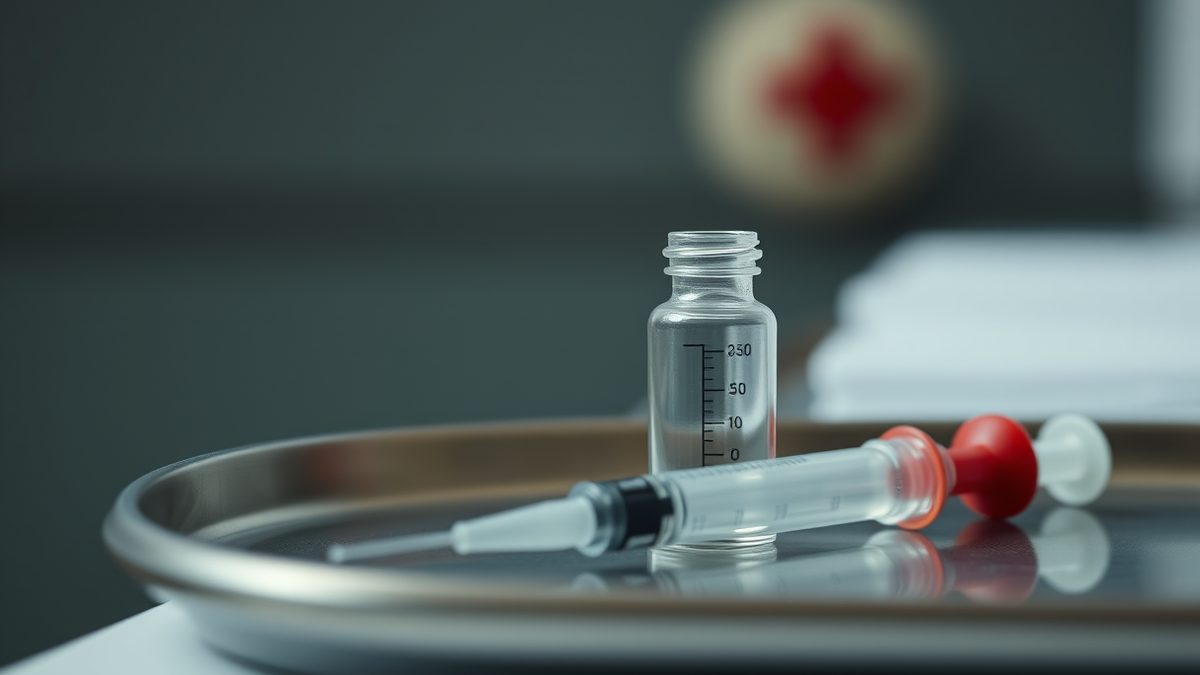
Treatment is a 50 mg injection into the spinal canal every three months, given by a trained health professional. That is four intrathecal doses a year.
The label covers infants through adults, across phenotypes, which is unusual for a disease this heterogeneous. The FDA said it evaluated the available evidence in support of an indication covering patients from infancy through adulthood. For patients under 2, direct trial data were limited by the rarity of the condition and the lack of a concurrent control. The FDA relied on pharmacokinetic modelling and safety data from four treated children to extend the indication downwards. "For patients with Alexander disease and their families, there have been no approved treatment options, only supportive care while the disease progresses," said Emily Freilich, director of the Division of Neurology I in the FDA's Center for Drug Evaluation and Research.
Why a rare-disease approval matters here
Until this decision, care meant managing seizures, loss of developmental milestones, difficulty walking and raised pressure in the brain while the disease progressed. Families now have a licensed option that acts on the disease process, and it is cleared across the age span rather than for one subgroup.
Amy Waldman, medical director of the Leukodystrophy Center at Children's Hospital of Philadelphia, said in a NeurologyLive interview that the approval reaches past this one disorder: it is the first antisense oligonucleotide approved for any leukodystrophy and the first therapy aimed at glial cells rather than neurons.
For hospital and specialty pharmacies the change is operational. A quarterly intrathecal procedure brings preparation, storage and handling requirements, plus counselling for caregivers who will make the trip four times a year, Pharmacy Times reported.
What the phase 3 trial showed
The pivotal study, NCT04849741, enrolled 49 patients aged 2 and older, with a separate open-label substudy of four children under 2. Ionis describes the wider programme as 54 participants aged 1.5 to 53 at 13 sites in eight countries, randomised 2:1 over a 60-week double-blind period. The 50 mg dose was given every 12 weeks.
In patients 5 and older with measurable difficulty walking at baseline, the 50 mg dose produced a least-squares mean difference of about 33.3% in gait speed at week 61 against untreated controls. The measure was the 10-Meter Walk Test, and the result carried P = .041. Children aged 2 to 4 were assessed on the Gross Motor Function Measure-88 instead: a 22.9-point difference, nominal P = .034, with treated children improving while controls declined.
Safety matched an intrathecal injection. The common adverse reactions were vomiting, back pain, cough, headache and post-lumbar puncture syndrome, and the FDA warns that aseptic meningitis has been reported.
Thirty years to a drug target
The target came out of UW-Madison. In the late 1990s Albee Messing, now professor emeritus of comparative biosciences, and Michael Brenner of the University of Alabama at Birmingham traced Alexander disease to mutations in the gene for GFAP. Their work also changed diagnosis, replacing invasive brain biopsies with blood tests for the mutation.
The finding began with an accident: mice engineered to overexpress GFAP developed the protein clumps, known as Rosenthal fibres, that are the disease's signature. Tracy Hagemann at the Waisman Center then built improved rodent models that let the team screen for drugs lowering GFAP. Working with Ionis, the researchers developed antisense oligonucleotides to suppress the protein, and the first human trial began in summer 2021.
"This is a wonderful and long-awaited day for the Alexander disease community," Messing said.
Who sells it and what comes next
Ionis is commercialising Zanvastro in the U.S. itself, with Recordati handling sales elsewhere. BioSpace called it the first marketed product from the company's independent neurology pipeline.
Reuters cited an April estimate from William Blair that peak annual sales could reach about $295 million. The drug carries Orphan Drug, Fast Track, Breakthrough Therapy, Rare Pediatric Disease and Priority Review Voucher designations, and it has no FDA-approved competitor in Alexander disease.
Ionis already sells neurology medicines including Spinraza, Wainua and Qalsody, and its pipeline includes programmes in Angelman syndrome, prion disease, multiple system atrophy and Huntington's disease.
Prevalence figures differ by source. The FDA puts Alexander disease at fewer than one in a million people worldwide, while Ionis estimates approximately 1 in 1 million to 3 million people worldwide. The disease affects fewer than 1,000 people in the U.S..
Sources
35- 01First drug to treat Alexander disease approved by the FDA after three decades of research at UW–Madison - UW–Madison NewsEN
- 02FDA Approves Zilganersen Injection, First Drug for Alexander Disease - Pharmacy TimesEN
- 03Ionis Pharmaceuticals (IONS) Gains First-Mover Advantage with FDA Approval of Rare Brain Disease Drug - Yahoo FinanceEN
- 04After 30 years, scientists finally have a drug for a deadly brain disease - Science DailyEN
- 05Clinical Considerations and Impact of Newly Approved Zilganersen for Alexander Disease - NeurologyLiveEN
- 06Novo’s canned heart disease trials, Novartis’ clinical fails, first approval for Alexander disease - BioSpaceEN
- 07Alexander Disease Finally Has an FDA-Approved DrugEN
- 08FDA Approves First Drug to Treat Alexander DiseaseEN
- 09FDA approves first drug treatment for Alexander diseaseEN
- 10FDA approves first drug for Alexander disease — ScienceAlertEN
- 11Estonia approves 24/7 robotic pharmacies, paving the way for a European firstEN
- 12Child dies of measles in Wisconsin’s first such death since 1990EN
- 13Palvella Wins Priority FDA Review for Rare Disease Drug - MyChesCoEN
- 14Google’s first Wyoming data centre will run on gas with carbon captureEN
- 15Anthropic reverses course and pays for news content for the first timeEN
- 16Finding New Drugs Is Laborious. This AI Startup Is Skipping The Lab WorkEN
- 17STAT+: Revolution Medicines’ pancreatic cancer drug has stunning commercial debutEN
- 18STAT+: A closer look at ProMis Neurosciences and its Alzheimer’s drugEN
- 19Revolta installs first 10 kWh sodium-ion home battery in GermanyEN
- 20First: Volvo CE Electric equipment does the work, without disturbing the wildlifeEN
- 21#AASLD26: Merck unwraps biopsy data for MASH drug it got from South Korea's HanmiEN
- 22Scientists trick cancer cells into making the drugs that kill themEN
- 23 China deploys 'world's first' 800-volt DC power system for massive AI data center EN
- 24Scientists discover new Alzheimer’s drug that repairs DNA damage and reduces brain inflammationEN
- 25Churchill Capital XI shareholders approve $2.5B Agility Robotics humanoid SPACEN
- 26China biotech Minghui does thyroid eye disease deal for $110M upfrontEN
- 27Toyota’s Corolla Cross EV spotted for the first time [Images]EN
- 28Westward Ho! First Trip Cross Country with Our New 2026 Tesla Model Y & Full Self Driving V14EN
- 29Common pesticide linked to 2.5 times the risk of Parkinson’s diseaseEN
- 30Ultragenyx to lay off 20% of employees, scrap a Wilson disease gene therapyEN
- 31Servier's $1.5B bet on Edgewise drug fails five months inEN
- 32Improved throughput with lesser memory per key as compared to RedisEN
- 33Price hikes aren’t all that’s at stake in FirstEnergy Ohio’s rate caseEN
- 34Federal Reserve Board announces approval of application by The Bank of Nova ScotiaEN
- 35T-Mobile: We'll be first with 6G, and no to SpaceX MVNOEN
All figures and quotations in this text come from the sources listed below.
Content prepared by the editorial team with AI assistance.
Sofia Marchetti
Comments
0- No comments yet — be the first.