Geely's new battery takes megawatt charging without killing longevity
Geely Auto Group says its new Ultra Short Blade Battery can peak at nearly 1,100 kilowatts while holding degradation in check, with a demo showing a Lynk & Co 10 going from 10 to 97 percent in 8 minutes and 40 seconds. The automaker detailed the chemistry on 30 September, the same day fresh data showed electric truck sales hitting a record.
 Daniel FisherSport, cars and travel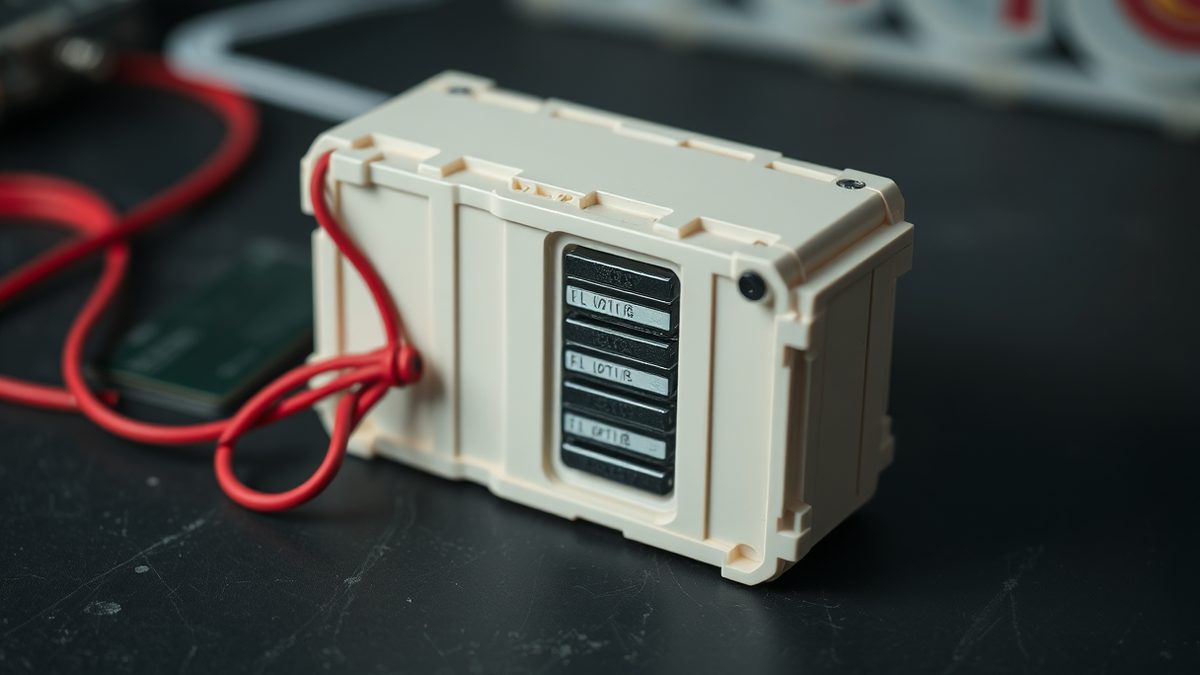
The charging number is the headline: a 10 to 97 percent top-up in 8 minutes and 40 seconds. Geely Auto Group showed that demo with a Lynk & Co 10, according to InsideEVs, which reported the details on 30 September. The pack, called the Ultra Short Blade Battery, peaks at nearly 1,100 kilowatts.
That is roughly three times the peak of the fastest-charging EVs sold in the United States. InsideEVs puts the Lucid Gravity and the Porsche Cayenne Electric at 400 kilowatts, with the upcoming Mercedes-AMG GT at 600 kW, and notes most mass-market US models average around 30 minutes for a 10 to 80 percent charge.
Geely did not pretend that speed comes free. "We do not advocate fast-charging technologies at the expense of lifespan," said Jerry Gan, CEO of Geely Auto Group, according to InsideEVs. "If a battery frequently fast-charged is not maintained or repaired, its lifespan suffers irreversible decline."
Why megawatts age a pack
The company's own breakdown of the heat problem is unusually specific, and it is the most useful part of the announcement. Megawatt charging accounted for 60 percent of the heat generated in the battery, Geely said, mainly because current is pushed through the cells' internal paths. About 35 percent came from electrochemical reactions, with the remainder from what the company called entropic heat, the kind produced by electrode reactions.
The other main aging mechanism is lithium plating. That happens when ions flood the anode, the negative electrode, instead of slotting in cleanly. Plating and the dendrites it can grow are linked to capacity loss and, in the worst case, internal short circuits.
Geely's answer is a set of engineering measures it says slow both effects, plus a warranty extension as a show of confidence. The warranty on the new pack goes from eight years and 150,000 kilometers (93,205 miles) to eight years and 200,000 km (124,000 miles), according to InsideEVs.
The charger behind all this is a 2.2 megawatt unit the company revealed the previous week at an event in Ningbo, China. Geely says it is the first in the world from which two EVs can pull megawatt speeds at the same station. High-end models under the Geely umbrella will peak around 1,100 kW, not the full 2.2 MW.
Megawatt charging accounted for 60 percent of the heat generated in the battery, Geely said, mainly because current is pushed through the cells' internal paths.
The rest of the battery week
Geely's numbers arrive in a stretch of unusually heavy battery news, most of it pointing the same direction: cheaper chemistries and faster charging, with China setting the pace.
On 29 September, General Motors announced that its Ultium Cells joint venture with LG Energy Solution will upgrade the Spring Hill, Tennessee plant to build cells on an LMR formula, short for lithium manganese-rich. CleanTechnica reported the announcement, and quoted GM's own framing: the company says producing multiple chemistries, including high-nickel, lithium iron phosphate and now LMR, in both pouch and prismatic form factors shows it can adapt as battery technology evolves. GM put combined LFP and LMR investment at $2 billion by 2030.
The company's vice president of battery and sustainability, Kurt Kelty, says high-nickel cells still address markets where long range matters most, while LMR comes in when affordability is the priority. Manganese is Earth-abundant and cheaper than several competing battery materials, but short lifespan and voltage decay have been the historic obstacles, which is why Ford and others have spent years on the chemistry.
The US angle is not only about chemistry. A BBC report published on 29 September looks at startups trying to rebuild battery manufacturing on American soil, including San Diego-based Unigrid, which sells a nine kilowatt-hour sodium-ion home battery. Its co-founder and chief executive, Darren Tan, told the BBC the company shipped its first 100 units and expects to ship 1,000 before the end of the year, with demand coming from Spain, France, Germany and the Netherlands after a hot European summer.
Unigrid's cells currently come from China, and the pack uses chromium-3 in its cathode. Professor Dame Clare Grey at the University of Cambridge, co-founder of battery firm Nyobolt, told the BBC that under certain conditions chromium-3 may form chromium-6, which is toxic and cancer-causing. Ivana Hasa of the Warwick Manufacturing Group, who has no connection to Unigrid, told the BBC the conversion is possible at very high states of charge but can be mitigated by voltage control. Tan called the toxicity concerns overblown and said third-party tests could not produce chromium-6.
Trucks and the demand side
Batteries only matter if something moves. BloombergNEF reported on 30 September that global sales of medium- and heavy-duty electric trucks hit a record 158,000 units in the first half of 2026, up 75 percent year on year, with more than nine in ten sold in China. Electric trucks are now about 20 percent of total truck sales worldwide.
Europe sits at 5.5 percent of truck sales for the half, with Norway and Switzerland above China's share and Denmark, the Netherlands and Sweden past 10 percent. BNEF describes the US battery-electric truck market as slowed to a near standstill, held back by policy and cost. The same report notes Tesla's Semi appears priced competitively at $250,000 to $300,000, which BNEF calculations suggest could undercut the total cost of ownership of equivalent diesel trucks in some duty cycles.
Charging economics remain the bottleneck. BNEF says operators would need to charge roughly $0.10 to $0.22 per kilowatt-hour, on top of electricity costs, to recover investment in megawatt-scale stations, and that utilization currently varies widely.
Numbers elsewhere are less flattering for the US. CleanTechnica's Zachary Shahan argued on 30 September that the country could finish last in light-vehicle electrification, citing a 5.9 percent battery-electric share in the first half of 2026, against 45 percent in China in August and 26 percent in Europe in July. Those are the outlet's own comparisons and should be read as an argument, not a neutral tally.
What to watch
- Whether Geely's warranty extension survives real-world megawatt use, since the claim rests on the company's own testing.
- Whether GM's LMR cells reach vehicles on schedule, or stay a chemistry announcement.
- Whether Europe's truck charging build-out catches up with the sales curve BNEF measured.
Sources
13- 01How Geely's New Battery Handles A Megawatt Of Charging Power Without Crazy DegradationEN
- 02The Electric Trucking Market's Record Rise: Three Things to KnowEN
- 03GM Really Wasn't Kidding About Those New LMR EV BatteriesEN
- 04The start-ups hoping to return battery making to the USEN
- 05Is The US Going To End DEAD LAST In Vehicle Electrification?EN
- 06Tesla patents 'Electric Fan Car' with 4 ducted fans ahead of Roadster revealEN
- 07Toyota dropped a 1,675 lb caravan on its electric truck, and it drove off unfazed [Video]EN
- 08BMW's Cheaper i3 Has A Smaller Battery, But Its Range Is Still ImpressiveEN
- 09Range Rover Sport Electric: Price, Specs, AvailabilityEN
- 10The Range Rover Sport Electric Is Here To Take On The Lucid GravityEN
- 11Most data centers refusing to say how much water, electricity they useEN
- 12Texas Electric Utility Only Considered Gas to Power $10 Billion Meta Data CenterEN
- 13Can the World Hit 35% Electrification by 2035?EN
All figures and quotations in this text come from the sources listed below.
Content prepared by the editorial team with AI assistance.
Daniel Fisher
Comments
0- No comments yet — be the first.