Google sends its first AI chips into orbit on a SpaceX rocket
On 1 October, a Falcon 9 is set to place four AI processors into orbit for the Suncatcher project. The prototype will compute only in sessions of about fifteen minutes, because of cooling constraints.
 Rachel NwosuAI, models and technology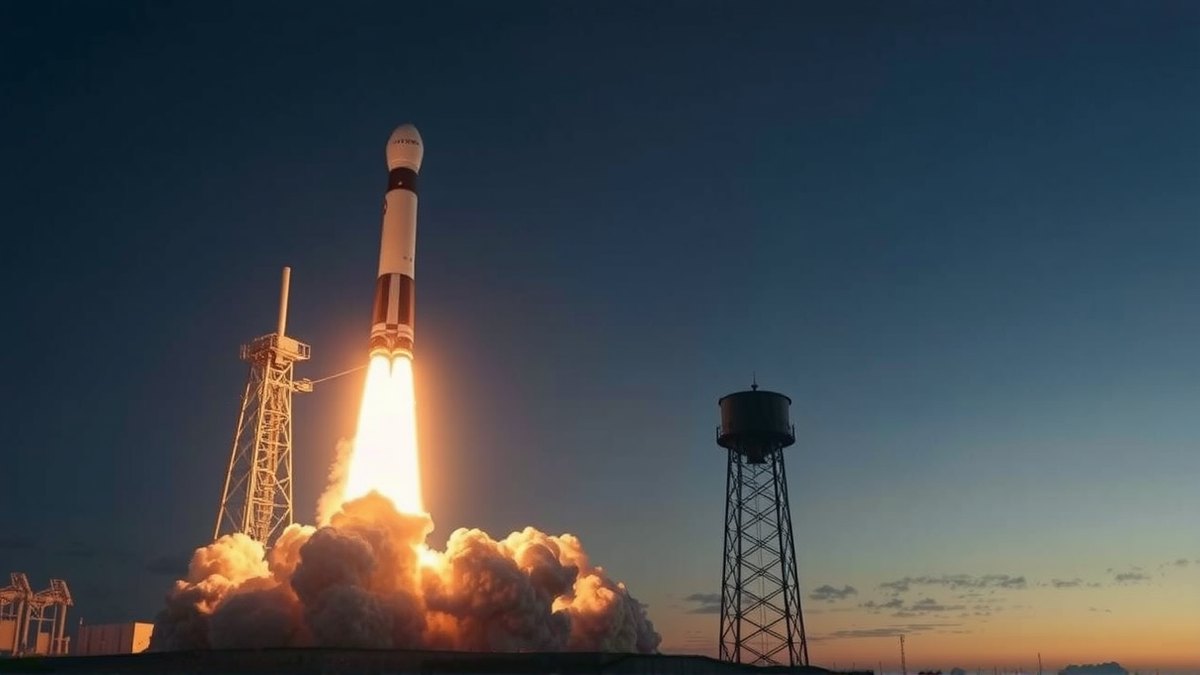
After the broad principles, the demonstration. On Thursday 1 October, Google will send four of its artificial intelligence chips into orbit aboard a SpaceX Falcon 9, Numerama reports. It is the first real-world test of the Suncatcher project, presented in November 2025, which aims to install computing centres in space.
Fifteen minutes of computing per session
The company announced the launch in a status update on 24 September. A blog post signed by Travis Beals, a director at the group, then confirmed it. The prototype on board will compute only in sessions of about fifteen minutes. In the vacuum of space, heat dissipation relies on radiation rather than convection, and that caps how long the chips can run.
The strategic goal is more ambitious than the technical demonstration: to build space data centres able to take advantage of near-continuous sunlight, with no night and no clouds, to power AI computing loads. Abundant, steady energy is precisely what ground-based centres lack most.
Why the energy question is shifting
The reasoning sits in a context of strain on electricity and land. In Italy, industry analysts note that next-generation racks, at the megawatt scale, are pushing towards direct-current architectures. Those designs cut losses and carry energy efficiency up to 98%. Solid-state transformers and smart flow management will be decisive in supporting the growth of computing capacity. The migration will happen in stages, from retrofit to hybrid architecture and then native, with challenges of standards, skills and complexity. The first prototypes and solid-state transformers are expected in 2026 and 2027.
In space, the constraint is no longer access to energy but the removal of heat: computing has to happen in short sessions.
Nothing guarantees that orbital computing will one day become competitive against ground-based centres. The test on 1 October will mainly serve to measure how the chips hold up to radiation and extreme thermal swings, before any economic conclusion.
Sources
3- 01Numerama : Google envoie ses premières puces IA en orbite à bord d'une fusée SpaceXFR
- 02Ars Technica : Google's first Suncatcher orbital data center test launches October 1EN
- 03Punto Informatico : Google lancia i chip AI nello spazio, cos'è Project SuncatcherIT
All figures and quotations in this text come from the sources listed below.
Content prepared by the editorial team with AI assistance.
Rachel Nwosu
Comments
0- No comments yet — be the first.