How China built its tech policy around export controls, and what it cost the US
Chinese state support for open source software, batteries and electric cars has turned export controls into a race China says it can win, according to reporting from MIT Technology Review, The Guardian and RNZ.
 Dr. Amara PatelEconomy, business and world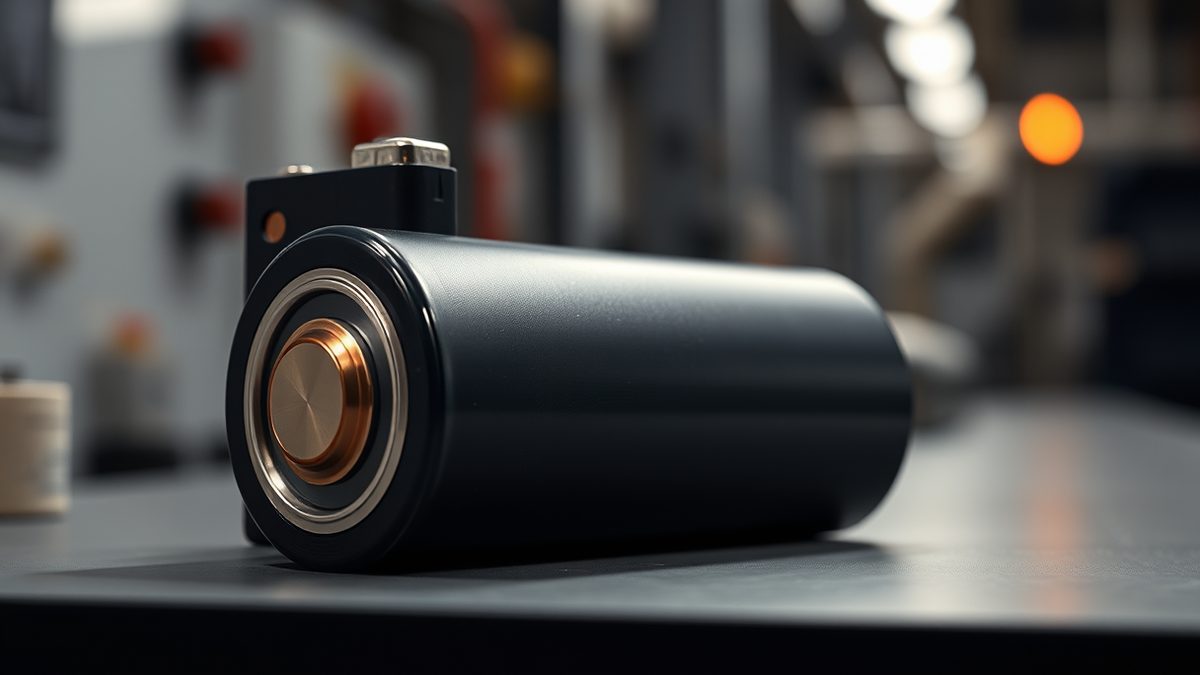
China exported 5000 electric vehicles to Australia in a single shipment this year. They travelled on a purpose-built LNG-powered bulk carrier called the BYD Zhengzhou, which docked at the Port of Melbourne on its first voyage, RNZ reported. It was the largest single EV shipment to Australia on record.
That shipment is one data point in a much larger argument about what Chinese technology policy actually is. It is not a single programme. It is a set of overlapping bets, made over roughly two decades, on open source software, battery chemistry, minerals refining and electric vehicles. The aim was to reduce China's dependence on foreign suppliers and to make other countries depend on China instead.
Open source as a way around sanctions
Writing in The Conversation, a China expert and open source researcher describes how Chinese government bodies made open source part of the national technology strategy. Early efforts aimed at technologies free from foreign control. A government-run software institute built Red Flag Linux as an alternative to Microsoft Windows, which Beijing saw as costly and vulnerable to foreign intelligence gathering. A Chinese military university later created Kylin for the People's Liberation Army.
More recently, Chinese companies have used open source as a route around US sanctions. After Washington blacklisted Huawei, Google revoked its access to licensed Android services. Huawei kept its smartphone operating system alive using Android's open source code, then built HarmonyOS NEXT and released an open source version, OpenHarmony. The Ministry of Industry and Information Technology now backs domestic platforms including the OpenAtom Foundation and Gitee, a Chinese alternative to GitHub.
There is a catch that the article flags but does not resolve. Chinese AI models such as Qwen, DeepSeek, Kimi and GLM are generally open-weight, not open-source: the software and final parameters are published, but not the training data or methodology. Some come with extra conditions. Moonshot's Kimi K3 licence requires large licensees to display the model name prominently. MiniMax M3's community licence lists uses prohibited by "applicable laws or regulations", which leaves open the question of whose laws apply. Bilingual licences written under Chinese government guidance, including the Mulan Permissive Software License 2.0 and the OpenAtom Model License 1.0, state that the Chinese version prevails in conflicting interpretations, especially in Chinese jurisdictions.
That last detail matters because it moves the fight from code to courts. The researcher's argument is that the countries which set the technical and legal standards for open source will hold an edge for decades. China is writing licences, not just software.
Washington splits over free Chinese models
The release of Moonshot's Kimi set off a public argument inside Donald Trump's AI circle, MIT Technology Review reported on 20 July. David Sacks, the president's AI and crypto "czar" until March, called Anthropic's models "lobotomized" and "woke". Emil Michael, a top Pentagon official, called OpenAI's new head of strategic futures a "supreme village idiot".
"We have to be careful in both ways. We don't want to restrict them when all of a sudden we come in second to China," Trump said, according to The Guardian.
The split is not about whether China is a competitor. It is about whether a free model that rivals paid American ones should be blocked, taxed or simply tolerated. Sacks argued on 19 July that top AI companies "want the government to eliminate their open source competition", per MIT Technology Review. He has also said Chinese models spread because they carry fewer restrictions on use, setting aside their built-in state censorship. Sacks no longer has a formal advisory role, and the review notes his position has largely been replaced by one favouring more government control over model releases.
The Guardian reported on 1 August that Microsoft, Nvidia, Palantir and Meta signed a letter urging lawmakers not to restrict open models, and that Nvidia chief executive Jensen Huang went to Capitol Hill to lobby Democratic and Republican leaders on the same point. On the other side, Anthropic and OpenAI argue Chinese-made models pose security risks. The White House itself is divided: Treasury secretary Scott Bessent floated sanctions over alleged intellectual property theft, while commerce secretary Howard Lutnick received letters from startup founders asking him not to cut off access to open models.
Meanwhile the administration moved on robots. The Federal Communications Commission announced a ban on humanoid robots from China on national security grounds, alleging they could steal data or surveil US citizens. The Guardian also reported that a report from The Information saying China had begun mass production of specialty AI chips erased $1tn in market value from other chip makers.
Batteries: a ban that is hard to enforce
The battery supply chain shows the same tension with a different instrument. MIT Technology Review reported in September that the Trump administration declared a national emergency in late August, banning Chinese batteries from grid-scale energy storage. The order covers "any foreign-produced bulk-power system electric equipment" deemed a national security risk, and names battery storage systems along with inverters and transformers.
Shan Tomouk of Benchmark Mineral Intelligence told the publication that "an outright ban was a bit of a surprise, and it does create a bit of concern for domestic players in the US". BloombergNEF analysis cited in the same piece expects near-term delays, because developers will wait for Department of Energy guidance expected by the end of the year. Isshu Kikuma of BloombergNEF said some projects may need to source cells elsewhere at higher cost, and that "worst case, those projects could get canceled".
The order technically applies to existing plants too. Since most installed US grid storage uses Chinese batteries, enforcing it to the letter would essentially mean removing most of that capacity, Kikuma said. Domestic factories from LG Energy Solutions, Samsung SDI, Ford and SK On are due online or ramping up next year, and a slowing EV market is pushing some vehicle battery plants to retool for grid storage. MIT Technology Review puts sufficient US capacity at about 2030, with full supply possibly later in the 2030s, and notes US-made cells remain significantly more expensive than Chinese ones.
Cars, minerals and the long bet
RNZ's analysis traces the vehicle side back to a deliberate industrial policy. China set out a strategic plan as far back as 2000, poured cash and incentives into the project in 2009, and encouraged battery firms including BYD to move into automobiles. The goals were to cut reliance on imported oil and to cut pollution. Alongside it, China pursued dominance in refining and producing industrial metals: steel, plus lithium, cobalt, manganese and graphite, and almost all of the world's anode and cathode production.
The chemistry choice proved decisive. South Korea concentrated on the more expensive nickel-magnesium-cobalt battery, while China opted for cheaper lithium-iron-phosphate. RNZ reports China now accounts for 90 percent of world battery production.
The sales numbers in Australia show what that translates into. In the first half of this year, Mazda sales fell 17 percent year on year, Toyota 21 percent, Subaru and Mitsubishi 25 percent each, and Nissan 32 percent, according to RNZ. Chinese brands rose from a much smaller base: BYD up 124 percent, Chery 77 percent and Geely 495 percent. Almost a quarter of cars sold in Australia last month were fully electric, against 7 percent a year earlier.
Japanese executives are not pretending otherwise. Toyota vice-chairman Koji Sato told an annual supplier meeting in March that "unless things change, we will not survive", and called for more cooperation among Japanese producers. In Europe, Volkswagen chief Oliver Blume has foreshadowed lay-offs of up to 100,000 workers, with VW's share price halved since his predecessor was removed four years ago, as the company contends with US tariffs and China's advance.
The Huawei trial in Brooklyn federal court adds a legal front to the same contest. A US Department of Justice attorney, Taylor Stout, told jurors on Wednesday that "theft, lies, cover-up" described how Huawei treated American companies for 20 years, alleging conspiracy to steal trade secrets from five US firms including Cisco router source code and a T-Mobile robotic arm. Defence lawyer Brian Heberlig countered that the case is "about competition, not conspiracy. Innovation, not theft." China's foreign ministry said it firmly opposes US suppression of Chinese enterprises and supports them in safeguarding legitimate rights. The trial is expected to last three months.
Put together, the picture is less a single policy than a set of positions China took early and held: write the licences, refine the minerals, pick the cheaper battery chemistry, subsidise the carmakers. Export controls arrive after those choices, aimed at chokepoints that China spent years building alternatives to. Whether the controls slow China, or simply raise costs for the countries applying them, is now the open question in Washington, Brussels and Tokyo alike.
Sources
6- 01How China won the car wars with cheap EVs loaded with technologyEN
- 02China is shaping the future of open-source technology – including AIEN
- 03China's AI models have Trump's AI world at war with itselfEN
- 04China's tech advances are causing chaos from Silicon Valley to the White HouseEN
- 05China's Huawei branded a criminal enterprise as tech firm's US trial opensEN
- 06Can the US battery market untangle from China?EN
All figures and quotations in this text come from the sources listed below.
Content prepared by the editorial team with AI assistance.
Dr. Amara Patel
Comments
0- No comments yet — be the first.