Humanoid robot factories race ahead while the data that trains them lags
Innodata opened a motion-capture laboratory on 30 September to generate training data for humanoid robots, saying robotics teams have run out of the real-world interaction data they need to make machines useful.
 Grace OkonkwoAI, models and technology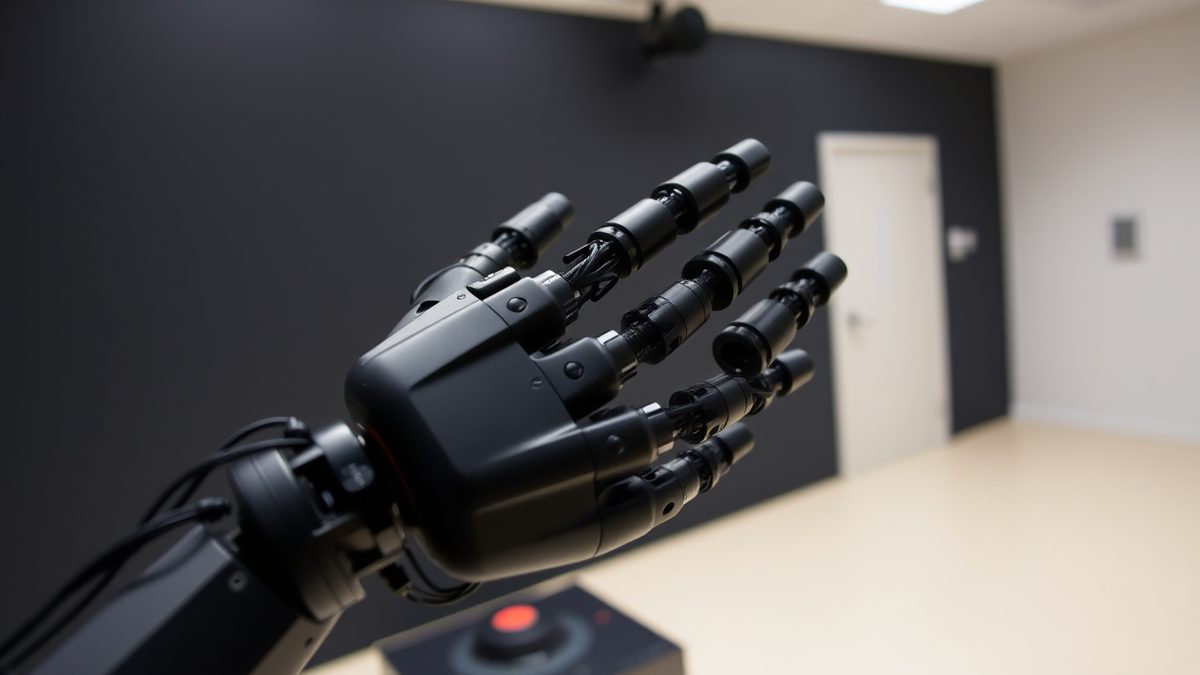
On 30 September, New Jersey data engineering firm Innodata said it opened a research and development facility that captures 3D motion directly from human and mechanical bodies instead of inferring movement from 2D video. The company pitches it as a fix for a bottleneck it says every robotics team hits: not enough real-world interaction data, and what exists is expensive and slow to produce, according to The Robot Report.
Innodata does not build robots. It sells data and evaluation frameworks, and it now sells them to physical AI companies that need to train humanoids and industrial arms on tasks humans perform without thinking.
"Physical AI is growing faster than any other segment in AI, but every robotics team hits the same wall," Innodata CEO Rahul Singhal said in a statement. "There isn't enough real-world interaction data, and what exists is expensive and slow to produce."
Why the data gap matters more than the hardware
Large language models had the internet to learn from. Robots do not. Franklin Tanner, Innodata's vice president of robotics and physical AI, told The Robot Report that physical AI "has to earn its tokens one interaction at a time, and they have to be deliberate." The lab's sensors register the smallest motion of every joint, which Innodata says makes training more accurate and efficient. Tanner gave the example of a robot picking up a mug: grab the handle or the base, and the difference may not matter until the mug is full of hot liquid.
That is a data problem, not a motor problem. It is also only one of several bottlenecks that showed up in the same week.
Paris-based Inbolt raised €11 million on 30 September to push real-time 3D vision and a hardware-agnostic AI layer onto existing production lines. Tech.eu reported the round was led by Shift4Good, with Bridges Climate Transition Partners and existing investors BNP Paribas Développement and Ora Global participating, bringing total funding to €30 million. Inbolt says its software is already deployed on more than 200 robots in over 100 factories across three continents, with customers including Bosch, Beko, Flex, Ford, Stellantis and Toyota.
Also on 30 September, MindOn introduced Mind-1, a physical AI model it says cuts robot inference latency from 82ms to 32ms and brings manipulation tasks to human-level cycle times. The company argues that a robot five or ten times slower than a human is hard to integrate into real workflows, no matter how capable it looks in a demo.
The benchmark problem
Capability claims are getting harder to compare. A technical report published on 30 September by Fig. evaluated frontier models including Astra and Opus 5.5 across web automation and four physical domains: manipulation, assembly, industrial procedures and driving. Its authors found no clear performance leader. In every model pair they tested, the lower-scoring model solved at least one task the higher-scoring one missed.
The same unevenness showed up across physical domains: models that beat Gemini 3.5-Flash on every domain average still did worse on some task categories. The team released an item-level dataset called RIDGE covering all five domains.
Meanwhile, the manufacturing buildout keeps accelerating. Tesla's planned solar factory in Texas has been dragged into a US patent lawsuit between two Chinese equipment makers, Electrek reported on 30 September. Linton Crystal Technologies sued Zhejiang Jingsheng in a Texas federal court on 22 September over two patents covering part of a Czochralski puller, the furnace that draws monocrystalline silicon ingots. Jingsheng, which disclosed the suit to investors on 24 September, says its products use "technical solutions entirely different" from the patents and expects no material impact.
Not every robot story is industrial. On 30 September, a Nasdaq-listed company worth about $2.4 million said it sent Tesla a procurement inquiry for 500 Robotaxis. KIDZ AI, formerly an online coding school called Classover Holdings, reported service revenue down 34% year over year to $0.48 million in the second quarter and a $2.5 million quarterly loss, according to Electrek. The inquiry, the company's own release says, is not a binding order.
The gap between announcements and deployed machines is not closing on its own.
Sources
8- 01Innodata opens motion-capture lab to help humanoids move more like peopleEN
- 02Inbolt raises €11M to bring real-time vision and intelligence to industrial robotsEN
- 03Mind-1: Cutting robot inference latency from 82ms to 32msEN
- 04Astra, Opus 5.5, and other Frontier Models Demonstrate Jagged Performance Across SoTA Agentic TasksEN
- 05Tesla's solar factory dragged into patent war between Chinese suppliersEN
- 06Tesla Robotaxi fleets are the new crypto treasury for zombie companiesEN
- 07What 30k robot dogs taught me about degrees of freedom, shipping a real productEN
- 08The Robot Report parent Arrowfly launches AI for Engineers platformEN
All figures and quotations in this text come from the sources listed below.
Content prepared by the editorial team with AI assistance.
Grace Okonkwo
Comments
0- No comments yet — be the first.