Infection study and breathing research sharpen the wearable health case
A paper published on 29 September in The Lancet Oncology attributes 2.3 million new cancer cases in 2024, 12 per cent of the global total, to infections. A Northwestern University study published the same day found response times are 41 milliseconds faster on an exhalation than on an inhalation.
 Sofia MarchettiScience and health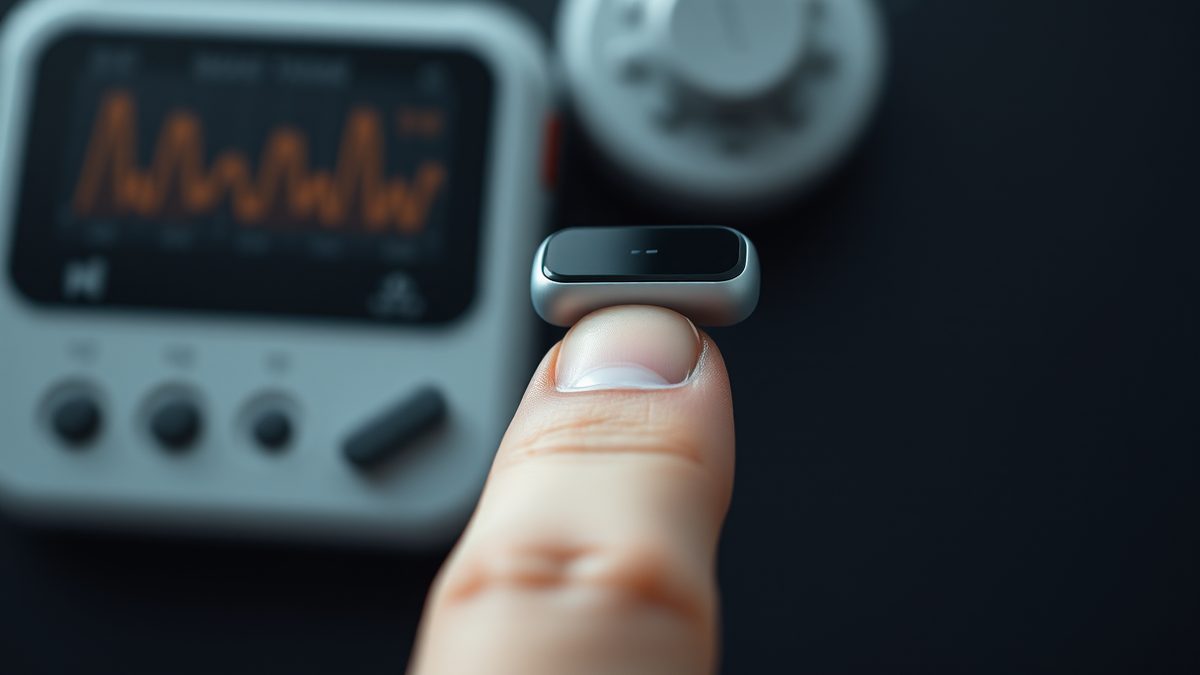
Two studies landed within hours of each other on 29 September. They point the same way: the body's basic signals, what it is fighting and how it breathes, carry information that better screening could use.
The cancer paper comes from the International Agency for Research on Cancer, an arm of the World Health Organization, and appeared in The Lancet Oncology. CBC News reported the findings on 29 September. The team estimated infections caused 2.3 million new cancer cases in 2024, 12 per cent of all new cases that year. Helicobacter pylori, a bacterium that raises the risk of stomach cancer, accounted for 760,000 cases, most in eastern Asia. Human papillomavirus came close behind with nearly 750,000 cases, with high rates in sub-Saharan Africa. Hepatitis B and hepatitis C were linked to a significant share of liver cancers.
That is a prevention story, not a treatment one.
Gary Clifford, a cancer epidemiologist and study co-author based in Lyon, France, told CBC that the science has moved. "There's been new infectious agents identified in this time as being cancer-causing, and even the infectious agents that we knew about in the past, the evidence has increased about the number of different cancers that they can cause," he said. The researchers added 16 cancers to the list of those linked to infections, including HIV and Merkel cell polyomavirus. Epstein-Barr virus was tied to about 260,000 cases in 2024 through nasopharyngeal cancer, some gastric cancers and Hodgkin's lymphoma.
The regional split is stark. High-income countries that built screening and vaccination programmes over recent decades are doing better than lower and medium-resourced countries, the researchers said. In Canada, a 2019 study put the share of cancers attributable to infections at four per cent, according to Karena Volesky, the Montreal epidemiologist who led that research. The global figure is 12 per cent.
Response speed and the breath
Northwestern University published the second study on 29 September in the journal iScience. Neuroscientists found that people respond faster on an exhalation than on an inhalation, by an average of 41 milliseconds, about 1/25th of a second. Responses during the pauses between breaths were 21 milliseconds faster than during inhalation. The team says it is the first experiment to measure response speed across all phases of respiration, including those pauses.
Thirty-five adults aged 18 to 33 took part. They pressed a space bar when a red square turned yellow, a standard Psychomotor Vigilance Task, while wearing a device under the nostrils to measure airflow. Each person did the task twice, once before and once after a nap or an eight-hour sleep in the lab.
"This study documents an important link between respiration and the brain systems for responding to environmental events," said Ken Paller, the study's senior author and a psychology professor at Northwestern. "We don't yet know exactly how they are linked, but we suspect neurophysiological efficiency."
Neither study tests a wearable. That gap matters, because consumer devices sold for continuous monitoring already collect respiration and sleep data at scale, and the clinical evidence for what that data can do remains thin. The Northwestern group says its next work, funded by the National Institutes of Health and led by lead author Erika M. Yamazaki, focuses on sleep apnea, where harmful breathing pauses are often under-diagnosed.
What the guidelines do not cover
Nieman Journalism Lab reported on 28 September on a separate study in Information, Communication and Society that surveyed 1,138 communication scholars across 77 countries, plus four focus groups. Nearly 70 per cent had used generative AI for at least one research task, yet most considered it inappropriate for most tasks. The authors describe the resulting reluctance to disclose as "AI shame" and call for a disclosure-positive culture.
The three findings do not connect directly. But they share a problem: the instruments and the habits are running ahead of the standards. Infection-linked cancers have known prevention tools, vaccines and antibiotics among them, that are not reaching everyone. Breathing and sleep data are measurable on cheap hardware without agreed clinical thresholds. And researchers are using AI tools with no shared rules for saying so.
Clifford's summary of the cancer numbers applies more widely. "We really still have a lot of work to do implementing things that we know work and we've known for a long time but haven't really made it into all populations in the world," he said.
Sources
4- 011 in 8 cancer cases worldwide are caused by infections, study findsEN
- 02Ready, set, exhale: Study links respiration and cognitionEN
- 03A lack of professional AI guidelines leads to feelings of "AI shame," a new study findsEN
- 04Studlark — AI-Powered Group Study SaaSEN
All figures and quotations in this text come from the sources listed below.
Content prepared by the editorial team with AI assistance.
Sofia Marchetti
Comments
0- No comments yet — be the first.