INMO Air3 recall over heat in the left temple: CPSC and Health Canada act
US and Canadian authorities have recalled the INMO Air3 AR glasses after the left temple was found to overheat, with 1,643 units sold in the US and 120 in Canada.
 Sofia MarchettiScience and health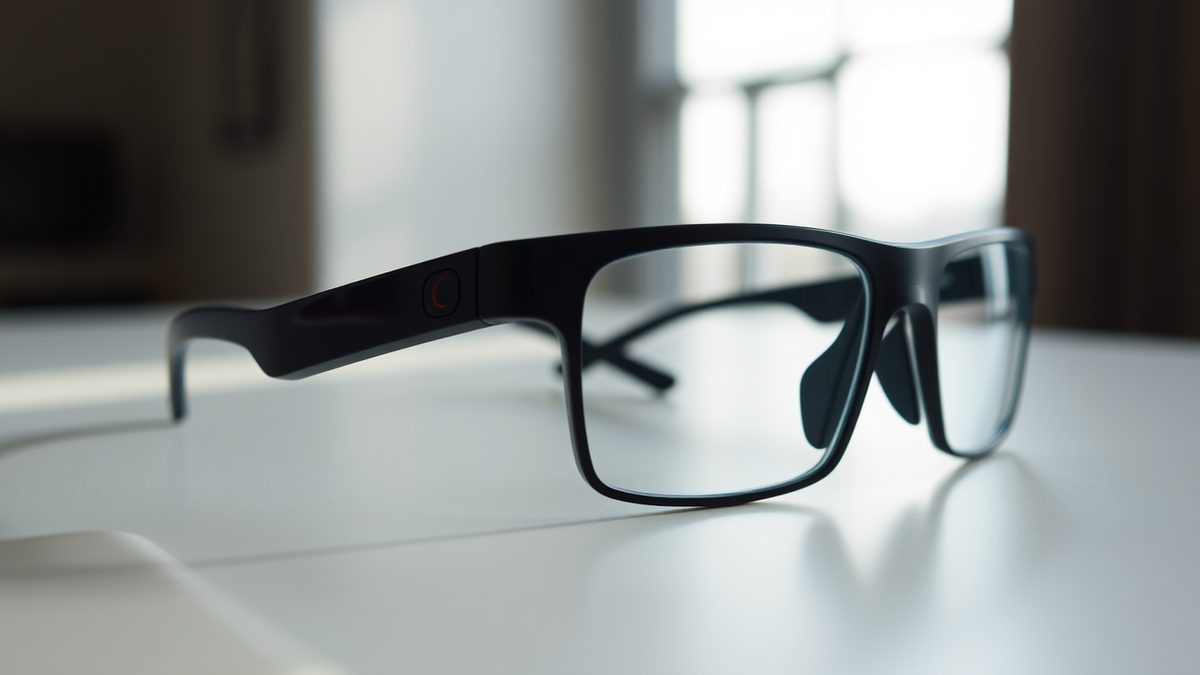
The US Consumer Product Safety Commission has issued an official recall of the INMO Air3 AR glasses. The German tech outlet t3n reported the action on 27 September. Health Canada joined in a coordinated move and warns users not to wear the model as it stands.
The left temple is the problem. The CPSC notice says it can overheat during extended use and poses a risk of serious burns. The hardware that runs the glasses sits in that arm, including a 660 milliampere-hour battery.
What is affected and who made it
The units reached customers between December 2025 and August 2026, t3n reports. In the United States, 1,643 units went out through various sales channels. In Canada, 120 units were sold in stores or shipped directly to buyers. The affected glasses are black and carry the labels "AIR3" and "INMO" on the inside of the right temple.
INMO International Technology Limited, based in Shenzhen, is the manufacturer. The company has set up a dedicated website and offers support by hotline and email to help owners install a firmware fix, according to t3n. Rather than swapping hardware or pulling the product, INMO is pushing a software update. Owners should not put the glasses back on until the operating system is upgraded to firmware version 3.16. That points to an attempt to cap heat through software throttling. The glasses run an Android-based system driving a micro-OLED display, so processor performance can be limited.
The recommended retail price runs from 900 to 1,300 US dollars depending on configuration, t3n says.
Ten official reports of overheating during use in the US have reached the manufacturer so far. No injuries have been reported in either country, according to the current documents from the authorities.
What earlier testing had shown
Warnings about the thermal problem were not new. t3n cites Futurism, which reported that thermal issues showed up in early tests months before regulators stepped in. The US hardware YouTuber "Non-Tech Tech Guy" said in a February 2026 video that the device became too hot to wear after a few minutes, and described temperatures that can hurt the ear.
The tester said the glasses did not just get slightly warm but reached temperatures that could cause pain at the ear.
According to his video, the manufacturer's first response was apparently to ship a cover for the temple, meant to stop direct skin contact with the plastic surface. That did not address the heat source inside the electronics.
Health Canada adds a legal warning for the second-hand market, according to the recall notice: Canadian consumer protection law bans reselling and even giving away the affected models.
The pattern is not unique to one gadget
The recall lands in a broader argument about how much confidence people place in devices and systems that present themselves as authoritative. A study covered by The Decoder on 26 September ran five experiments with 3,132 participants to test whether access to a language model changes how people handle uncertainty. Having AI advice available nearly wiped out their willingness to say "I don't know," the researchers found.
In the first two studies, participants could choose whether to ask an AI for advice. In the control group without AI access, they withheld judgment on 36 and 44 percent of questions. With AI access, those numbers fell to 6 and 3 percent. In Study 2, confidence with AI access hit 75.9 points on a scale of 100, against 29.6 without AI, while the share of correct answers fell from 27.6 to 10.0 percent. The questions were picked because the model used, Step 3.5 Flash, was almost always wrong on them. They turned on fine visual details from movies, such as the color of a team uniform in Bend It Like Beckham, which rarely appear in online text and are prime targets for hallucinations.
Across all studies, participants without incentives who had AI access got 9.2 percent of questions right, versus 27.5 percent without AI. Financial incentives in Studies 2 through 4, paying 10 cents for a correct answer and deducting 10 cents for a wrong one, led people to seek AI advice less often, 4.53 versus 5.27 requests out of six in Study 3, and to answer correctly more often when AI was available. None of the three studies showed a statistically significant interaction between incentives and AI availability.
The same trust question runs through healthcare money. An analysis by the Blue Cross Blue Shield Association, reported by TechCrunch on 26 September, found that hospitals' use of AI tools when submitting insurance claims led to an additional 942 million US dollars in healthcare spending over a two-year period. The BCBSA analysis found "a sharp increase in patients being documented as having complex conditions" but argued there is a "clear disconnect between [medical] coding and treatment," as there is "no evidence of corresponding change in care delivered."
The New York Times, cited by TechCrunch, called the analysis the latest sign that AI is contributing to higher healthcare costs. Insurers and hospitals have fought over treatments and payments for years, but the NYT said AI on both sides appears to be making it worse. Dr. Shiv Rao, founder of the AI startup Abridge, said the use of AI could lead to "a horrible dystopic future nobody wants to live in," with "bots fighting bots, agents fighting agents," though he also said it might reduce tensions and cut costs. Luke Chalker, a senior vice president at the BCBSA, resisted the framing of a battle: "It's not a war. It's a completely one-sided blood bath," he said, with insurers on the losing side.
A counting problem in the middle of an outbreak
Measurement disputes are not limited to money. In an opinion piece published by STAT on 25 September, two former senior leaders at the National Center for Health Statistics questioned a change in how the CDC counts measles deaths. By mid-September, the Pennsylvania Department of Health had reported four confirmed measles-associated deaths, surpassing the highest annual number of measles-associated deaths in the United States since 1992. Statewide cases exceed 800, clustering in communities with a history of vaccine hesitancy. The CDC's measles dashboard page, however, showed just one measles-related death so far this year, with an asterisk.
Health and Human Services Secretary Robert F. Kennedy Jr. has said the CDC will only "report measles-caused deaths when the National Center for Health Statistics (NCHS) reports measles as the underlying cause based on death record information submitted by the states." The authors, Lau and Schoendorf, argue this deviates from the agency's historical reliance on state medical officials for real-time "associated" death cases during active outbreaks, and that it will not provide the surveillance information needed at the start of an outbreak when counts are low. They also flag NCHS suppression rules: the agency does not report death counts in any category from one to nine, so the national total must pass 10 before the dashboard shows an actual figure.
Meanwhile, Rest of World published an interview on 24 September with physician and consultant Ruby Wang, author of the forthcoming book China Cure, on China's health tech expansion. Wang said Chinese society treats digital health as normal infrastructure rather than an add-on, and that more clinical trials are conducted in China than in the US, with China accounting for half of global drug licensing deals. She put this year's share of global drug out-licensing deals at as much as 60 percent, while noting China is weaker in immunology and at commercializing its own drugs.
For owners of the Air3, the immediate question is narrower than any of these debates. Update to firmware 3.16, or leave the glasses off. The manufacturer's support site, hotline and email are listed in the recall notice.
Sources
5- 01Wenn das Wearable zur Gefahr wird: Behörden warnen vor smarter BrilleDE
- 02Insurers claim AI is already increasing healthcare costsEN
- 03AI access makes people almost entirely unwilling to say "I don't know," study findsEN
- 04Opinion: RFK Jr.'s use of the National Center for Health Statistics will add confusion to measles deaths countEN
- 05China is excelling in health tech. That's good news for the worldEN
All figures and quotations in this text come from the sources listed below.
Content prepared by the editorial team with AI assistance.
Sofia Marchetti
Comments
0- No comments yet — be the first.