Music rights, skating music and Fender: five copyright fights worth watching
A copyright dispute is rarely just about one song or one design. These five cases, from YouTube's SESAC takedowns to a legal database's fight with an AI startup, show how the same arguments keep resurfacing.
 Helen MarshCulture, food and lifestyle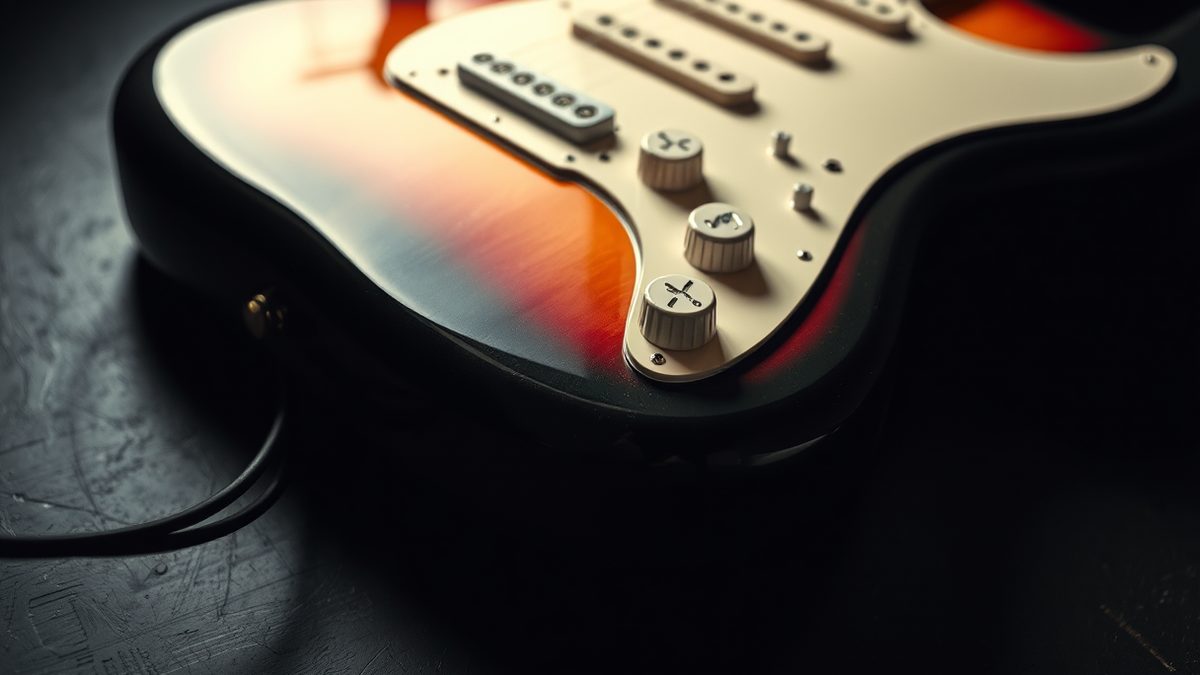
Copyright disputes tend to look like one-off stories: a song disappears, a routine gets rewritten, a lawsuit settles. Look at a handful together and the pattern becomes harder to ignore. The same questions about clearance, platforms and who actually owns what keep coming up, in courtrooms, at the Olympics and in guitar shops.
Here are five disputes, drawn from reporting by The Verge, The Guardian, TorrentFreak, BetaKit and Guitar World, that cover the range of how rights fights play out in public.
YouTube and SESAC: takedowns, then a deal
Some of the most watched music on YouTube and YouTube Music vanished on a Saturday in late September 2024, replaced with a message: "This video contains content from SESAC. It is not available in your country." Tracks from Adele, Kendrick Lamar, Britney Spears, Green Day, Kanye West and Burna Boy were among those affected, according to The Verge.
SESAC, the Society of European Stage Authors and Composers, has existed since 1930. By its own account, it licenses the public performance of more than 1.5 million songs for over 15,000 affiliated songwriters, composers and publishers. It is smaller than BMI and ASCAP, but its portfolio includes major names. Blackstone, the private equity firm, acquired it in 2017.
YouTube did not stay quiet. Spokesperson Mariana de Felice told The Verge: "We have held good faith negotiations with SESAC to renew our existing deal. Unfortunately, despite our best efforts, we were unable to reach an equitable agreement before its expiration. We take copyright very seriously and as a result, content represented by SESAC is no longer available on YouTube in the US. We are in active conversations with SESAC and are hoping to reach a new deal as soon as possible."
Variety, citing an unnamed source, reported that the timing may have been a negotiating tactic, since "the previous deal actually does not expire until next week." By Monday afternoon, YouTube said it had a new deal and that missing music would return "over the next day or two." The episode lasted a weekend, but it showed how quickly a licensing impasse can pull down a catalogue.
A figure skater, the Minions and a last-minute reprieve
Copyright clearance is not only a problem for streaming platforms. The Spanish figure skater Tomàs-Llorenç Guarino Sabaté learned late last week that his Olympic short program, built around music from the Minions films, would not be cleared for use at the Milano Cortina Winter Games, according to The Guardian.
Guarino Sabaté, a six-time Spanish national champion making his Olympic debut, said he had submitted the music through the International Skating Union's recommended rights-clearance process months earlier and had performed the routine all season, including at the European championships in Sheffield. Then the clearance fell through.
By Tuesday, Universal had granted permission. "Huge THANK YOU to everyone who reposted, shared and supported. Because of you Universal Studios reconsidered and officially granted the rights for this one special occasion," he wrote on Instagram. "There are still a couple things to be tied up with the other 2 musics of the programme but we are so close to accomplishing it!"
The broader problem is structural. Colin Smith, the ISU director-general, told the Guardian at last year's world championships in Boston that the music industry "has no common clearance platform." He added: "There are multiple buckets of rights, and within those buckets the clearance process isn't done on a single platform. Tracking tools have improved, but the facilitated process just isn't there."
Other skaters have not been so lucky. Canadian ice dancers Marie-Jade Lauriault and Romain Le Gac learned late last year that two Prince songs planned for their rhythm dance could not be cleared for Olympic use, despite being approved for the rest of the season. At the Beijing Olympics in 2022, American pairs champions Alexa Knierim and Brandon Frazier faced a copyright lawsuit over a cover of House of the Rising Sun; it was later settled privately for an undisclosed sum understood by the Guardian to be around $1.4m. Canadian pairs skaters Deanna Stellato-Dudek and Maxime Deschamps abandoned a Phil Collins cover after being quoted a licensing fee in the tens of thousands of dollars.
Anne Frank, geo-blocking and the EU's top court
In the Netherlands, a copyright fight over the Diary of Anne Frank has reached the Court of Justice of the European Union. The Anne Frank Fonds, established by Otto Frank in 1963 in Switzerland, owns the copyrights. The Dutch Anne Frank Stichting wants to publish the manuscripts online, but the Fonds has not given permission.
Early versions are presumably in the public domain in several countries, according to TorrentFreak, but the original manuscripts are protected in the Netherlands until 2037. The manuscripts site is blocked for Dutch visitors, and the lower courts found that the geo-blocking measures were reasonable. The Fonds appealed and lost, and the case is now before the Dutch Supreme Court, which has referred three questions to the CJEU.
The core of the argument is whether state-of-the-art geo-blocking is enough, given that people can use a VPN to get around it. The Fonds argues the site is partly directed at a Dutch audience, so the manuscripts are being made available in the Netherlands regardless of blocking. The defendants point to the GO4YU case, which suggests that circumventing geo-blocking with a VPN does not constitute a communication to the public in the blocked territory unless the blocking is intentionally ineffective.
The CJEU's answers could affect far more than one archive. If geo-blocking is not sufficient to alleviate copyright concerns, rights holders could in theory go after publishers and platforms that rely on it, including large streaming services. That would make geographical licensing much harder to enforce.
CanLII and Caseway: an AI dispute settles quietly
The Canadian Legal Information Institute, or CanLII, sued Vancouver-based AI startup Caseway AI in the British Columbia Supreme Court in November 2024. CanLII alleged that Caseway built a business by wrongfully taking its work through a bulk and systemic download from its online database, without permission or compensation, according to BetaKit.
On Friday, the two sides announced they had "resolved all matters arising from the proceeding." Terms are confidential. A CanLII blog post said the organisation "continues its work providing broad public access to primary legal information," while Caseway "continues developing technology solutions for organizations that operate in complex, document-heavy environments."
Caseway's own news release framed the outcome more broadly: "The settlement resolves all outstanding claims and establishes a path forward that reflects the realities of modern AI development." It added that "for the first time in the legal tech space, a dispute of this scale between a legal data institution and an AI company has concluded with a forward-looking resolution rather than a prolonged legal battle."
The case is one of several involving AI companies and copyright. Canadian news publishers have sued OpenAI, alleging it violated Canadian copyright law in training ChatGPT, while Canadian LLM developer Cohere faces a lawsuit from a different group of publishers. In the legaltech world, Burnaby-based Clio took fellow Canadian company Alexi to court in December over a database at the heart of Clio's recent AI transformation.
Thomann sues Fender over Stratocaster cease-and-desists
In June, the world's largest music retailer, Thomann, sued Fender over its recent wave of cease-and-desist letters, according to Guitar World. Thomann's in-house guitar brand Harley Benton had received one of its own, and the retailer became the first firm to take Fender to court in the ongoing Stratocaster copyright dispute. Thomann was founded in 1954, the same year Fender launched the Stratocaster, and has carried the brand for over 70 years.
"After careful consideration, we have decided to take legal action," a statement on the Thomann blog reads. "We have done so because we are convinced that the questions raised here go far beyond a mere legal dispute and affect the future of diversity, innovation and competition in our industry."
Thomann says it is acting on behalf of other brands, naming "custom shop brands and innovators" including Tyler, Tom Anderson, Suhr, LsL, Maybach, Pensa, FGN and PRS as at risk. CEO Hans Thomann said: "Many of those affected do not have the financial and legal means to conduct such a legal dispute. We therefore see it as our responsibility to have this matter clarified in court not only for our own company, but for all parties involved."
Fender's legal push stems from a default ruling by the Regional Court of Dusseldorf in March, which granted "enforceable rights against any guitars using the Stratocaster body shape" in the EU. In May, it sent cease-and-desist letters to firms including LsL Instruments and PRS Guitars. Fender has since said it is "working directly with companies to find practical paths forward," but the backlash has been loud, with several prominent YouTubers criticising the company or cutting ties.
Thomann's legal argument echoes that of industry lawyer Ronald Bienstock: that the Stratocaster is not a copyrightable work of art, and that its design and success come down to ergonomics. The retailer closed its statement with a direct appeal: "We urge Fender to stop issuing cease and desist demands against manufacturers, distributors and dealers and to return to a fair, cooperative partnership."
Sources
5- 01YouTube pulls songs from Adele, Nirvana, and others due to SESAC disputeEN
- 02Figure skater saved from scrapping Olympic routine after Minions music copyright disputeEN
- 03"Anne Frank" Copyright Dispute Triggers VPN and Geoblocking Questions at EU's Highest CourtEN
- 04Online legal database CanLII and AI startup Caseway settle copyright disputeEN
- 05Music retailer sues Fender over C&Ds in Stratocaster copyright disputeEN
All figures and quotations in this text come from the sources listed below.
Content prepared by the editorial team with AI assistance.
Helen Marsh
Comments
0- No comments yet — be the first.