NASA's Swift Rescue Fails: $30M LINK Spins Out as Telescope Faces Reentry
NASA and Katalyst Space Technologies have called off the robotic rescue of the Neil Gehrels Swift Observatory. The LINK spacecraft suffered ongoing attitude control failures and could no longer attempt to capture and boost the 22-year-old telescope.
 Sofia MarchettiScience and health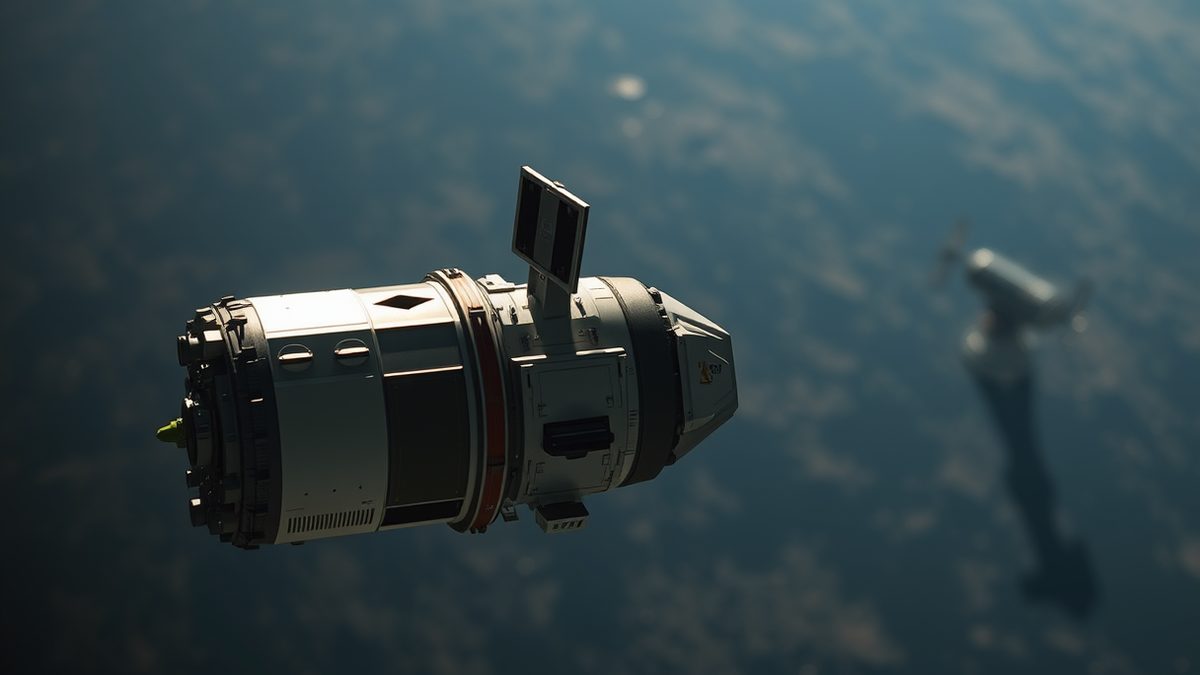
NASA and Katalyst Space Technologies said Wednesday they are dropping the LINK mission's core objective: a robotic capture and orbital boost of the Neil Gehrels Swift Observatory, according to Ars Technica. The telescope is now expected to reenter Earth's atmosphere and burn up later this year.
Swift launched into low Earth orbit in 2004 to study gamma-ray bursts, the most powerful explosions in the universe. They are triggered by events such as the births of black holes and collisions between ultra-dense stars. Less than a year ago, NASA awarded Arizona-based Katalyst a $30 million contract to build and launch a rescue spacecraft. The rush job was driven by the observatory's accelerating orbital decay. The failure leaves a gap in high-energy astronomy that is unlikely to be patched soon.
LINK launched July 3 on Northrop Grumman's Pegasus XL rocket. Mission managers established communications after launch, but problems emerged quickly.
Less than two weeks into the flight, teams began reporting issues with the probe's orientation, NBC News reported. In a July 15 blog post, NASA officials said Katalyst engineers had "addressed early communications and attitude control issues." Software patches appeared to fail. On July 28, NASA said LINK's attitude control systems had malfunctioned, "causing the spacecraft to spin and resulting in sporadic communications." The spacecraft was rotating at about 9 degrees per second, according to the agency. Ars Technica reported that two of the satellite's three reaction wheels, used for attitude control, stopped working, and that cold gas thrusters used for finer pointing were also giving trouble. That left three low-impulse plasma thrusters as the only means of regaining control as LINK zipped around Earth at nearly 5 miles per second.
"This is not the outcome we were working toward, but it does not change why this mission was worth attempting," NASA Administrator Jared Isaacman said in a statement. "NASA should be willing to move quickly and take smart risks when the potential return is worth it, and that is exactly what we did."
Katalyst CEO Ghonhee Lee said in a LinkedIn post that the company and NASA had agreed the mission "will not include the capture and boost of NASA's Neil Gehrels Swift Observatory," according to Scientific American. "Katalyst designed, developed, and launched an experimental spacecraft to go after an ambitious mission on an aggressive timeline," Lee said. "We took on this high-risk, high-reward challenge and are proud of the milestones we reached along the way."
The rescue was always a long shot. NASA gave Katalyst nine months to design, build and launch LINK, a satellite about the size of a refrigerator. It carried two solar arrays, three xenon-fueled electric thrusters and three robotic arms meant to grab Swift. Ars Technica noted that first-of-their-kind satellites usually take several years to ready for launch, and the compressed schedule forced engineers to tolerate technical risks they might not otherwise accept. Swift has no thrusters of its own, so a servicing mission was the only way to keep the $500 million observatory operating.
Problems for Swift began in 2024, during a period of intense solar activity, NBC News reported. All satellites in low Earth orbit slowly lose altitude to atmospheric drag. When the Sun's activity ramps up, it heats Earth's atmosphere, which increases drag and causes orbits to decay faster than anticipated.
Despite the failure, both NASA and Katalyst said the mission produced useful data. Katalyst will still attempt to approach and rendezvous with Swift to demonstrate close-in navigation technology that could inform future satellite servicing flights. "We are going to learn everything we can from LINK's rendezvous attempt and put those lessons to work on the missions that follow," Isaacman said.
Shawn Domagal-Goldman, director of NASA's astrophysics division, said in a statement that the mission was "a first-of-its kind attempt, developed on an unprecedented timeline driven by the Sun's activity." He added: "We were all hoping for more science from Swift. But we knew the takeaways from this mission would be worthwhile either way."
Satellite servicing remains a strategic interest for NASA and commercial operators. Katalyst is one of several US companies working on rendezvous and proximity operations, technologies that could eventually refuel, repair or upgrade satellites in orbit. The market is still nascent, and the Swift rescue offered a rare real-world test of both the hardware and the business case.
For astronomers, the more immediate loss is Swift itself. The observatory has far outlived its original two-year design and remains in demand for its unique combination of multi-wavelength instruments and agile pointing, which allow it to identify gamma-ray bursts for follow-up by other telescopes. Once it reenters, that capability goes with it.
NASA has not announced a replacement for Swift's specific role in burst detection and rapid pointing. The agency's next major astrophysics missions, including the Nancy Grace Roman Space Telescope, launched in late August, focus on different questions. Roman is designed to collect more information than any previous telescope about how the universe is expanding and how many hidden planets may exist in the galaxy.
Sources
4- 01NASA calls off mission to rescue Swift gamma-ray observatory - Ars TechnicaEN
- 02NASA mission to save its sinking space telescope fails - NBC NewsEN
- 03NASA calls off rescue mission for its falling Swift space telescope - Scientific AmericanEN
- 04NASA scientists say relocations put space missions at risk - NPREN
All figures and quotations in this text come from the sources listed below.
Content prepared by the editorial team with AI assistance.
Sofia Marchetti
Comments
0- No comments yet — be the first.