Private fusion posts firsts in D-T fuel, 150M°C plasma and direct energy conversion
Helion says its Polaris prototype became the first privately developed fusion machine to run on deuterium-tritium fuel and hold plasma at 150 million degrees Celsius. Realta Fusion reported the first direct conversion of plasma energy into electricity by a commercial fusion company.
 Sofia MarchettiScience and health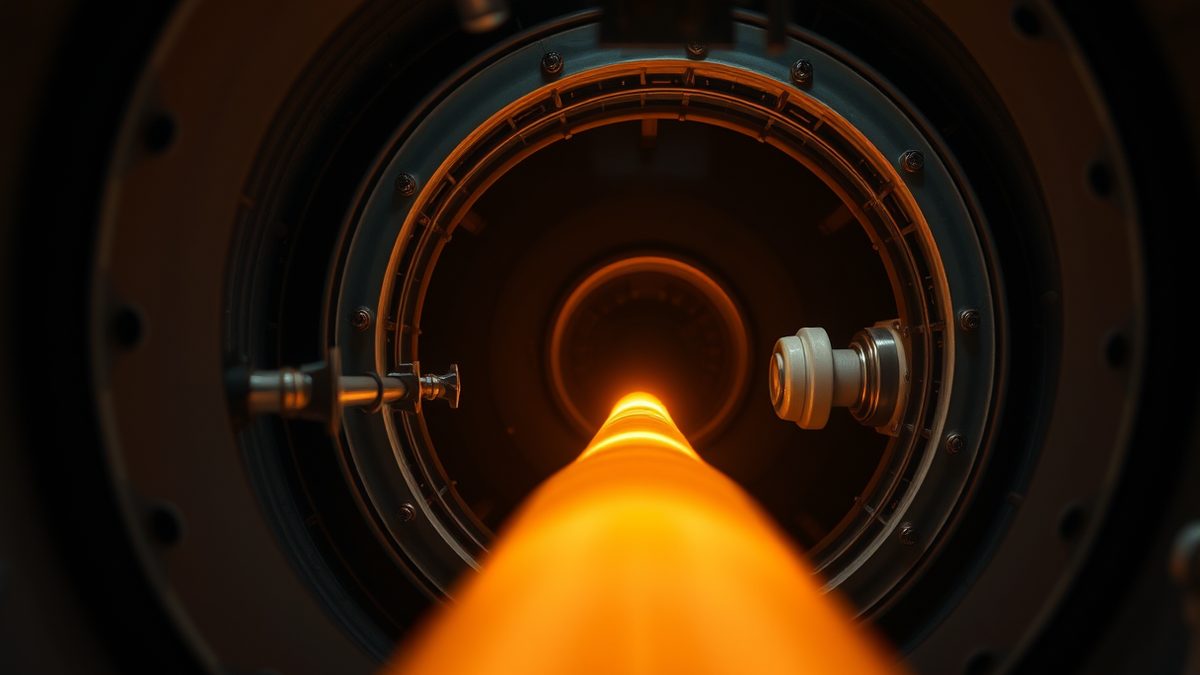
Two private fusion firms have posted firsts that used to belong to publicly funded labs. Helion published its D-T and temperature claims on 13 February 2026. Realta's electricity demo came on 19 June 2026. Different machines, months apart, same direction.
Helion is based in Everett, Washington. It says its seventh-generation Polaris prototype is the only private fusion machine to have used deuterium-tritium fuel, doing so in January. The company also reported plasma temperatures of 150 million degrees Celsius, or 13 keV. That breaks its own industry record of 100 M°C, set by its sixth-generation Trenta device. Within the industry, the company notes, 100 M°C is treated as the threshold for a commercially relevant machine. Polaris began operating at the end of 2024. The D-T campaign is one step in its test programme, not the destination. Helion says it will keep raising plasma temperatures in Polaris to reach conditions for deuterium-helium-3, the fuel it intends to use in commercial operations.
Helion's own framing is iterative. "We believe the surest path to commercializing fusion is building, learning and iterating as quickly as possible," said David Kirtley, co-founder and CEO. "We've built and operated seven prototypes, setting and exceeding more ambitious technical and engineering goals each time."
Outside reviewers, and what they did not say
The company put two external reactions in its announcement. Ryan McBride is an inertial confinement fusion and pulsed power specialist who has worked at Sandia National Laboratories and the University of Michigan. He said he had reviewed diagnostic data and called evidence of D-T fusion above 13 keV "exciting". Alan Hoffman has worked on field-reversed configuration plasmas for over 40 years and led the Large S device at the University of Washington. He said he continues to see the technology scaling. Jean Paul Allain, associate director for fusion energy sciences at the Department of Energy's Office of Science, said the Polaris data, including record temperatures and gains from the fuel mix, "indicates strong progress". None of the three described net energy production. The Helion release does not claim it either.
Realta's claim is narrower. In one sense, more concrete.
Realta worked with the University of Wisconsin-Madison on the WHAM axisymmetric mirror device. The company installed a direct energy converter in the end-ring assembly, replacing the centre disk. The converter slows charged particles leaving through the mirror's loss cone using an electrostatic potential, turning their kinetic energy into current. The first prototype is a single-stage device with three meshed grids: a grounded grid, an electron repulsion grid and an ion collector grid. During plasma operations it drew multiple amps at around 100 volts, enough, the company says, to light a few bulbs. Realta plans to scale the voltage in the coming weeks.
"This is neither a demonstration of net-electricity production nor large-scale conversion of fusion-born power directly into electricity," the company wrote.
That caveat matters. WHAM runs on deuterium only, so most of the energy converted in the demo was input power the company had supplied, not fusion power. Realta frames the work as "first make it work, then make it good", targeting multi-kilowatt and then multi-megawatt capability on future devices.
Why the two results sit together
Direct conversion is an old idea with a simple appeal: pushing less energy through a thermal cycle avoids the efficiency limits that thermodynamics imposes on turbines. Realta argues it suits magnetic mirrors, where the loss cone that hurts confinement can be turned into an exhaust path for helium ash and a source of recoverable charged particles. The context for both announcements is ITER, the publicly funded reactor in southern France. CNET reported in May 2026 that ITER carries an estimated cost of $22 billion and that cracks found in a heat shield's piping in 2020, along with welding distortions and pandemic disruption, pushed back its timeline and added $5 billion in repair costs.
That gap is the space private firms are working in. ITER's chief strategic advisor, Laban Coblentz, told CNET the project had become "a model for how countries of unlike persuasion can work over decades", and its scientists describe the output as public knowledge. Whether that knowledge translates into a grid-connected plant is the question none of the February or June results answers.
Sources
3- 01Helion Achieves New Fusion Energy MilestonesEN
- 02A look inside ITER, the world's largest fusion energy projectEN
- 03A Fusion First: Realta Demos Direct Energy Conversion to ElectricityEN
All figures and quotations in this text come from the sources listed below.
Content prepared by the editorial team with AI assistance.
Sofia Marchetti
Comments
0- No comments yet — be the first.