Quantum computing milestones: superfluid qubits, Dirac-3S and a national roadmap
The University of Surrey proposed a qubit built on superfluid helium that its calculations say could cut error rates roughly 100 times, according to a study published in npj Quantum Information and reported by ScienceDaily on 1 October.
 Rachel NwosuAI, models and technology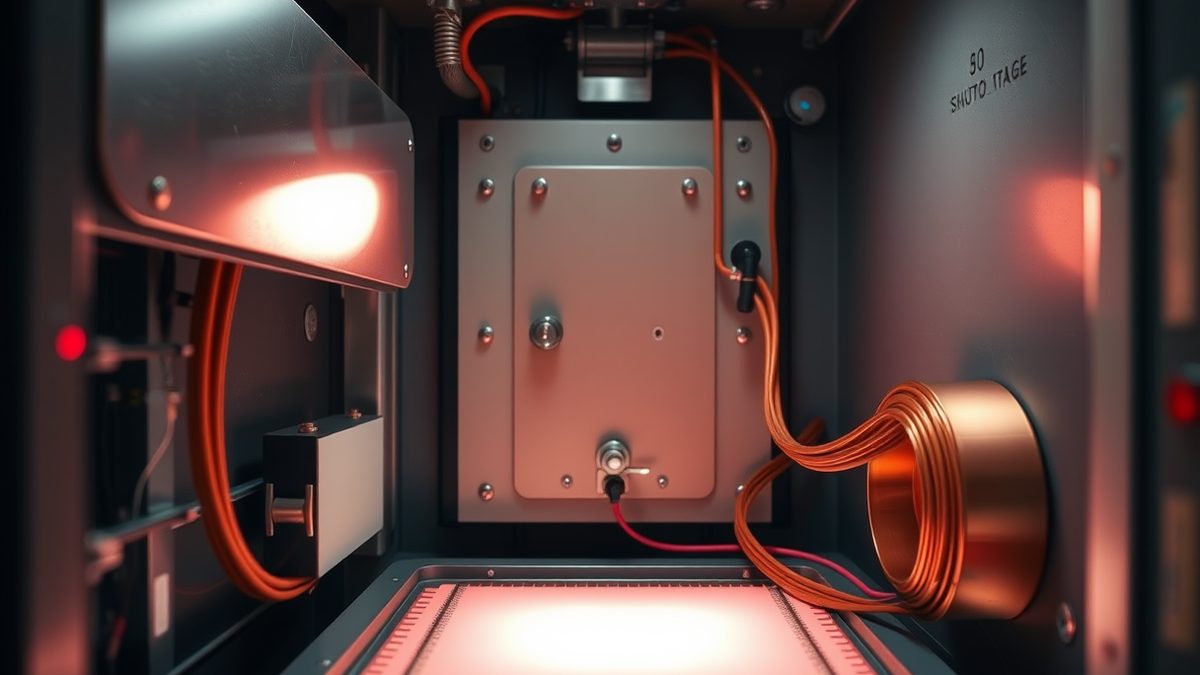
On 1 October, ScienceDaily reported the University of Surrey design, called the Superfluid Helium Oscillator Quantum device, or SHOQ. It uses charge-neutral superfluid helium-3, a frictionless liquid, so the qubit should be naturally shielded from some electromagnetic noise. The paper appears in npj Quantum Information.
"We are not the first to think about the individual components behind this idea, but what we have done for the first time is bring them together in a microfluidic device and work out the specific details that could enable the device to function as a qubit," said Priya Sharma, a Daphne Jackson Fellow at Surrey and lead author, in the release. She added that the next step is a prototype. That is a design, not a working machine. No experimental confirmation yet.
On the same day, HPCwire reported that Quantum Computing Inc. announced Dirac-3S, a next-generation quantum optimization machine, with a first customer shipment expected in November 2026. QCi says the platform has demonstrated computation on problems with up to 9,980 variables using a 5U base system plus one Expansion Module.
QCi's chief technology officer, Yong Meng Sua, framed it as a commercial step: "Dirac-3S takes our quantum optimization platform from demonstrating what is possible to delivering a system built for practical commercial use." The company lists financial services, logistics, manufacturing, energy and aerospace among target markets, and says the system can run on-premises or in the cloud.
Also on 1 October, Q/C Technologies said it is collaborating with the Center for Integrated Nanotechnologies at Sandia National Laboratories on optical computing for AI inference. Sandia runs about 17,000 employees on an annual budget of roughly $5 billion, per the announcement carried by HPCwire. The work targets nanophotonic components for Q/C's optical processing unit, including nonlinear operations, memory, precision and optical loss.
Older work fills in the picture. On 30 September, ScienceDaily reported that Caltech physicists measured energy levels in synthetic quantum matter predicted by the Ising and tricritical Ising conformal field theories, a result about 40 years in the making, published in Nature. The collaboration involved Caltech, Universite Paris-Saclay and the Technical University of Munich.
On 29 September, ScienceDaily covered Kyoto University and Hiroshima University work on an entangled measurement that identifies 3-photon W states, a capability that had been missing since the GHZ equivalent more than 25 years ago. Shigeki Takeuchi, the corresponding author, said the team had "finally obtained the entangled measurement for the W state as well."
Earlier, on 26 September, ScienceDaily reported that a Duke-led team used a 13-ion quantum simulator to reproduce string-breaking dynamics tied to particle formation, published 23 September in Nature Physics. Christopher Monroe of Duke said quantum simulations are the best available platform for questions about matter formation "short of having witnessed the Big Bang itself."
The policy side moved on 27 September, when Fermilab published the Department of Energy's SCAC Quantum Committee Report, chaired by Fermilab's Anna Grassellino, targeting a scientifically relevant, error-corrected quantum computer by 2028.
Outside quantum computing proper, Google DeepMind's 23 September note described adding secure server-side memory to its Private AI Compute platform, and Quanta Magazine on the same day examined quantumlike mathematics in biology.
Sources
10- 01This new qubit could be 100 times less error-prone in superfluid quantum computer breakthroughEN
- 02Quantum Computing Inc. Announces Dirac-3S, Scaling to Nearly 10,000 VariablesEN
- 03Q/C Technologies Collaborates with Sandia on Optical Computing for AI InferenceEN
- 04Caltech physicists finally measure a quantum energy ladder predicted 40 years agoEN
- 05Quantum teleportation breakthrough: Scientists crack a 25-year entanglement challengeEN
- 06Quantum computer simulates matter popping into existenceEN
- 07DOE releases national quantum computing roadmap following field-wide effort led by SCAC subcommitteeEN
- 08Advancing Private AI Compute with secure, server-side memoryEN
- 09Biology Might Not Be Quantum, but Its Math Is QuantumlikeEN
- 10Quantum computing's dark horse just proved it can go universalEN
All figures and quotations in this text come from the sources listed below.
Content prepared by the editorial team with AI assistance.
Rachel Nwosu
Comments
0- No comments yet — be the first.