Taiwan's export-control review spares machine tools, as Beijing drafts its own list
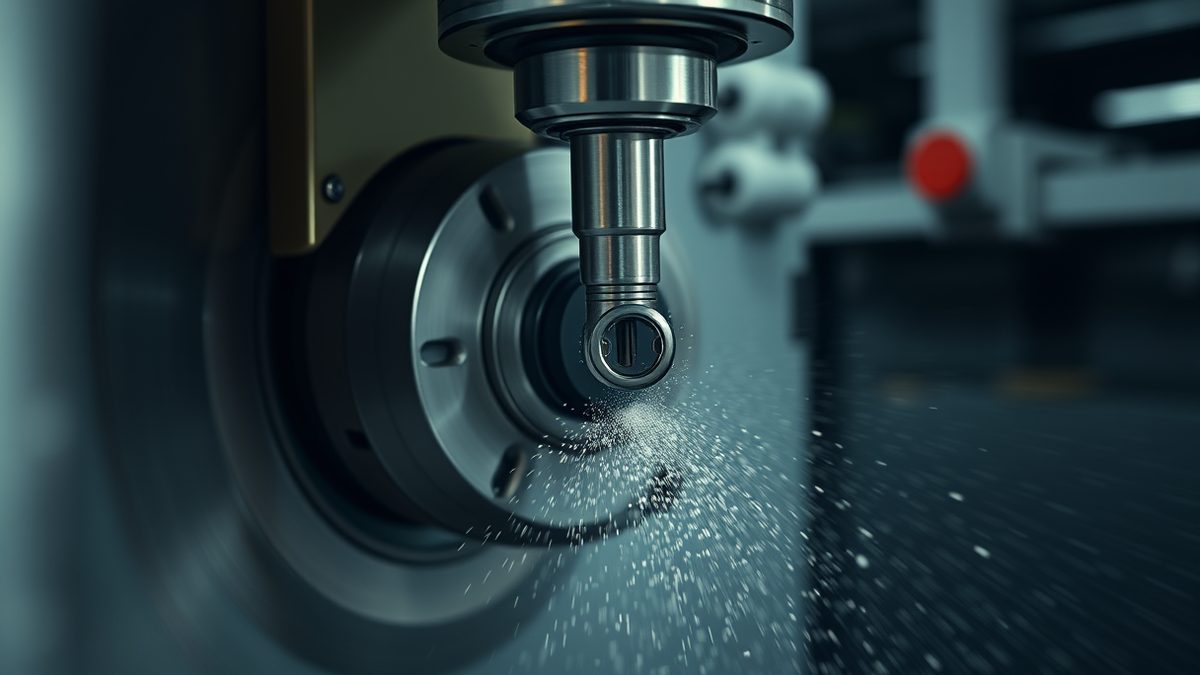
Taiwan said its first wave of new high-tech export controls will not cover machine tools or general machinery. Syntec Technology, which makes machine-tool controllers, stayed locked at its daily limit-down for a second straight session on 4 November.
 Dr. Amara PatelEconomy, business and world
Taiwan's Ministry of Economic Affairs is studying wider export controls. The controls would cover high-tech goods sold to China.
The ministry says it is studying bringing advanced chips into an overall package of controls. That package would sit alongside tighter checks on illegal transshipment. The aim is to preserve the island's "silicon shield". It is acting under the Trade Act and in line with the US-Taiwan Agreement on Reciprocal Trade. That matters for Taiwanese suppliers with heavy China revenue. It also matters for Chinese buyers already shifting machine-tool purchasing to local suppliers. The ministry has not said which chip-related items it would list, or when.
The company says its main exports are controllers and servo motors, not complete machines. It supplies control systems and key components inside China. So the direct hit should be limited. Tongtai Machine & Tool, Goodway Machine and Awea Mechantronic also traded weakly.
Beijing is tightening from the other side. The commerce and science ministries have proposed adding 40 technologies to a catalogue of prohibited or restricted exports. The list covers AI, advanced gene and cell technology and solar power. Fourteen items would face outright bans and 26 would face restrictions. A public consultation runs to 15 November. Registration requirements for some technology transfers are already in force. A separate proposal targets AI exports, which it describes as keeping core technology at home.
China accounts for more than 80% of global solar-panel component production. It is also home to the leading suppliers of solar manufacturing equipment.
In April, Chinese officials considered restricting exports of advanced solar manufacturing equipment to the United States. The move followed reports that Tesla sought about $2.9 billion of equipment from Chinese suppliers for American solar factories. The curbs could have covered equipment for high-efficiency heterojunction cells. Beijing has used narrower controls before. It licensed gallium and germanium exports in 2023. It then licensed graphite. It banned certain dual-use items for US military users in December 2024.
Nvidia has told some cloud customers to take on less Chinese business.
The Information reported the guidance, citing three people familiar with the matter. It is not mandatory. It applies to future contracts rather than existing deals. The guidance also asks customers to disclose who ultimately uses the chips. The Financial Times reported that the instruction went out verbally through sales reps and regional teams. US rules restrict chip shipments but generally do not cover remote access through cloud services. So Chinese AI developers can rent compute abroad instead of importing hardware.
US authorities have been looking into Chinese AI companies. Those companies reach chips through foreign data centers. This has continued since allegations involving Moonshot AI, the developer of the Kimi chatbot.
A smuggler described his method to The Information. Tom's Hardware relayed that reporting. He pairs cheap server processors with banned HBM from Samsung and SK hynix. Export rules look at the processor's performance, not at the other components on it. So the memory travels inside a legal-looking server. It lands in Hong Kong and travels into Shenzhen. Technicians heat the boards to soften the solder and lift the memory chips off. A Shenzhen broker said a single HBM3E unit changed hands for several hundred dollars a year ago. It now sells for about $4,000.
An AI chip needs six to eight of them. So a broker can make $24,000 to $32,000 on the memory in each AI GPU.
According to Tom's Hardware, Huawei's Ascend 950DT sells for about $37,000. It delivers roughly half the performance of the previous-generation Nvidia H100. Huawei has told customers to find the HBM its servers need themselves. Samsung and SK hynix are off limits. Chinese memory makers lack the capacity. Chinese memory maker CXMT has begun risk production of HBM3E. It is expected to reach mass production by the end of this year. But yields are reportedly low.
Beijing's consultation on the 40-technology list closes on 15 November. Until then, trade keeps moving through gaps no list covers. Those gaps include cloud contracts, component swaps, and the luggage of commuters crossing into Shenzhen.
Sources
28- 01Machine Tools Excluded From First Wave of China Export Controls, but Syntec Still Posts Two Straight Limit-Down DaysEN
- 02China’s Risky Plan to Restrict Hi-Tech ExportsEN
- 03Nvidia pushes cloud customers to cut back on China businessEN
- 04AI chip smugglers exploit trade control loophole to bring banned HBM from South Korea into ChinaEN
- 05China proposes AI export curbs to keep core technology at homeEN
- 06'This is a pivot point': China's exports projected to avert 24% of global CO2 emissions - FortuneEN
- 07Analysis: China’s clean-tech exports in 2026 to avoid as much CO2 as Brazil emits in a yearEN
- 08China's record-breaking exports of clean tech are making a big dent in emissions, report saysEN
- 09Haitian Water plans $118 million solar silver paste facility in ChinaEN
- 10Choosing The Right Power Transistor: Why Application Fit Matters More Than TechnologyEN
- 11China’s Mengxi grid tops 20 GW of storage as renewables approach 60% of capacityEN
- 12China Truck Sales Now Majority Electric. What’s Next?EN
- 13Tesla China October wholesale sales total 67,829, lowest since FebruaryEN
- 14China Details Its Plan to Land Astronauts on the Moon Before 2030EN
- 15Lexus is taking a page from China for its next electric SUV launching in 2027EN
- 16Electric trucks hit 50% of China’s heavy truck sales, diesel demand fallsEN
- 17Chinese automakers reportedly head to Beijing for talks on EU hybrid export quotasEN
- 18Chery October sales rise 5.3% as NEVs hit record and exports top 200,000 againEN
- 19AI Balloon in China Deflates by Half a Trillion DollarsEN
- 20I imported a $2,000 electric truck from China. Five years later, here’s the truthEN
- 21Does Reliance on China Undermine Iran’s Grand Strategy?EN
- 22China’s ‘Lipstick King’ hawks tokens as AI gets mass-market Singles’ Day pushEN
- 23Launch Preview: Falcon 9 to launch USSF missions, China to launch internet satellitesEN
- 24China’s EDA champion buys start-up to address weak link, support Huawei’s Tau Scaling LawEN
- 25 Look up! China's mysterious space plane is visible over the US this week EN
- 26Toyota’s EV sales more than doubled in a year, but gas cars are getting crushed in ChinaEN
- 27How Beta Technologies Is Clearing the Runway for Electric FlightEN
- 28Inside Automotive DMS & OMS: Technology, Challenges & Power Solutions EN
All figures and quotations in this text come from the sources listed below.
Content prepared by the editorial team with AI assistance.
Dr. Amara Patel
Comments
0- No comments yet — be the first.