Temple's heart rate claim rests on a study the company ran itself
Temple's claim that its head-worn device beats the Apple Watch on heart rate accuracy rests on a study the company funded, ran and analysed itself, The Economic Times reported. The white paper, published on 31 October, has not been peer reviewed.
 Sofia MarchettiScience and health
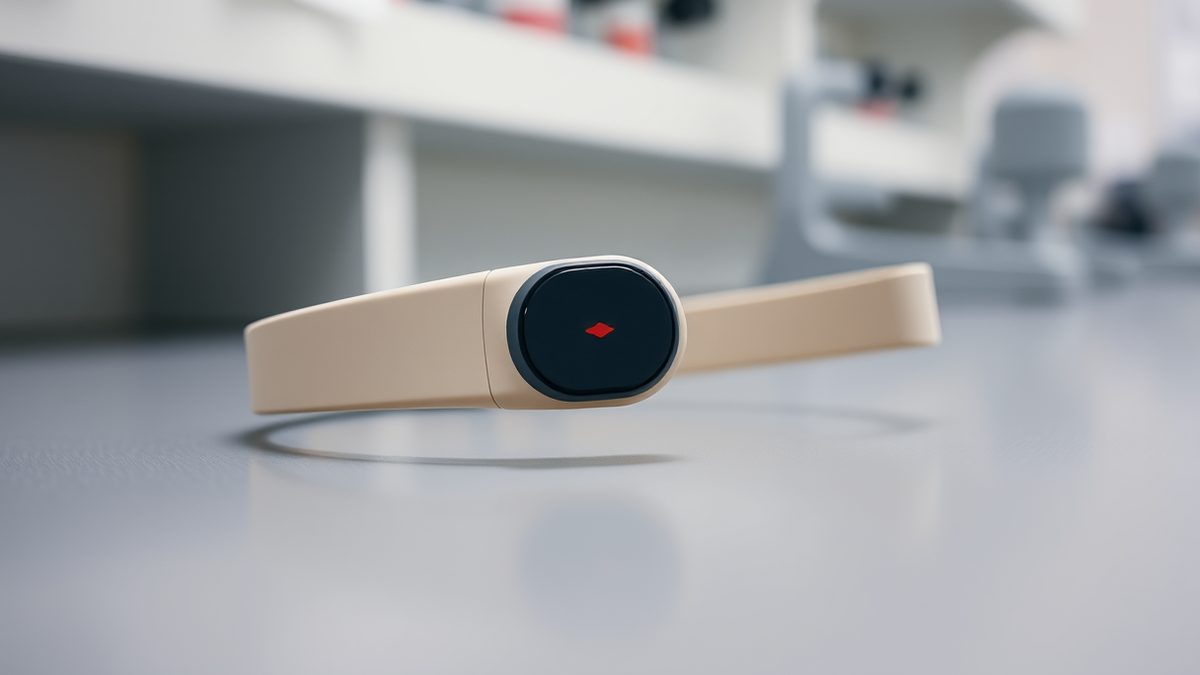
Buyers paying ₹85,000 for the device are being asked to trust a company-run result. No independent lab has tested the claim, and first shipments are not due until early 2027. If it holds, a head-worn optical sensor could give athletes another option in the high-intensity zones where wrist devices struggle. If it fails, the launch loses its main selling point.
What Temple claims
Deepinder Goyal posted the claim on X on 1 November, hours before pre-orders opened. He said accurate tracking is not a solved problem. "You would think accurate HR (Heart Rate) tracking is a solved problem. It is not. Especially in zones 4 & 5, which matter to professional athletes the most," he wrote.
Temple says its device recorded the lowest heart rate measurement error at rest and across five exercise zones. The comparison covered the Apple Watch Series 12, Garmin Forerunner 970, Fitbit Air, Whoop MG and Oura Ring 5. The Apple Watch Series 12 came closest, the company says. Goyal credits two design choices: an adhesive that keeps the sensor on the skin, and placement at the temple, over a major artery. "Temple uses adhesive, so its lab condition is its wear condition. You'll experience our study outcomes in real life," he said.
Temple sells the device as a wellness monitor rather than a medical one. It uses optical sensors the company calls BrainFlow and produces an Entropy score from 1 to 250. The target is elite athletes, starting with heart rate.
How the test was run
The reference device was a Polar H10 chest strap. Temple taped it to the chest because the usual placement can lose contact during sprints and miss heartbeats.
The study was single-site, in Gurugram, with one session per participant and treadmill running only. Cycling, strength training, outdoor running and everyday activity were not tested. Tech Insider said sample sizes and beats-per-minute error figures were not disclosed.
Temple says the full paper and data are on its website. It also says the device beat an untaped Polar H10 in zones 4 and 5. Tech Insider noted that a claim about hard exercise is narrower than a general accuracy claim.
What happens next
Temple says independent researchers are running an extended study. It has invited replication and offered to fund it. Until those results appear, the claim remains a company result.
Sources
15- 01Deepinder Goyal's Temple claims it beat Apple Watch, Oura, Whoop on heart-rate accuracy testEN
- 02Temple beats Apple Watch: Deepinder Goyal says his wearable device delivers better heart rate accuracyEN
- 03Can Deepinder Goyal's Temple beat Apple Watch? New study claims accuracy advantageEN
- 04Temple Heart Rate Wearable: Goyal's 1 Claim Tested [2026]EN
- 05Deepinder Goyal claims Temple wearable beats Apple Watch in heart rate accuracy, here's how it worksEN
- 06Wearable devices + AI analysis may predict high blood pressure crisis up to 3 days early - www.heart.orgEN
- 07Rapid LLM development is outrunning the research meant to explain it, study findsEN
- 08How to choose the right gaming monitor for youEN
- 09 Snag this 360Hz QD-OLED gaming monitor for only $349 EN
- 10Liom Advances Non-Invasive Glucose Monitoring with Wearable PhotonicsEN
- 11 Gamer's Asus TUF monitor blocks bullet fired through wall during Call of Duty session EN
- 1275,000-year-old Neanderthal may have been killed by a spear aimed at the heartEN
- 13Opening the Box Changes the Cat: LLMs Detect Chain-of-Thought Monitoring - What now?EN
- 14Studying Fraudulent North Korean IT WorkersEN
- 15Exercise doesn't just strengthen your heart. It rewires itEN
All figures and quotations in this text come from the sources listed below.
Content prepared by the editorial team with AI assistance.
Sofia Marchetti
Comments
0- No comments yet — be the first.